

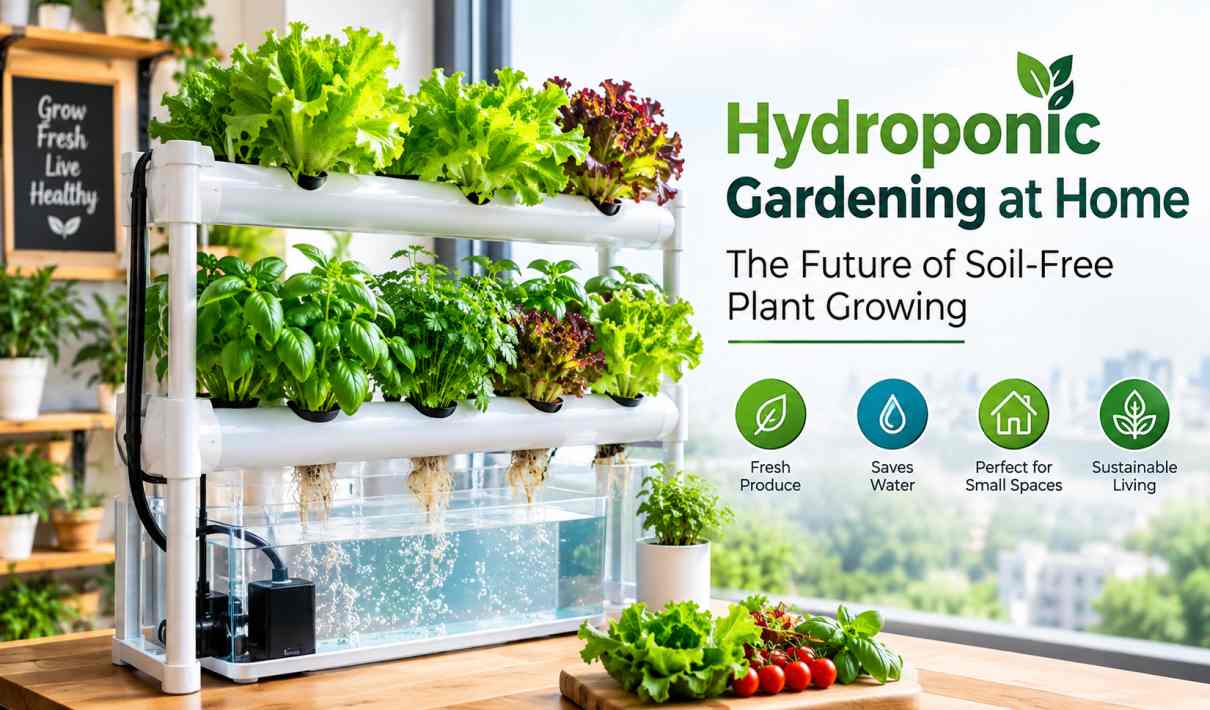
Hydroponic Gardening at Home: The Future of Soil-Free Plant Growing
Introduction
Gardening is evolving as homeowners search for innovative, sustainable, and space-saving ways to grow fresh vegetables, herbs, and ornamental plants. One increasingly popular approach is hydroponic gardening at home, a modern cultivation technique that allows plants to grow without traditional soil.
Hydroponics uses nutrient-rich water to deliver essential minerals directly to plant roots. Unlike conventional gardening, where plants obtain nutrients from the soil, hydroponic systems provide controlled growing conditions that can support healthy plant development.
With increasing urbanization, limited outdoor spaces, and growing interest in sustainable living, hydroponic gardening is becoming an attractive option for modern households. Whether you live in an apartment, own a small balcony, or have a dedicated indoor gardening area, hydroponics offers opportunities to grow fresh produce throughout the year.
From leafy vegetables and aromatic herbs to certain fruits, hydroponic systems can support various crops when suitable lighting, nutrients, and environmental conditions are maintained.
This article explores how hydroponic gardening works, its advantages, different growing systems, suitable plants, setup requirements, and the future of soil-free gardening.
What Is Hydroponic Gardening?
Hydroponic gardening is a method of growing plants without soil by supplying essential nutrients through a water-based solution.
In traditional gardening, soil supports plant roots and stores water and nutrients. Hydroponic systems replace these functions using nutrient solutions, containers, growing media, and specialized equipment.
Plants may grow in water or inert materials such as coco coir, perlite, or clay pebbles. These materials support the roots while allowing access to moisture, nutrients, and oxygen.
A typical hydroponic gardening system includes:
- A water reservoir containing nutrient solution
- Plant containers or growing trays
- Suitable growing media
- Hydroponic nutrients
- Natural sunlight or artificial grow lights
- Water circulation or aeration equipment, depending on the system
By controlling these elements, gardeners can create favorable growing conditions without relying on conventional garden soil.
Hydroponic gardening is particularly useful for urban residents who want to grow plants in limited spaces.
Why Hydroponic Gardening at Home Is Becoming Popular
Interest in hydroponic gardening at home is increasing because it addresses several challenges associated with conventional gardening.
1. Limited Gardening Space
Urban homes often have small balconies, terraces, or limited outdoor areas.
Hydroponic systems can fit into compact spaces, making them suitable for apartments and smaller residential properties.
Vertical hydroponic arrangements also allow gardeners to grow multiple plants using relatively little floor space.
2. Efficient Water Management
Water conservation is an important consideration in modern gardening.
Recirculating hydroponic systems reuse nutrient solutions, potentially reducing water consumption compared with some conventional cultivation methods.
Actual water savings depend on the system design, crop, climate, and maintenance practices.
3. Growing Fresh Vegetables at Home
Hydroponic gardening allows households to cultivate vegetables and herbs close to where they are consumed.
Homegrown produce can be harvested when needed, potentially reducing storage time and packaging requirements.
4. Greater Control Over Growing Conditions
Hydroponic gardeners can manage nutrient concentrations, water quality, lighting, and other environmental factors.
This control can support consistent plant development when systems are properly maintained.
5. Reduced Dependence on Garden Soil
Hydroponics eliminates the need for traditional soil beds.
This can be particularly beneficial where suitable gardening soil is unavailable or outdoor ground conditions are unsuitable.
How Does a Hydroponic Gardening System Work?
The basic principle of hydroponics is straightforward: plants receive the nutrients required for growth through water rather than extracting them from soil.
Plant roots absorb dissolved minerals, including nitrogen, phosphorus, potassium, calcium, and magnesium.
The nutrient solution must also provide appropriate conditions for oxygen availability and root health.
Hydroponic systems generally follow four essential processes.
Nutrient delivery: A balanced nutrient solution supplies minerals necessary for plant development.
Root support: Containers or growing media keep plants stable while allowing roots to access water and oxygen.
Water management: Reservoirs, pumps, or passive systems maintain an appropriate moisture supply.
Environmental control: Adequate lighting, temperature, humidity, and airflow support photosynthesis and healthy growth.
Some systems use electricity-powered pumps, while others operate through passive water movement.
Choosing the appropriate system depends on available space, budget, gardening experience, and plant requirements.
Types of Hydroponic Gardening Systems for Home Use
Several hydroponic growing systems are suitable for residential gardening. Each offers different advantages and maintenance requirements.
1. Deep Water Culture System
Deep Water Culture, commonly called DWC, is a popular hydroponic technique.
Plants are supported above a nutrient reservoir, allowing their roots to extend into oxygenated water.
An air pump and air stone typically supply oxygen to the root zone.
Advantages:
- Relatively simple system design
- Suitable for leafy vegetables
- Useful for learning hydroponic fundamentals
- Can support rapid growth under favorable conditions
Lettuce, basil, and other leafy greens are commonly grown using DWC systems.
2. Nutrient Film Technique
The Nutrient Film Technique, or NFT, circulates a shallow stream of nutrient solution through channels containing plant roots.
The solution flows continuously or frequently before returning to a reservoir.
NFT systems are often used for lettuce, herbs, and other lightweight crops.
They can use water efficiently but require careful monitoring because pump failures may quickly affect exposed roots.
3. Wick Hydroponic System
A wick system is among the simplest methods for beginners.
It uses absorbent materials to transport nutrient solution from a reservoir into the growing medium.
Because it does not necessarily require electricity, it can be convenient for small indoor gardens.
However, wick systems generally work best with plants that have relatively modest water and nutrient requirements.
4. Ebb and Flow System
Also known as flood and drain hydroponics, this system periodically floods a growing tray with nutrient solution.
The solution then drains back into the reservoir.
This cycle supplies water and nutrients while allowing air to reach plant roots between flooding periods.
Ebb and flow systems can accommodate different plant varieties but require reliable timing and drainage.
5. Drip Hydroponic System
Drip systems deliver nutrient solution directly to the growing medium through small tubes or emitters.
They are suitable for plants requiring consistent nutrient delivery, including tomatoes and peppers.
Drip hydroponics offers flexibility but requires regular inspection to prevent blocked emitters.
Best Plants for Hydroponic Gardening at Home
Selecting suitable crops is important for successful hydroponic gardening.
Beginners should generally start with plants that grow quickly and have manageable nutrient requirements.
Leafy Green Vegetables
Leafy greens are excellent choices for home hydroponic systems.
Popular options include:
- Lettuce
- Spinach
- Kale
- Pak choi
- Swiss chard
These vegetables typically have relatively compact root systems and can grow successfully in suitable hydroponic arrangements.
Fresh Herbs
Herbs are another practical option for indoor hydroponic gardening.
Basil, mint, parsley, coriander, and chives can be cultivated hydroponically.
Fresh herbs are especially convenient for households that regularly use them in cooking.
Fruiting Vegetables
Tomatoes, cucumbers, and peppers can also grow hydroponically.
However, they usually require more space, stronger lighting, additional nutrients, and appropriate structural support.
Beginners may find leafy greens easier to manage before progressing to fruiting crops.
Strawberries
Strawberries are suitable for certain hydroponic systems.
They require appropriate lighting, nutrient management, and pollination.
Compact hydroponic strawberry arrangements can be attractive additions to balconies and indoor growing spaces.
How to Start Hydroponic Gardening at Home
Creating a small hydroponic garden does not necessarily require expensive equipment or extensive gardening experience.
A carefully planned beginner setup can provide an accessible introduction to soil-free cultivation.
Step 1: Choose a Suitable Location
Select an area with adequate lighting, ventilation, and convenient access to water.
Balconies, terraces, and dedicated indoor spaces may be suitable.
For indoor growing, artificial grow lights may be necessary when natural sunlight is insufficient.
Step 2: Select a Beginner-Friendly System
A simple wick system or small Deep Water Culture setup can be a practical starting point.
Consider available space, maintenance requirements, and the types of plants you intend to grow.
Step 3: Prepare the Growing Containers
Use clean, water-resistant containers designed for gardening.
Food-safe, opaque reservoirs are preferable for edible crops because they help limit unwanted light exposure and algae growth.
Ensure the containers provide adequate support for plants and their roots.
Step 4: Add Suitable Growing Media
Depending on the system, use clay pebbles, coco coir, perlite, or another appropriate hydroponic growing medium.
The growing medium should support roots without restricting access to oxygen.
Step 5: Prepare the Nutrient Solution
Use nutrients formulated specifically for hydroponic cultivation.
Follow the manufacturer’s instructions for mixing and concentration.
Monitor solution pH and electrical conductivity when appropriate, since nutrient availability depends partly on these conditions.
Step 6: Introduce Healthy Seedlings
Start with healthy seedlings or seeds suitable for hydroponic cultivation.
Avoid overcrowding because plants require sufficient space for root development, airflow, and light exposure.
Step 7: Monitor Plant Growth
Inspect plants regularly for changes in leaf color, root condition, and overall development.
Maintain suitable water levels, replace or refresh nutrient solution as required, and keep equipment clean.
Consistent monitoring helps prevent minor issues from becoming serious problems.
Benefits of Hydroponic Gardening at Home
Hydroponic gardening offers several potential advantages for homeowners interested in modern gardening techniques.
Efficient Use of Space
Compact hydroponic systems can fit into apartments, balconies, and other restricted areas.
Vertical designs can further increase the number of plants grown within a limited footprint.
Potentially Faster Plant Growth
Under favorable conditions, hydroponically grown plants may develop faster than comparable soil-grown plants.
However, results vary according to crop variety, lighting, nutrients, temperature, and system management.
Fewer Soil-Related Problems
Without traditional soil, hydroponic systems avoid certain soil-borne weeds and pests.
Nevertheless, hydroponic plants remain vulnerable to diseases, insects, algae, and waterborne pathogens.
Convenient Nutrient Management
Gardeners can adjust nutrient solutions according to plant growth stages.
This allows more precise nutrient management than many traditional home gardening methods.
Year-Round Growing Opportunities
Indoor hydroponic gardening can support cultivation during different seasons when lighting and environmental conditions are suitable.
This makes it appealing for households seeking a more consistent supply of fresh herbs and vegetables.
Challenges of Hydroponic Gardening
Despite its advantages, hydroponic gardening requires planning and ongoing maintenance.
Initial investment: Pumps, reservoirs, lighting, nutrients, and monitoring equipment can increase setup costs.
Electricity requirements: Active systems may depend on electricity for water circulation, aeration, or lighting.
Nutrient imbalance: Incorrect nutrient concentrations or pH levels can negatively affect plant development.
Equipment failures: Pump breakdowns and interrupted water circulation may damage plants, particularly in systems with exposed roots.
Regular maintenance: Reservoir cleaning, water-quality checks, and equipment inspections are essential.
Beginners can reduce these challenges by starting with a small system and gradually expanding as their experience improves.
Hydroponic Gardening vs Traditional Soil Gardening
Both hydroponic and soil-based gardening offer valuable ways to grow plants.
Hydroponics provides greater control over nutrient delivery and can be convenient where outdoor space is limited.
Traditional soil gardening generally requires less specialized equipment and can support a wider range of crops without artificial lighting or mechanical systems.
Water consumption also differs depending on irrigation practices and growing conditions.
Hydroponics is not automatically more environmentally friendly. Electricity use, equipment materials, nutrient production, and waste management influence its overall environmental impact.
For homeowners, the best approach depends on their available space, gardening goals, resources, and willingness to maintain the system.
The Future of Hydroponic Gardening in India
Hydroponic gardening has considerable potential in Indian cities, where apartment living and limited outdoor space can make conventional gardening difficult.
Compact hydroponic systems may be useful for residential balconies, terraces, schools, and community gardening projects.
Interest in locally grown vegetables and efficient water management could encourage wider experimentation with soil-free cultivation.
However, India’s diverse climate creates practical challenges.
High summer temperatures can warm nutrient reservoirs, while humid conditions may increase disease risks.
Indoor systems may also require significant electricity for lighting and cooling.
Successful adoption therefore depends on choosing climate-appropriate crops, managing operating costs, and designing systems for local conditions.
Hydroponics can complement conventional gardening rather than replace it entirely.
Smart Technology and the Future of Soil-Free Gardening
Technological developments are creating new possibilities for hydroponic gardening at home.
Smart sensors can monitor water temperature, pH, and electrical conductivity.
Automated dosing equipment can help maintain nutrient concentrations, while timers can control lighting and irrigation schedules.
Connected monitoring systems may also alert gardeners when equipment requires attention.
More advanced systems are beginning to incorporate data analysis and artificial intelligence to support growing decisions.
Although these technologies can improve convenience, they are not essential for successful hydroponic gardening.
Simple, well-maintained systems remain a practical option for beginners.
Sustainable Hydroponic Gardening Practices
Home gardeners can make hydroponic cultivation more resource-conscious through thoughtful system design.
Choosing efficient pumps and LED grow lights can help reduce electricity consumption.
Maintaining covered reservoirs can limit evaporation and algae growth.
Regular equipment inspection helps prevent leaks and unnecessary water loss.
Gardeners should also avoid releasing concentrated nutrient solutions directly into drains, waterways, or natural environments.
Responsible nutrient disposal and careful water management are important parts of sustainable hydroponic gardening.
Whenever possible, homeowners should select durable equipment that can be repaired or reused.
These practices help balance the convenience of modern growing systems with environmental responsibility.
Frequently Asked Questions About Hydroponic Gardening
1. Is hydroponic gardening suitable for beginners?
Yes. Beginners can start with simple wick systems or small Deep Water Culture setups. Leafy greens and herbs are generally good introductory crops.
2. Can hydroponic plants grow without sunlight?
Plants require sufficient light for photosynthesis. Indoor hydroponic systems can use suitable artificial grow lights when natural sunlight is inadequate.
3. Is hydroponic gardening expensive?
Costs vary depending on system size, equipment, and lighting requirements. Small passive systems can be relatively affordable, while automated indoor setups may require greater investment.
4. Which vegetables grow best in hydroponic systems?
Lettuce, spinach, pak choi, kale, and several culinary herbs are popular choices. Tomatoes, peppers, and cucumbers are also possible with more advanced setups.
5. Does hydroponic gardening save water?
Recirculating hydroponic systems can use less water than certain conventional growing methods. Actual savings depend on the crop, equipment, climate, and water-management practices.
Conclusion
Hydroponic gardening at home offers an innovative approach to growing fresh vegetables, herbs, and other plants without traditional soil.
Its space-saving design, controlled nutrient delivery, and potential water efficiency make it particularly appealing for modern urban households.
From simple beginner systems to advanced automated gardens, hydroponics provides opportunities for homeowners to experiment with practical, technology-supported cultivation.
However, successful soil-free gardening requires appropriate lighting, balanced nutrients, clean equipment, and regular monitoring.
As interest in sustainable living and urban food production continues, hydroponic gardening is likely to remain an important part of the conversation about future home gardening.
For anyone interested in growing fresh produce within limited space, starting with a small hydroponic garden can be a rewarding first step toward understanding this modern cultivation method.