

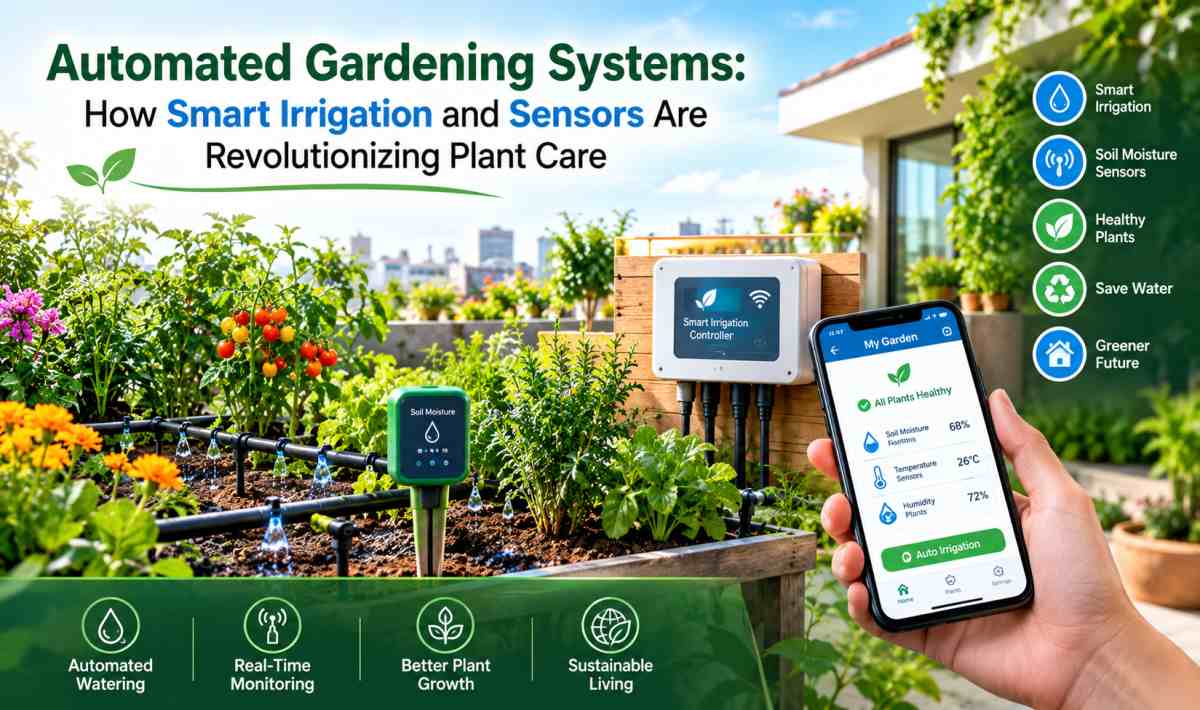
Automated Gardening Systems: How Smart Irrigation and Sensors Are Revolutionizing Plant Care
Introduction
Gardening is evolving rapidly as technology becomes an essential part of modern homes and sustainable lifestyles. Traditional gardening methods often require regular watering, manual monitoring, and continuous attention. However, automated gardening systems are transforming how homeowners maintain healthy plants and beautiful green spaces.
Smart irrigation systems, soil moisture sensors, Internet of Things (IoT) devices, and intelligent gardening applications are making plant care more convenient, efficient, and environmentally responsible.
These technologies help gardeners understand plant requirements, monitor soil conditions, and deliver water when necessary.
For homeowners living in busy cities, automated gardening offers a practical solution for maintaining balcony gardens, rooftop greenery, indoor plants, and outdoor landscapes.
As water conservation and sustainable living become increasingly important, smart gardening technology is attracting attention across India.
This article explores how automated gardening systems work, their major benefits, emerging technologies, and their role in the future of modern gardening.
1. What Are Automated Gardening Systems?
Automated gardening systems use electronic controllers, sensors, and connected technologies to manage essential gardening activities with minimal manual intervention.
Unlike traditional watering methods, automated systems can respond to changing environmental conditions.
They monitor factors such as soil moisture, temperature, humidity, and weather patterns to support healthier plant growth.
Key Components of Automated Gardening
Modern automated gardening systems may include:
- Soil moisture sensors for monitoring water availability.
- Smart irrigation controllers for regulating watering schedules.
- Temperature and humidity sensors.
- Automated drip irrigation equipment.
- Wi-Fi-enabled monitoring applications.
- Rain sensors and weather-based controllers.
- Smart valves and water-flow monitoring devices.
These components work together to improve watering accuracy and simplify everyday garden maintenance.
However, automated systems still require periodic inspection, maintenance, and appropriate plant care.
2. How Smart Irrigation Systems Work
Smart irrigation is one of the most important developments in automated gardening.
Traditional irrigation systems often operate according to fixed schedules, regardless of actual soil conditions.
Smart irrigation systems use environmental information to determine when watering is necessary.
For example, when soil moisture falls below a suitable threshold, a compatible controller can activate irrigation.
When sufficient moisture is available, the system can delay or prevent unnecessary watering.
Types of Smart Irrigation Systems
Soil Moisture-Based Irrigation: Uses sensors to monitor moisture levels and adjust watering decisions.
Weather-Based Irrigation: Uses weather information and landscape conditions to modify irrigation schedules.
Automated Drip Irrigation: Delivers water gradually near plant roots through a network of tubes and emitters.
App-Controlled Irrigation: Allows gardeners to monitor and adjust compatible watering systems through mobile applications.
The US Environmental Protection Agency recognizes soil moisture-based and weather-based controllers as effective technologies for improving irrigation efficiency.
3. Soil Moisture Sensors: The Foundation of Smart Plant Care
Soil moisture sensors are essential components of many automated gardening systems.
These devices estimate the amount of water available in the soil and provide information that helps determine irrigation requirements.
Different plants require different moisture conditions.
For example, many tropical foliage plants prefer relatively consistent moisture, while several drought-tolerant plants need their growing medium to dry between watering sessions.
Benefits of Soil Moisture Sensors
Soil moisture sensors can help gardeners:
- Identify when soil becomes too dry.
- Avoid unnecessary watering.
- Maintain more suitable growing conditions.
- Monitor moisture changes over time.
- Improve watering decisions for different plants.
Some advanced sensors connect to mobile applications, allowing users to check readings remotely.
Correct sensor placement is important because moisture conditions may vary across different sections of a garden.
4. Internet of Things Technology in Modern Gardening
The Internet of Things is changing how gardening equipment communicates and operates.
IoT gardening systems connect compatible sensors, controllers, and monitoring devices through wireless networks.
This connectivity allows gardeners to access information without physically inspecting every plant.
How IoT Gardening Works
A connected gardening system typically collects information from sensors installed in the garden.
The collected data is transmitted to a controller or digital platform.
Depending on the system, gardeners may receive notifications about soil moisture, temperature, irrigation activity, or equipment problems.
Some systems also support remote watering adjustments.
Advantages of IoT Gardening
IoT technology offers several benefits:
- Convenient remote garden monitoring.
- Automated watering schedules.
- Better visibility into environmental conditions.
- Early identification of unusual moisture readings.
- Improved management of multiple gardening areas.
These capabilities are especially useful for homeowners managing rooftop gardens, larger landscapes, or plants across different locations.
5. Artificial Intelligence and Smart Gardening Technology
Artificial intelligence is creating additional opportunities for automated gardening.
AI-enabled systems can analyze information collected from sensors, weather services, and historical irrigation records.
By identifying patterns, intelligent software may help improve watering recommendations.
For example, a system could consider recent rainfall, temperature changes, and previous moisture readings before suggesting irrigation adjustments.
Applications of AI in Gardening
Potential applications include:
Predictive Watering: Estimating future irrigation requirements using environmental information.
Plant Monitoring: Identifying possible changes in plant appearance through image analysis.
Weather Adaptation: Adjusting recommendations according to changing weather conditions.
Resource Management: Helping gardeners understand patterns in water consumption.
Personalized Plant Care: Providing guidance based on plant types and growing environments.
Although these technologies are promising, AI recommendations should complement practical gardening knowledge rather than replace regular plant inspection.
6. Automated Drip Irrigation for Water Conservation
Drip irrigation is a practical watering method for home gardens and landscaped spaces.
It delivers water slowly near the root zones of plants instead of spraying large areas.
When combined with automated controllers and moisture sensors, drip irrigation can provide more precise watering.
Why Drip Irrigation Is Effective
Automated drip irrigation offers several advantages:
- Direct water delivery near plant roots.
- Reduced unnecessary surface wetting.
- Better control over watering duration.
- Compatibility with raised beds and containers.
- Lower potential for runoff when properly designed.
The effectiveness of drip irrigation depends on appropriate system design, maintenance, water pressure, and plant requirements.
For Indian households, this approach can be particularly useful during hot, dry periods when efficient water management becomes important.
7. Smart Gardening for Urban Indian Homes
Urban gardening is becoming increasingly popular among homeowners seeking greenery in limited spaces.
Apartments, balconies, terraces, and compact residential properties can benefit from automated gardening solutions.
In densely populated cities, gardeners may face challenges involving limited space, changing sunlight exposure, and irregular watering schedules.
Balcony Gardening
Compact automated watering systems can help maintain potted plants and vertical gardens.
Moisture sensors are particularly useful because containers often dry faster than larger garden beds.
Rooftop Gardening
Rooftop gardens may experience intense sunlight, wind, and temperature fluctuations.
Smart irrigation can help gardeners respond to changing moisture conditions.
Proper waterproofing, drainage, and structural load considerations remain essential for rooftop installations.
Indoor Gardening
Indoor plants can benefit from moisture monitoring and suitable environmental sensors.
However, automatic watering should be carefully adjusted to prevent excessive moisture and poor root conditions.
8. Major Benefits of Automated Gardening Systems
Automated gardening systems provide advantages for homeowners, gardening enthusiasts, and landscape professionals.
Improved Water Efficiency
Smart controllers can reduce unnecessary irrigation by responding to soil moisture or weather conditions.
The US Environmental Protection Agency estimates that a WaterSense-labeled soil moisture-based controller can save an average US home with an automatic landscape irrigation system more than 15,000 gallons of water annually.
Actual savings vary according to climate, existing irrigation practices, system configuration, and maintenance.
Time-Saving Convenience
Automated watering reduces the need to manually irrigate plants every day.
Better Plant Care
More consistent moisture management can help reduce problems associated with irregular watering.
Remote Monitoring
Connected systems allow gardeners to review supported garden information through mobile devices.
Sustainable Landscaping
Efficient irrigation can support environmentally responsible gardening by reducing avoidable water consumption.
Together, these benefits make automated gardening attractive for modern residential landscapes.
9. Smart Gardening Sensors Beyond Soil Moisture
Although soil moisture sensors are widely used, other sensors can provide valuable information about growing conditions.
Temperature Sensors
Temperature sensors monitor environmental changes that may affect plant growth and watering requirements.
Humidity Sensors
Humidity sensors measure moisture in the surrounding air.
They can be useful in greenhouses and controlled indoor growing environments.
Light Sensors
Light sensors help gardeners understand how much illumination plants receive.
This information can support better plant placement and lighting decisions.
Rain Sensors
Rain sensors can prevent scheduled irrigation during or immediately after rainfall.
Water-Flow Sensors
Water-flow monitoring devices may help identify unusual consumption patterns or possible irrigation problems.
Combining multiple sensor types can provide a more complete understanding of garden conditions.
10. Automated Gardening and Sustainable Landscaping
Sustainability is becoming a central consideration in modern landscape design.
Automated gardening supports this goal by helping gardeners use water more carefully.
When combined with suitable plant selection, mulching, composting, and effective drainage, smart irrigation can contribute to healthier outdoor environments.
Sustainable Gardening Practices
Gardeners can combine automation with:
- Native and climate-appropriate plants.
- Organic compost and soil improvement.
- Mulching to reduce moisture loss.
- Rainwater harvesting where suitable.
- Water-efficient irrigation equipment.
- Seasonal adjustments to watering requirements.
For example, grouping plants with similar watering needs into separate irrigation zones can improve efficiency.
Technology works best when supported by thoughtful garden planning and environmentally responsible maintenance.
11. Choosing the Right Automated Gardening System
Selecting an automated gardening system depends on garden size, plant requirements, available infrastructure, and budget.
A small balcony garden may require only basic moisture monitoring and a compact watering controller.
Larger landscapes may benefit from multiple irrigation zones and advanced monitoring capabilities.
Important Factors to Consider
Garden Size: Determine the number of plants and areas requiring irrigation.
Plant Requirements: Consider whether different plants need separate watering schedules.
Connectivity: Check whether the system requires Wi-Fi, Bluetooth, or another communication method.
Power Supply: Consider reliability, energy consumption, and backup arrangements.
Ease of Use: Choose equipment with understandable controls and accessible monitoring features.
Maintenance: Review sensor cleaning, calibration, and equipment inspection requirements.
Compatibility: Ensure the controller works with the selected irrigation equipment.
A carefully selected system is generally more useful than purchasing advanced features that do not match actual gardening needs.
12. Challenges of Automated Gardening Technology
Despite its benefits, automated gardening technology has limitations.
Understanding these challenges helps homeowners make realistic decisions.
Initial Investment
Advanced controllers, sensors, and connected irrigation equipment can require a higher initial investment than basic watering tools.
Sensor Accuracy
Incorrect placement, calibration problems, or damaged sensors may produce unreliable readings.
Connectivity Problems
Some connected systems depend on stable internet access for remote monitoring and cloud-based features.
Equipment Maintenance
Irrigation lines, filters, sensors, and valves require periodic inspection.
Different Plant Requirements
Plants growing in different soil types or sunlight conditions may need separate irrigation settings.
Automation cannot completely eliminate the need for gardening knowledge and observation.
13. Future of Automated Gardening Systems in 2027 and Beyond
The future of automated gardening is likely to involve more intelligent, accessible, and connected technologies.
As sensor technology develops, homeowners may gain access to increasingly detailed information about garden conditions.
AI-powered software could improve the interpretation of moisture readings and environmental patterns.
Emerging Gardening Technology Trends
Advanced Sensor Networks: Multiple connected sensors may provide detailed monitoring across different garden zones.
AI-Assisted Irrigation: Intelligent software could offer more accurate watering recommendations.
Integrated Smart Homes: Gardening equipment may become more closely connected with home automation platforms.
Improved Mobile Applications: Gardeners may receive clearer insights into plant care and irrigation performance.
Energy-Efficient Equipment: Manufacturers may increasingly focus on low-power devices and efficient controllers.
Data-Driven Landscaping: Historical information could help gardeners improve long-term resource management.
These developments may make automated gardening more practical for both residential and commercial landscapes.
However, affordability, reliability, and ease of maintenance will remain important considerations.
14. Why Automated Gardening Matters for Indian Homeowners
India experiences diverse climatic conditions, ranging from humid coastal regions to dry inland areas.
These differences create varying irrigation requirements across locations and seasons.
Automated gardening systems can help homeowners adapt watering practices to local environmental conditions.
For example, a garden in Rajasthan may require different irrigation management from one in Kerala or West Bengal.
During monsoon periods, rain-aware controllers may help reduce unnecessary watering.
In hot summer conditions, moisture monitoring can help identify when additional irrigation is required.
Automated gardening also supports modern residential design by making green spaces easier to maintain.
For architects, landscape designers, and property developers, smart irrigation offers an opportunity to integrate efficient water management into residential projects.
Frequently Asked Questions About Automated Gardening Systems
1. What is an automated gardening system?
An automated gardening system uses sensors, controllers, and irrigation equipment to monitor growing conditions and manage watering with reduced manual effort.
2. How do smart irrigation systems save water?
Smart irrigation systems use soil moisture readings or weather information to adjust watering schedules and avoid unnecessary irrigation.
3. Are automated gardening systems suitable for small balconies?
Yes. Compact moisture sensors and compatible watering controllers can support balcony gardens, container plants, and small green spaces.
4. Can automated gardening systems work without Wi-Fi?
Some systems operate locally using timers, sensors, or standalone controllers. Wi-Fi is mainly required for certain remote monitoring and connected features.
5. What is the role of IoT in smart gardening?
IoT technology connects sensors and controllers, allowing gardeners to monitor conditions, receive notifications, and manage compatible equipment remotely.
6. Is automated gardening environmentally friendly?
Automated gardening can support sustainability when it reduces unnecessary watering and is combined with responsible landscaping practices.
Conclusion
Automated gardening systems are changing how homeowners maintain plants and manage green spaces.
Smart irrigation controllers, soil moisture sensors, IoT technology, and AI-assisted monitoring are helping make gardening more convenient and resource-efficient.
These innovations can support healthier plant care while reducing unnecessary water consumption and routine maintenance.
For Indian homeowners, automated gardening offers practical opportunities for improving balcony gardens, rooftop landscapes, indoor greenery, and residential outdoor spaces.
As smart gardening technology continues to develop, future systems may become more intelligent, accessible, and closely integrated with modern homes.
However, successful automation will always depend on appropriate equipment selection, regular maintenance, and an understanding of plant requirements.
The future of gardening is not simply about watering plants automatically. It is about combining technology, sustainability, and thoughtful plant care to create healthier, greener living spaces.