

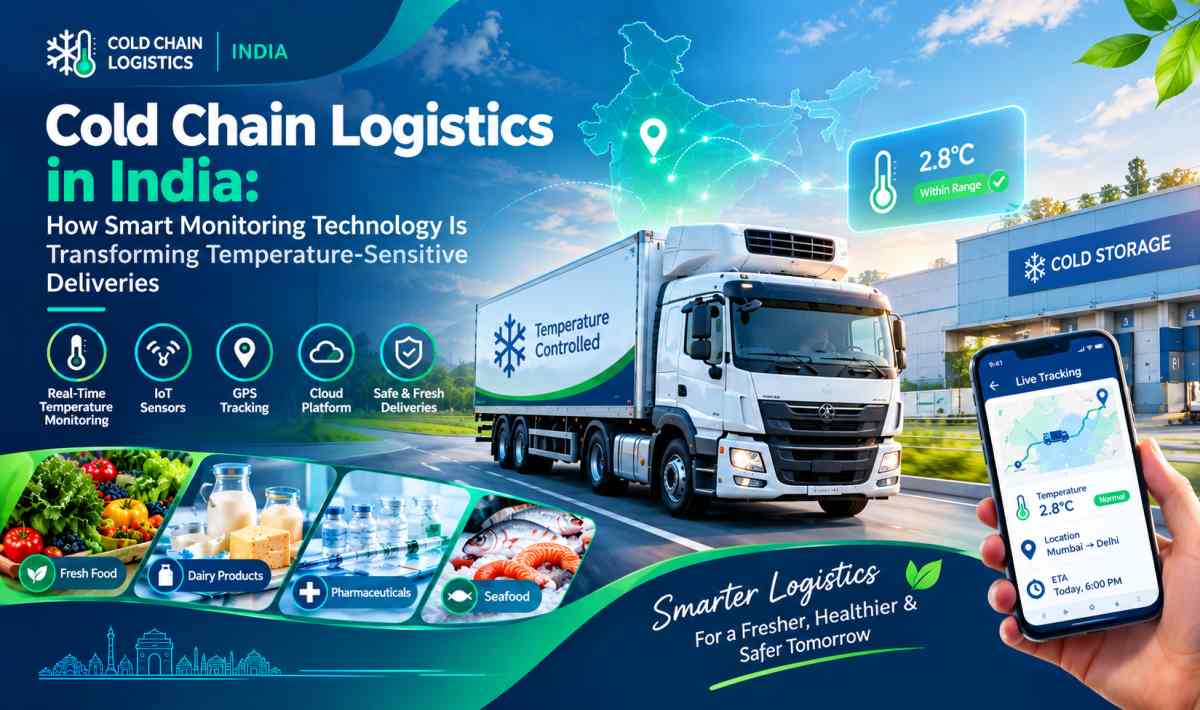
Cold Chain Logistics in India: How Smart Monitoring Technology Is Transforming Temperature-Sensitive Deliveries
Introduction
India’s logistics industry is undergoing a significant transformation as businesses increasingly adopt advanced technologies to improve transportation efficiency, product safety, and supply chain reliability. Among the fastest-evolving segments is cold chain logistics in India, which plays an essential role in transporting temperature-sensitive products such as fresh food, dairy products, pharmaceuticals, vaccines, seafood, and agricultural commodities.
Maintaining appropriate temperatures throughout transportation and storage is critical because even small temperature fluctuations can affect product quality, safety, and shelf life.
Traditional cold chain systems often depend on manual temperature checks, basic refrigeration equipment, and limited shipment visibility. However, modern logistics companies are introducing smart monitoring technology, Internet of Things (IoT) sensors, artificial intelligence (AI), GPS tracking, and cloud-based monitoring platforms to improve cold chain operations.
These innovations allow businesses to monitor shipments continuously, identify potential temperature problems, and respond before products are damaged.
As India’s food processing, pharmaceutical, agricultural, and e-commerce industries expand, technology-enabled cold chain logistics is becoming increasingly important.
This article explores how smart monitoring technology is transforming temperature-sensitive deliveries, its major benefits, industry applications, challenges, and future opportunities.
What Is Cold Chain Logistics?
Cold chain logistics refers to the transportation, handling, and storage of products that require controlled temperature conditions to maintain their quality, safety, and effectiveness.
Unlike conventional logistics, cold chain transportation involves specialized infrastructure designed to maintain appropriate environmental conditions throughout the supply chain.
A typical cold chain system includes:
- Refrigerated warehouses and cold storage facilities
- Temperature-controlled trucks and transportation vehicles
- Refrigerated containers
- Temperature monitoring sensors
- GPS-enabled shipment tracking
- Insulated packaging solutions
- Digital supply chain management platforms
Different products require different storage conditions. For example, many fresh produce categories require chilled environments, while frozen foods typically require substantially lower temperatures.
Certain vaccines and pharmaceutical products also require precisely controlled storage conditions established by manufacturers.
The objective of cold chain logistics is to maintain the required temperature from the point of production to the final delivery destination.
Growing Importance of Cold Chain Logistics in India
India is one of the world’s major producers of agricultural commodities, dairy products, pharmaceuticals, and processed foods.
However, transporting temperature-sensitive products across long distances remains challenging because of climatic conditions, infrastructure limitations, and fragmented supply chains.
The growing importance of temperature-controlled logistics in India is connected to several factors.
1. Expansion of the Food Processing Industry
India’s food processing sector requires efficient refrigerated transportation to preserve fruits, vegetables, dairy products, seafood, and frozen foods.
Modern cold chain systems help businesses maintain product freshness and reduce avoidable spoilage during transportation.
2. Growth of Pharmaceutical Distribution
India’s pharmaceutical industry relies on dependable logistics infrastructure for distributing medicines, vaccines, and temperature-sensitive medical products.
Smart monitoring helps logistics providers maintain specified temperature conditions and create reliable shipment records.
3. Increasing Demand for Online Grocery Delivery
Online grocery platforms and food delivery businesses require efficient cold chain networks to transport perishable products.
Temperature-controlled distribution centers and refrigerated delivery vehicles help support product quality during delivery.
4. Rising Agricultural Export Opportunities
Exporters of fresh produce, seafood, and processed foods require reliable cold chain infrastructure to meet destination-market quality and safety requirements.
Digital monitoring can strengthen shipment visibility and support compliance documentation.
How Smart Monitoring Technology Works in Cold Chain Logistics
Smart monitoring technology combines connected sensors, communication networks, cloud platforms, and analytics software to track environmental conditions throughout transportation and storage.
Instead of relying entirely on manual inspections, businesses can receive automated temperature readings and alerts.
Step 1: Temperature Data Collection
Wireless sensors installed inside refrigerated vehicles, containers, and warehouses continuously measure temperature.
Depending on the application, additional sensors may monitor humidity, door openings, equipment performance, and location.
Step 2: Real-Time Data Transmission
Connected devices transmit monitoring information through cellular networks, Wi-Fi, or other communication technologies.
When network coverage is unavailable, some devices store readings locally and upload them after connectivity returns.
Step 3: Cloud-Based Monitoring
Collected information is displayed on centralized dashboards.
Logistics managers can review shipment conditions, historical temperature readings, and equipment status.
Step 4: Automated Alerts
If temperatures move outside the permitted range, the monitoring system can notify responsible personnel.
Alerts may be delivered through mobile applications, SMS, email, or logistics management software.
Step 5: Corrective Action
Operations teams can investigate refrigeration problems, arrange vehicle maintenance, or redirect shipments when necessary.
This approach improves visibility and supports faster responses to potential cold chain failures.
Key Smart Technologies Transforming Cold Chain Logistics in India
1. Internet of Things (IoT) Temperature Sensors
IoT sensors are among the most important technologies used in modern cold chain management.
These devices collect temperature information and communicate with digital monitoring platforms.
Major benefits include:
- Continuous temperature monitoring
- Automated alerts
- Reduced dependence on manual readings
- Improved shipment visibility
- Historical temperature records
IoT-based monitoring is particularly valuable for pharmaceutical shipments and high-value perishable products.
2. Artificial Intelligence and Predictive Analytics
Artificial intelligence helps logistics businesses analyze monitoring data and identify operational patterns.
AI-powered systems can support demand forecasting, route planning, refrigeration maintenance, and risk assessment.
For example, predictive maintenance software may identify unusual refrigeration performance before equipment fails.
However, AI predictions depend on reliable data and must be supported by appropriate operational procedures.
3. GPS Tracking and Fleet Management
GPS technology allows logistics companies to monitor refrigerated vehicle locations and delivery progress.
When combined with temperature sensors, GPS tracking provides information about both shipment location and environmental conditions.
Fleet managers can use this information to identify delays, optimize delivery routes, and improve customer communication.
4. Cloud-Based Cold Chain Management
Cloud platforms allow authorized stakeholders to access monitoring information from different locations.
These platforms can integrate warehouse records, transportation data, shipment documentation, and temperature histories.
Centralized monitoring improves coordination between suppliers, logistics providers, distributors, and customers.
5. Smart Refrigeration Systems
Modern refrigeration equipment can incorporate electronic controllers, connected sensors, and automated performance monitoring.
Some systems adjust operation based on predefined temperature settings and equipment conditions.
Smart refrigeration can help improve temperature stability and identify maintenance requirements.
Benefits of Smart Cold Chain Monitoring Technology
1. Reduced Product Spoilage
Temperature fluctuations can accelerate food deterioration and compromise certain pharmaceutical products.
Continuous monitoring helps businesses identify temperature excursions earlier and take corrective action.
Although monitoring cannot eliminate every risk, it can reduce preventable losses when supported by reliable equipment and trained personnel.
2. Improved Product Quality and Safety
Maintaining appropriate temperatures helps preserve the quality of perishable goods.
For pharmaceuticals, monitoring also supports adherence to product-specific storage and transportation requirements.
Accurate temperature records can assist quality teams when assessing whether shipments remain suitable for distribution.
3. Better Supply Chain Visibility
Traditional cold chain operations may provide limited information about shipment conditions during transportation.
Smart monitoring offers more detailed visibility into temperature history, location, and delivery status.
This helps businesses coordinate operations and respond to unexpected disruptions.
4. Greater Operational Efficiency
Automated monitoring reduces repetitive manual recording tasks.
Digital platforms also make it easier to review shipment histories, investigate incidents, and prepare operational reports.
These improvements can help logistics teams use resources more effectively.
5. Improved Customer Confidence
Businesses transporting sensitive products must demonstrate that shipments have been handled appropriately.
Reliable monitoring records can provide customers with greater transparency regarding transportation conditions.
This is particularly valuable in pharmaceutical distribution, food exports, and premium grocery logistics.
Applications of Smart Cold Chain Logistics Across Indian Industries
Pharmaceutical and Healthcare Industry
Pharmaceutical logistics requires careful handling of medicines, vaccines, biological products, and other temperature-sensitive materials.
Connected monitoring devices help distributors track conditions during storage and transportation.
Digital records also support quality assurance procedures and regulatory documentation.
Food and Beverage Industry
Food manufacturers use cold chain infrastructure to transport dairy products, meat, seafood, frozen foods, and other perishable items.
Smart monitoring helps identify refrigeration problems and maintain suitable storage conditions.
Agriculture and Horticulture
Farmers, agricultural cooperatives, and exporters can benefit from temperature-controlled transportation and packhouse infrastructure.
Proper cooling and monitoring help preserve produce quality between harvesting, distribution, and retail delivery.
E-Commerce and Online Grocery
Online grocery businesses increasingly require efficient systems for handling chilled and frozen products.
Connected monitoring can help distribution centers and delivery operators maintain appropriate temperatures during fulfillment.
Seafood and Meat Processing
Seafood and meat products require carefully managed temperatures to limit deterioration and maintain food safety.
Digital monitoring provides additional oversight during processing, storage, and transportation.
Challenges Facing Cold Chain Logistics in India
Despite technological progress, several challenges continue to affect the development of reliable cold chain networks.
High Infrastructure Investment
Refrigerated warehouses, specialized vehicles, sensors, and monitoring software require significant investment.
Small logistics businesses may find the initial costs difficult to manage.
Inconsistent Infrastructure Availability
Cold chain facilities are not equally distributed across India.
Some agricultural production regions and smaller markets have limited access to modern refrigerated transportation and storage.
Power Supply and Equipment Reliability
Cold storage facilities depend on reliable electricity and refrigeration equipment.
Power interruptions and mechanical failures can create temperature-control risks.
Backup power systems and preventive maintenance are therefore essential.
Connectivity Limitations
IoT devices require dependable communication systems for real-time reporting.
Remote locations and certain transportation routes may experience network interruptions.
Devices with local data storage can help preserve monitoring records during connectivity gaps.
Workforce Training
Employees need training to operate monitoring platforms, interpret alerts, and follow temperature-control procedures.
Technology is most effective when supported by clear responsibilities and practical response plans.
Government Initiatives Supporting Cold Chain Development
The Indian government has introduced initiatives intended to strengthen food processing infrastructure, agricultural supply chains, and cold storage capacity.
The Pradhan Mantri Kisan SAMPADA Yojana (PMKSY) includes support for integrated cold chain and value addition infrastructure through applicable components.
The Ministry of Food Processing Industries has also supported projects designed to improve food preservation and processing capabilities.
Such initiatives can encourage investment in modern infrastructure, although eligibility, funding availability, and scheme requirements vary.
Businesses should consult current government guidelines before making investment decisions.
Improved coordination between public agencies, private logistics providers, agricultural organizations, and technology companies can further strengthen India’s cold chain ecosystem.
How Businesses Can Implement Smart Cold Chain Monitoring
Companies planning to modernize temperature-sensitive deliveries should begin by assessing their operational requirements.
First, identify product-specific temperature needs. Different goods require different conditions, monitoring intervals, and handling procedures.
Second, select suitable monitoring equipment. Sensors should offer appropriate accuracy, calibration, durability, and data-storage capabilities.
Third, integrate monitoring with logistics operations. Temperature data becomes more useful when connected with fleet management, warehouse systems, and shipment records.
Fourth, establish alert-response procedures. Businesses should define who receives notifications and what actions must follow a temperature excursion.
Finally, review performance regularly. Monitoring data can help identify recurring problems, improve maintenance schedules, and support operational improvements.
A phased implementation approach can help smaller businesses control costs while evaluating the benefits of new technology.
Future Trends in Cold Chain Logistics in India: 2027 and Beyond
The future of smart cold chain logistics in India is likely to involve greater automation, improved connectivity, and more advanced data analytics.
AI-Powered Predictive Maintenance
Refrigeration systems equipped with connected sensors may increasingly use predictive analytics to identify potential equipment problems.
This can help maintenance teams address developing faults before they disrupt deliveries.
Advanced Temperature Monitoring
Smaller sensors, improved battery life, and more accessible cloud platforms may make monitoring practical for a wider range of shipments.
Greater adoption could improve visibility across smaller logistics networks.
Electric Refrigerated Vehicles
Electric vehicles and energy-efficient refrigeration technologies may become more common in urban cold chain distribution.
Their suitability will depend on charging infrastructure, operating costs, vehicle range, and refrigeration requirements.
Automated Cold Storage Warehouses
Automated storage and retrieval systems can help improve warehouse handling efficiency.
Combined with digital inventory management, these technologies may reduce unnecessary handling and improve stock visibility.
Digital Supply Chain Integration
Future cold chain platforms may connect suppliers, warehouses, transport operators, and retailers through shared digital systems.
Better integration could improve traceability, coordination, and shipment documentation.
Role of Sustainability in Modern Cold Chain Logistics
Sustainability is becoming an important consideration for temperature-controlled logistics.
Refrigeration consumes energy, while certain refrigerants can have significant environmental impacts if released.
Logistics providers can improve environmental performance by adopting energy-efficient equipment, maintaining refrigeration systems, reducing unnecessary transport, and selecting lower-impact refrigerants where suitable.
Solar-assisted cold storage and improved insulation may also support energy savings in appropriate locations.
Smart monitoring contributes by identifying inefficient equipment operation and helping businesses prevent avoidable product waste.
However, sustainability outcomes depend on the complete system, including electricity sources, refrigerant management, transportation efficiency, and equipment life cycles.
Frequently Asked Questions About Cold Chain Logistics
1. What is cold chain logistics in India?
Cold chain logistics involves storing and transporting temperature-sensitive products under controlled conditions to maintain their quality, safety, and effectiveness.
2. How does IoT improve cold chain transportation?
IoT sensors continuously collect temperature data and transmit information to monitoring platforms, allowing businesses to detect problems and respond more quickly.
3. Which industries benefit most from cold chain monitoring?
Pharmaceuticals, healthcare, food processing, agriculture, dairy, seafood, and online grocery businesses are major users of cold chain monitoring technology.
4. Can smart monitoring reduce logistics costs?
Smart monitoring can help reduce preventable spoilage, improve maintenance planning, and streamline recordkeeping. Actual savings depend on implementation costs and operational performance.
5. What is the future of cold chain logistics in India?
The industry is expected to adopt more connected sensors, AI-supported analytics, automated warehouses, and energy-efficient refrigeration technologies.
Conclusion
Cold chain logistics in India is entering a new phase of digital transformation, driven by the growing need for reliable temperature-controlled transportation and storage.
Smart monitoring technologies such as IoT sensors, AI-powered analytics, GPS tracking, and cloud-based platforms are helping businesses improve shipment visibility, identify temperature problems, and strengthen operational efficiency.
These solutions are particularly important for pharmaceuticals, agriculture, food processing, and e-commerce, where maintaining appropriate temperatures directly affects product quality and safety.
Although infrastructure costs, connectivity limitations, and workforce training remain challenges, continued investment in modern cold chain systems can create substantial opportunities.
As technology develops, businesses that combine reliable refrigeration infrastructure with effective digital monitoring and strong operating procedures will be better positioned to deliver temperature-sensitive products safely, efficiently, and sustainably.