

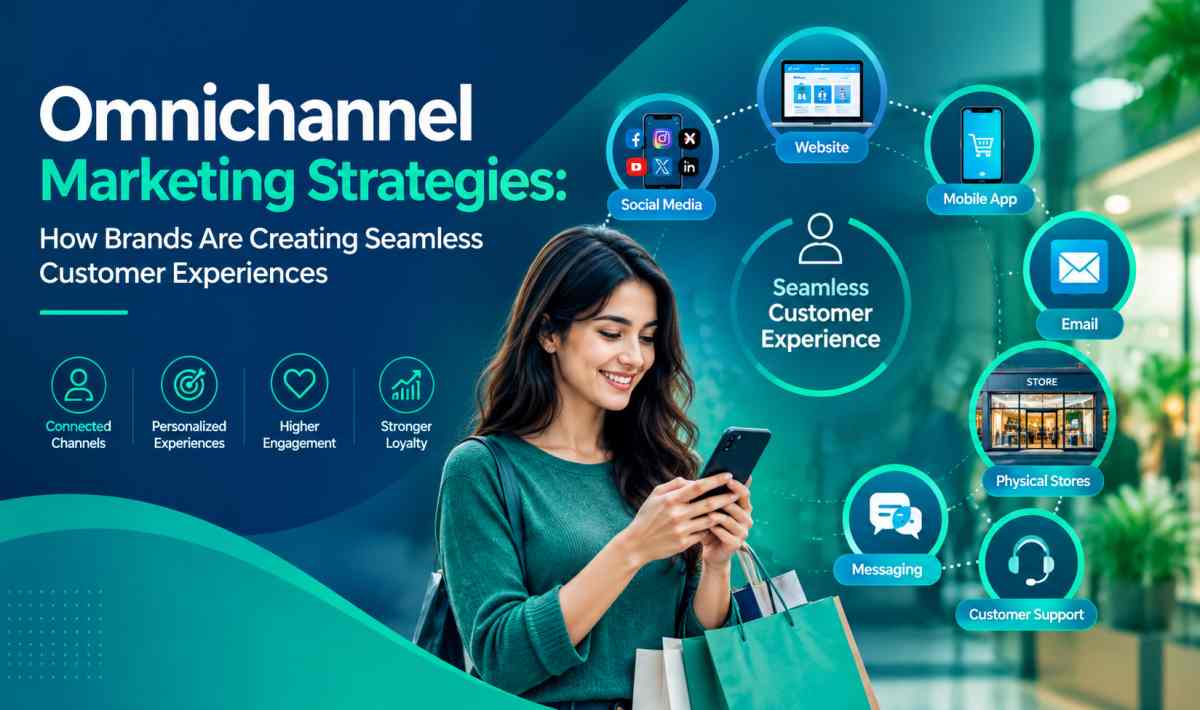
Omnichannel Marketing Strategies: How Brands Are Creating Seamless Customer Experiences
Introduction
The digital marketing landscape is evolving rapidly as customers interact with brands through multiple online and offline channels. From social media platforms and mobile applications to websites, email campaigns, and physical stores, modern consumers expect consistent and personalized experiences throughout their purchasing journey.
This changing consumer behavior has made omnichannel marketing strategies increasingly important for businesses seeking stronger customer relationships and sustainable growth.
Unlike traditional marketing approaches that treat communication channels separately, omnichannel marketing connects every customer interaction into one seamless experience. Customers can discover products on social media, explore details on a website, receive personalized recommendations through email, and complete purchases through their preferred channels.
As businesses embrace artificial intelligence, marketing automation, and customer data analytics, omnichannel marketing is becoming an essential component of modern digital marketing strategies.
This article explores how omnichannel marketing works, its major benefits, effective implementation strategies, emerging technologies, and how businesses can create seamless customer experiences in 2026 and beyond.
What Is Omnichannel Marketing?
Omnichannel marketing is a customer-focused marketing approach that integrates multiple communication and sales channels to deliver a consistent, connected, and personalized brand experience.
These channels may include:
- Business websites and e-commerce platforms
- Social media marketing platforms
- Email marketing campaigns
- Mobile applications and notifications
- Physical retail stores
- Customer support and live chat
- Search engines and digital advertisements
- SMS and messaging applications
The primary objective is to ensure customers receive relevant information and consistent service regardless of how they interact with a business.
For example, a customer browsing furniture on a mobile application might save a product, receive an email reminder, and later visit a physical showroom. An effective omnichannel system helps the business recognize the customer’s preferences and provide relevant assistance.
This interconnected approach improves convenience while reducing unnecessary interruptions during the buying journey.
Omnichannel Marketing vs. Multichannel Marketing
Although omnichannel and multichannel marketing involve several communication platforms, their approaches differ significantly.
Multichannel Marketing
Multichannel marketing focuses on promoting products or services through different platforms.
Businesses may use websites, social media, email, and physical stores, but these channels often operate independently.
Consequently, customer information and communication may remain disconnected.
Omnichannel Marketing
Omnichannel marketing connects different platforms into a unified customer experience.
Customer preferences, purchase history, and previous interactions can inform future communications across authorized channels.
The main difference is integration.
Multichannel marketing emphasizes reaching customers through multiple platforms, while omnichannel marketing focuses on connecting those platforms to create a continuous customer journey.
This distinction is particularly important for businesses competing in increasingly customer-focused markets.
Why Omnichannel Marketing Strategies Are Important in 2026
Customer expectations are changing as digital technology becomes part of everyday shopping and communication.
Consumers increasingly want convenient purchasing options, faster customer support, relevant recommendations, and consistent information across platforms.
A disconnected experience can create frustration when customers must repeatedly explain their requirements or restart their purchasing journey.
Effective omnichannel marketing strategies address these challenges by connecting customer interactions.
1. Increasing Customer Expectations
Modern consumers expect brands to understand their preferences and provide convenient experiences.
Businesses that maintain consistent communication across channels can build stronger relationships and improve customer satisfaction.
2. Growing Digital Competition
Businesses compete for customer attention across search engines, social platforms, mobile applications, and online marketplaces.
An integrated marketing approach helps brands maintain visibility without delivering repetitive or inconsistent messages.
3. Rising Importance of Personalization
Personalized marketing helps businesses deliver relevant recommendations, offers, and communication based on customer interests.
Omnichannel systems can make personalization more useful by connecting information from different customer touchpoints.
4. Demand for Convenient Shopping
Customers increasingly value flexibility when researching, purchasing, collecting, and returning products.
Omnichannel marketing supports this flexibility by connecting digital interactions with physical shopping experiences.
Key Benefits of Omnichannel Marketing for Businesses
Implementing effective omnichannel marketing strategies can provide several advantages.
Improved Customer Experience
Connected communication channels reduce friction during the customer journey.
Customers can switch between platforms without unnecessarily repeating information, creating a more convenient experience.
Higher Customer Engagement
Relevant communication across preferred channels encourages customers to interact with brands.
Personalized emails, useful mobile notifications, and responsive customer support can strengthen engagement.
Better Conversion Opportunities
Customers often research products through several channels before purchasing.
Consistent information, accessible support, and convenient checkout options can reduce obstacles that prevent conversions.
Stronger Customer Loyalty
Positive experiences encourage repeat purchases and long-term relationships.
Brands that deliver reliable service across different platforms are better positioned to earn customer trust.
Improved Marketing Efficiency
Integrated marketing systems can help businesses coordinate campaigns, reduce duplicated activities, and allocate resources more effectively.
Centralized reporting also makes it easier to evaluate marketing performance.
10 Effective Omnichannel Marketing Strategies for Modern Brands
Businesses need a structured approach to develop successful omnichannel customer experiences.
The following strategies can improve marketing integration, customer engagement, and business performance.
1. Understand the Complete Customer Journey
Understanding customer behavior is the foundation of successful omnichannel marketing.
Businesses should identify how customers discover products, compare alternatives, make purchases, and seek post-purchase assistance.
Customer journey mapping helps marketers recognize important interactions and potential difficulties.
For example, customers may discover a product through social media but prefer completing purchases on a desktop website.
Understanding these preferences allows businesses to improve each stage of the buying journey.
2. Integrate Customer Data Across Channels
Disconnected customer information is one of the biggest challenges in omnichannel marketing.
Businesses should connect relevant information from customer relationship management systems, websites, sales platforms, and customer support tools.
A unified customer view helps authorized teams understand previous interactions and provide more relevant assistance.
However, customer data integration must include appropriate consent, security controls, and privacy protections.
3. Deliver Personalized Customer Experiences
Personalization is an important component of effective omnichannel marketing strategies.
Businesses can use customer preferences and permitted behavioral information to recommend relevant products or services.
Examples include personalized product suggestions, relevant educational content, and timely customer service updates.
Effective personalization should provide genuine value rather than overwhelm customers with excessive promotional messages.
4. Maintain Consistent Brand Messaging
Brand consistency helps customers recognize and trust businesses across different communication platforms.
Companies should maintain consistent visual identities, product information, pricing explanations, and communication styles.
Marketing teams should also coordinate promotional campaigns to avoid conflicting information.
A consistent brand experience strengthens credibility and reduces customer confusion.
5. Connect Online and Offline Shopping
Integrating physical stores with digital platforms creates additional convenience.
Retail businesses can offer services such as online ordering with in-store collection, digital inventory availability, and coordinated returns.
Customers may also benefit from accessing product information online before visiting a showroom.
Connecting these experiences allows businesses to support different shopping preferences.
6. Use Marketing Automation Effectively
Marketing automation helps businesses manage customer communication across several platforms.
Automated workflows can deliver order confirmations, appointment reminders, service updates, and relevant follow-up messages.
For example, an e-commerce business might send a permitted reminder when a customer leaves items in an online shopping cart.
Automation should remain relevant, transparent, and respectful of communication preferences.
7. Optimize Mobile Customer Experiences
Mobile devices play an important role in product discovery, communication, and online purchasing.
Businesses should ensure websites and applications provide responsive designs, accessible navigation, fast loading times, and secure payment experiences.
Mobile optimization also includes simplifying forms, improving readability, and reducing unnecessary checkout steps.
A convenient mobile experience supports smoother transitions between digital channels.
8. Integrate Customer Support Channels
Customer service is a critical part of omnichannel marketing.
Businesses should connect support interactions across email, live chat, telephone services, and messaging platforms where appropriate.
When customers move between support channels, authorized representatives should be able to access relevant previous interactions.
This reduces repeated explanations and helps resolve issues more efficiently.
9. Coordinate Social Media and E-Commerce
Social media platforms influence product discovery and purchasing decisions.
Businesses can connect social content with product pages, customer support, and e-commerce experiences.
For example, a customer discovering a product through a social media campaign should reach a relevant product page containing accurate information.
Clear navigation between platforms improves convenience and supports purchase decisions.
10. Measure and Improve Marketing Performance
Successful omnichannel marketing requires continuous evaluation.
Businesses should monitor customer engagement, conversion rates, repeat purchases, and satisfaction across different channels.
Marketing teams can use these insights to identify problems, improve campaigns, and refine customer experiences.
Regular testing helps businesses adapt to changing customer preferences.
How Artificial Intelligence Is Transforming Omnichannel Marketing
Artificial intelligence is becoming increasingly important in modern omnichannel marketing strategies.
AI-powered technologies can help businesses analyze customer behavior, identify patterns, and deliver relevant experiences across connected platforms.
AI-Powered Customer Personalization
AI systems can analyze permitted customer information to identify interests and recommend suitable products.
This enables businesses to deliver more relevant experiences across websites, applications, and communication channels.
Predictive Customer Analytics
Predictive analytics uses historical information to estimate potential customer behavior.
Businesses can apply these insights to inventory planning, campaign optimization, and customer engagement strategies.
However, predictions should be evaluated regularly because customer preferences can change.
Intelligent Customer Support
AI-powered chatbots and virtual assistants can answer common questions, provide order information, and direct customers toward appropriate services.
More complex situations should have accessible human support options.
Automated Marketing Optimization
AI-assisted tools can help marketers evaluate campaign performance, identify audience trends, and recommend improvements.
These capabilities can reduce repetitive work and allow marketing teams to focus on strategy and customer relationships.
Omnichannel Marketing Strategies for Indian Businesses
India’s expanding digital commerce ecosystem creates opportunities for businesses to connect online and offline customer experiences.
Consumers may discover products through search engines, social platforms, or messaging services before purchasing online or visiting physical stores.
Indian businesses can improve omnichannel experiences by supporting regional language communication, mobile-friendly websites, convenient digital payments, and reliable customer assistance.
Retailers can connect online catalogs with showroom availability, while service providers can integrate appointment booking with customer communication.
Small and medium-sized businesses do not necessarily need expensive technology to begin.
A connected website, organized customer records, consistent social media communication, and reliable support processes can establish a practical foundation.
Businesses should prioritize channels their customers actually use rather than attempting to maintain every available platform.
Common Challenges in Omnichannel Marketing
Despite its advantages, omnichannel marketing involves several implementation challenges.
Disconnected Technology Systems
Different platforms may store customer information separately, making integration difficult.
Businesses can address this challenge through compatible software, reliable integrations, and structured data management.
Data Privacy and Security
Customer information requires responsible handling.
Companies should collect necessary information, explain its intended use, protect sensitive records, and respect customer preferences.
Inconsistent Customer Communication
Separate marketing and service teams may deliver conflicting information.
Shared communication guidelines and coordinated campaign planning help maintain consistency.
Implementation Costs
Advanced marketing platforms can require significant investment.
Businesses should begin with high-impact improvements and expand their systems gradually.
Measuring Cross-Channel Results
Customers may interact with several platforms before completing purchases.
Businesses need suitable attribution methods and consistent reporting to evaluate the contribution of different channels.
How to Measure Omnichannel Marketing Success
Measuring performance helps businesses determine whether their strategies are delivering meaningful improvements.
Important omnichannel marketing metrics include:
Customer Retention Rate: Measures the percentage of customers who continue purchasing over a defined period.
Conversion Rate: Tracks the proportion of visitors or leads completing desired actions.
Customer Lifetime Value: Estimates the financial value of a customer relationship over time.
Customer Satisfaction Score: Evaluates satisfaction with products, services, or specific interactions.
Repeat Purchase Rate: Measures how frequently customers return for additional purchases.
Cross-Channel Engagement: Examines how customers interact with connected communication platforms.
Businesses should evaluate these metrics together rather than relying on a single performance indicator.
Future Omnichannel Marketing Trends for 2027 and Beyond
Omnichannel marketing will continue evolving as digital technologies become more sophisticated.
Several emerging developments are expected to influence future customer experiences.
Hyper-Personalized Customer Journeys
Advanced analytics and AI may enable businesses to deliver increasingly relevant experiences based on customer preferences and real-time context.
Conversational Commerce
Messaging-based shopping and AI-assisted customer interactions may make product discovery and purchasing more convenient.
Unified Customer Experience Platforms
Businesses are likely to prioritize systems that connect marketing, sales, commerce, and customer service information.
Privacy-First Personalization
Transparent data collection, meaningful consent, and responsible information management will remain important for maintaining customer trust.
Enhanced Online and Offline Integration
Retailers may increasingly connect digital product discovery with physical shopping, collection, and customer support services.
These developments highlight the growing importance of customer-focused technology and coordinated marketing operations.
Best Practices for Building a Successful Omnichannel Strategy
Businesses planning to implement omnichannel marketing should focus on practical improvements rather than technology adoption alone.
Start by identifying customer needs and preferred communication channels.
Next, map the customer journey and locate points where disconnected experiences create difficulties.
Integrate essential customer information using secure and appropriate systems.
Maintain consistent brand messaging while allowing customers to choose how they communicate.
Finally, monitor performance, collect feedback, and improve the experience continuously.
A successful omnichannel strategy should make customer interactions easier, more relevant, and more trustworthy.
Conclusion
Omnichannel marketing strategies are transforming how brands create seamless customer experiences across digital and physical platforms.
By connecting websites, social media, mobile applications, customer support, and offline interactions, businesses can deliver more consistent and convenient customer journeys.
Technologies such as artificial intelligence, marketing automation, and customer analytics are making integrated experiences increasingly achievable.
However, successful omnichannel marketing requires more than adopting advanced tools. Businesses must understand customer expectations, maintain consistent communication, protect customer information, and continuously improve service quality.
As competition increases in 2026 and beyond, brands that prioritize connected, personalized, and trustworthy customer experiences will be better positioned to strengthen loyalty, improve engagement, and achieve sustainable business growth.