

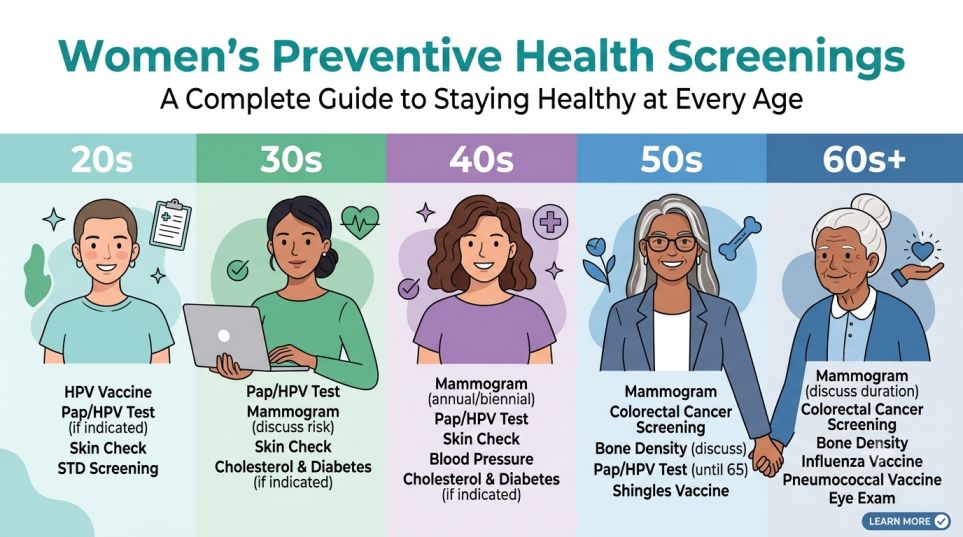
Women’s Preventive Health Screenings: A Complete Guide to Staying Healthy at Every Age
Preventive healthcare is one of the most important parts of maintaining long-term health. Rather than waiting until symptoms appear, regular health screenings can help identify potential concerns early, when they may be easier to manage. For women, preventive care can change throughout life because health needs are influenced by age, family history, lifestyle, reproductive history, and other individual risk factors.
Women’s health screenings may include routine physical examinations, blood pressure checks, cholesterol and diabetes assessments, cancer screenings, bone health evaluations, and discussions about mental and reproductive health. The exact schedule is not the same for everyone, so screening decisions should be made with a qualified healthcare professional.
This complete guide explains the importance of preventive health screenings for women and highlights the types of checkups that may become relevant at different stages of life.
Why Are Women’s Preventive Health Screenings Important?
Preventive health screenings are designed to identify health concerns before they become more serious. Some conditions may develop without noticeable symptoms, making regular checkups especially valuable.
A preventive appointment also gives women an opportunity to discuss changes in their health, lifestyle, nutrition, sleep, stress, medications, and family medical history. Healthcare professionals can use this information to determine which screenings may be appropriate.
Regular preventive care can help with:
- Detecting certain diseases at an earlier stage
- Monitoring important health measurements
- Identifying personal risk factors
- Keeping recommended vaccinations up to date
- Discussing mental and emotional wellbeing
- Monitoring reproductive and sexual health when relevant
- Supporting healthy lifestyle choices
- Creating an individualized long-term healthcare plan
Screening recommendations can vary between countries and healthcare organizations. Therefore, general age-based guidelines should be used as a starting point rather than a substitute for personalized medical advice.
Preventive Health in the Teen and Young Adult Years
Preventive healthcare begins well before middle age. During adolescence and early adulthood, healthcare visits can focus on overall development, mental wellbeing, nutrition, physical activity, sleep, vaccinations, and other age-appropriate concerns.
Blood pressure may be checked during routine healthcare visits, while healthcare professionals can also discuss factors that influence future heart health, including nutrition, physical activity, tobacco exposure, and family history.
Mental health is another important part of preventive healthcare. Feelings of persistent sadness, anxiety, stress, changes in sleep, or difficulties functioning at school or home deserve attention. A healthcare professional can provide appropriate support when needed.
For sexually active individuals, healthcare professionals may also recommend appropriate screening for sexually transmitted infections based on age and individual risk. The U.S. Preventive Services Task Force, for example, recommends screening for chlamydia and gonorrhea in certain sexually active young women and in older women who have increased risk.
Women’s Health Screenings in the 20s and 30s
During the 20s and 30s, preventive healthcare generally focuses on maintaining healthy habits, identifying risk factors, and completing age-appropriate screenings.
Cervical Cancer Screening
Cervical cancer screening is an important part of preventive care. Guidelines differ by country, but the USPSTF recommends cervical cancer screening for women aged 21 to 65.
For women aged 21 to 29, the USPSTF recommends cervical cytology alone every three years. For women aged 30 to 65, options include cytology every three years, high-risk HPV testing every five years, or combined HPV and cytology testing every five years.
These recommendations may differ for people with previous abnormal results, certain medical conditions, or other risk factors. A healthcare professional can determine the appropriate approach.
Blood Pressure and Heart Health
Heart health should not be ignored simply because cardiovascular disease is more commonly associated with older adults. Blood pressure checks are a simple but important part of routine healthcare.
Maintaining regular physical activity, eating a balanced diet, getting adequate sleep, avoiding tobacco, and managing stress can support cardiovascular health throughout adulthood.
Cholesterol and Diabetes Risk
Depending on age and individual risk factors, healthcare professionals may recommend blood tests to evaluate cholesterol levels or blood sugar. These assessments can help identify cardiovascular or metabolic risk before obvious symptoms develop.
The USPSTF recommends screening for prediabetes and type 2 diabetes in adults aged 35 to 70 who have overweight or obesity. Individual circumstances may lead a healthcare professional to recommend screening at a different time.
Preventive Care During the 40s
The 40s can be an important period for expanding preventive health discussions. Along with routine examinations and risk assessments, certain cancer screenings become particularly relevant.
Breast Cancer Screening
Breast cancer screening recommendations have changed over time, so women should discuss current guidance with their healthcare professional.
The USPSTF currently recommends mammography every two years for women aged 40 to 74 who are at average risk.
Women with a strong family history, genetic risk factors, previous breast problems, or other circumstances may need a different screening strategy. Personalized medical advice is especially important in these situations.
Colorectal Cancer Screening
Colorectal cancer screening is another important preventive service for adults. The USPSTF recommends screening beginning at age 45 for average-risk adults, with recommendations continuing through age 75. Different screening methods are available, and the appropriate option depends on individual circumstances and medical guidance.
Preventive Health Screenings in the 50s
During the 50s, preventive healthcare continues to focus on cancer detection, cardiovascular health, metabolic health, and overall wellbeing.
Continue Breast and Cervical Screening as Recommended
Women should continue following their individualized breast and cervical cancer screening schedules. Cervical screening recommendations generally extend through age 65 for appropriate individuals, although the need for continued screening can depend on previous screening history and other factors.
Monitor Heart and Metabolic Health
Blood pressure, cholesterol, blood sugar, and other cardiovascular risk factors may become increasingly important to monitor as women get older.
Healthcare professionals may also discuss weight changes, physical activity, nutrition, sleep, alcohol and tobacco exposure, and family history. These conversations can help identify opportunities to support long-term health.
Pay Attention to Menopause-Related Health
Menopause is a natural stage of life, but symptoms can affect sleep, mood, comfort, and daily activities. Women experiencing significant changes should discuss them with a healthcare professional.
Menopause also makes conversations about bone health increasingly relevant because changes in hormone levels can contribute to bone loss.
Women’s Preventive Health After 60
As women enter their 60s and beyond, preventive healthcare continues to evolve. Screening decisions increasingly consider overall health, previous screening results, family history, medications, mobility, and personal preferences.
Bone Health and Osteoporosis Screening
Osteoporosis can weaken bones and increase the risk of fractures. Bone health becomes especially important after menopause.
The USPSTF recommends osteoporosis screening for women aged 65 and older. It also recommends considering screening for postmenopausal women younger than 65 who have risk factors that indicate increased fracture risk. A DXA bone mineral density test may be used for screening.
Bone health is supported by adequate nutrition, appropriate physical activity, and other healthy lifestyle habits. A healthcare professional can provide individualized recommendations.
Vision and Hearing
Changes in vision and hearing can become more common with age. Regular discussions with healthcare professionals can help determine whether formal eye or hearing evaluations are appropriate.
Vision and hearing are important not only for communication but also for maintaining independence and everyday safety.
Mental Health Is Part of Preventive Healthcare
Preventive care is not limited to physical health. Mental and emotional wellbeing are equally important.
Stress, anxiety, depression, loneliness, sleep problems, and major life changes can affect overall quality of life. Talking with a healthcare professional about these concerns can be an important part of routine care.
The USPSTF recommends depression screening for adults, including pregnant and postpartum individuals and older adults.
Seeking support for mental health concerns is a normal part of healthcare and should not be viewed as a weakness.
Vaccinations and Preventive Care
Vaccinations are another important component of preventive healthcare. Recommended vaccines can vary according to age, medical history, occupation, travel, pregnancy status, and local health guidance.
During a routine appointment, women can ask whether their vaccinations are up to date. Healthcare professionals can review previous vaccination records and recommend appropriate vaccines.
Family History Can Change Your Screening Plan
Age-based recommendations are useful, but they do not tell the whole story.
A family history of certain cancers, heart disease, diabetes, osteoporosis, or other conditions may influence when and how frequently someone should be screened. Personal medical history can also affect recommendations.
For example, women with a strong family history of breast or ovarian cancer may need a more individualized risk assessment. Similarly, previous abnormal screening results can change future screening schedules.
Keeping an updated family health history can therefore be useful when speaking with healthcare professionals.
How to Prepare for a Preventive Health Appointment
A little preparation can make a routine appointment more useful.
Before visiting a healthcare professional, consider preparing:
- A list of current medications and supplements
- Previous screening results, if available
- Vaccination information
- Important family health history
- Questions about symptoms or health changes
- Information about previous diagnoses or procedures
- A list of concerns you want to discuss
It can also be helpful to write down questions beforehand so important topics are not forgotten during the appointment.
Common Mistakes to Avoid
One common mistake is waiting until symptoms become severe before seeking medical advice. Preventive healthcare is intended to identify certain risks before they become obvious problems.
Another mistake is assuming that a screening schedule applies equally to everyone. Recommendations can change according to personal risk, previous results, family history, and local guidelines.
Women should also avoid relying entirely on online information when making personal healthcare decisions. Reliable health organizations can provide general guidance, but an appropriately qualified healthcare professional is best placed to interpret an individual’s circumstances.
Building a Lifelong Preventive Health Routine
Preventive healthcare works best as an ongoing process rather than a single annual event.
A simple approach is to keep track of routine appointments, recommended screenings, vaccination updates, and questions for future visits. Digital reminders or a health notebook can make this easier.
The goal is not to undergo every possible test. Instead, the goal is to receive appropriate preventive care based on age, risk factors, health history, and current evidence.
Final Thoughts
Women’s preventive health screenings play an important role in supporting health throughout life. From routine blood pressure checks and mental health discussions to cervical, breast, colorectal, and bone health screening, preventive care changes as women move through different stages of life.
The most important point is that screening schedules are not one-size-fits-all. Age, family history, personal medical history, lifestyle, and previous test results can all influence healthcare decisions.
Making preventive care a regular part of life can help women stay informed about their health and identify potential concerns early. Rather than waiting for a health problem to become noticeable, regular conversations with qualified healthcare professionals can provide an opportunity to understand individual risks and make informed decisions.
Disclaimer: This article provides general educational information and is not a substitute for professional medical advice, diagnosis, or treatment. Screening recommendations can vary by country and individual circumstances. Always discuss personal screening needs with a qualified healthcare professional.