

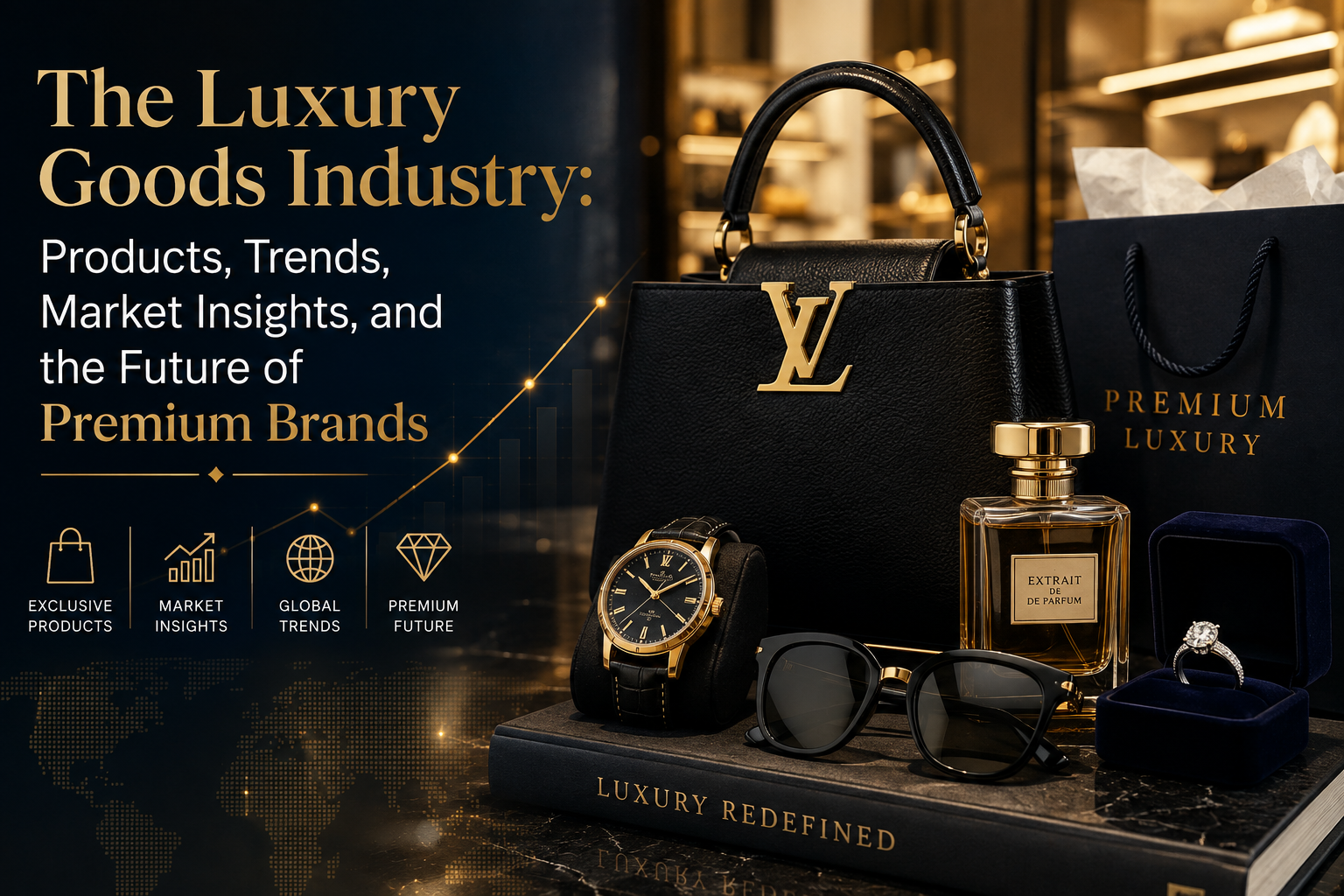
The Luxury Goods Industry: Products, Trends, Market Insights, and the Future of Premium Brands
The luxury goods industry represents one of the most distinctive and influential sectors in the global consumer market. From premium watches and fine jewelry to designer handbags, footwear, eyewear, and exclusive accessories, luxury products are created to offer more than basic functionality. They combine exceptional craftsmanship, heritage, exclusivity, design, and prestige to create a powerful emotional connection with consumers.
Luxury goods have traditionally been associated with status and wealth, but the modern luxury market is evolving. Today’s consumers increasingly look for authenticity, quality, personalization, sustainability, and memorable experiences alongside brand recognition. As a result, luxury brands are adapting their products and strategies to meet changing expectations while protecting the exclusivity that makes their products desirable.
This article explores the luxury goods industry, its major product categories, defining characteristics, emerging trends, consumer behavior, and future opportunities.
What Is the Luxury Goods Industry?
The luxury goods industry is a segment of the consumer market focused on premium products that are distinguished by superior materials, craftsmanship, design, brand heritage, exclusivity, and perceived value.
Unlike mass-market products, luxury goods are generally positioned at higher price points and are often produced with greater attention to detail. Their value can come from a combination of tangible qualities—such as precious metals, fine leather, gemstones, or mechanical movements—and intangible qualities, including brand reputation, heritage, rarity, and cultural significance.
Major luxury categories include:
- Premium watches and timepieces
- Fine jewelry and gemstones
- Designer handbags and leather goods
- Luxury footwear and fashion accessories
- Premium eyewear
- High-end beauty and fragrance products
- Luxury travel and lifestyle accessories
- Collectible and limited-edition products
The industry serves consumers who are willing to pay a premium for distinctive products, craftsmanship, exclusivity, and the experience associated with a luxury brand.
Major Product Categories in the Luxury Goods Market
The luxury market encompasses a wide range of products, with several categories playing a particularly important role.
1. Premium Watches
Luxury watches are among the most recognizable products in the premium goods market. High-end mechanical watches can involve complex engineering, precision craftsmanship, carefully selected materials, and extensive finishing.
Beyond telling time, a luxury watch can function as a statement of personal taste, achievement, heritage, and individuality. Limited editions and collectible models can also attract enthusiasts and collectors who appreciate rarity and craftsmanship.
The growing interest in watch collecting has helped make premium timepieces both lifestyle products and objects of cultural and financial interest.
2. Fine Jewelry
Fine jewelry is another major segment of the luxury goods industry. Products may include diamond rings, gemstone necklaces, bracelets, earrings, and other pieces crafted from precious metals.
The appeal of luxury jewelry comes from several factors, including material quality, design, craftsmanship, rarity, and emotional significance. Jewelry is frequently purchased to celebrate important events such as weddings, anniversaries, birthdays, and personal achievements.
Contemporary luxury jewelry brands are also increasingly emphasizing unique designs and personalization, allowing customers to purchase pieces that feel more individual and meaningful.
3. Designer Handbags and Leather Goods
Designer handbags have become an important part of modern luxury fashion. Premium handbags often combine distinctive designs with carefully selected leather, detailed construction, recognizable branding, and limited availability.
Luxury leather goods extend beyond handbags to include wallets, belts, travel bags, briefcases, and other accessories.
For many consumers, designer handbags offer a balance between functionality and self-expression. Their visual identity can make them immediately recognizable while their craftsmanship supports their premium positioning.
4. Luxury Accessories
Accessories provide another significant opportunity for luxury brands. This category includes sunglasses, scarves, belts, wallets, hats, watches, jewelry, and other fashion-related products.
Luxury accessories can serve as entry points for consumers who want to experience a premium brand without purchasing its highest-priced products. This makes accessories an important part of customer acquisition and brand-building strategies.
What Makes a Product Luxury?
Price alone does not make a product luxurious. A genuinely luxury product typically combines several characteristics that distinguish it from ordinary consumer goods.
Exceptional Craftsmanship
Craftsmanship is one of the foundations of luxury. High-quality products often require skilled artisans, specialized techniques, careful finishing, and considerable attention to detail.
This focus on craftsmanship helps create products that consumers perceive as distinctive and durable.
Premium Materials
Luxury products frequently use high-quality materials, including precious metals, gemstones, fine leather, specialized fabrics, and high-grade components.
Material selection can influence both performance and perception, helping reinforce a product’s premium positioning.
Brand Heritage
Heritage plays a powerful role in luxury branding. Brands with long histories can draw on traditions, iconic designs, craftsmanship techniques, and stories that have been developed over decades or generations.
This heritage gives consumers a sense of authenticity and continuity.
Exclusivity and Scarcity
Luxury depends heavily on exclusivity. Limited production, special collections, invitation-only experiences, and controlled distribution can make products feel more desirable.
Scarcity can create a perception of rarity, encouraging consumers to purchase products that may not remain available indefinitely.
Design and Identity
Luxury products are often designed to be visually distinctive. Signature shapes, patterns, colors, materials, and details can help consumers immediately recognize a brand.
Strong design identity allows luxury companies to differentiate themselves in an increasingly competitive global market.
The Role of Branding in the Luxury Goods Industry
Branding is particularly important in the luxury goods market because consumers are purchasing more than a physical product. They are often buying into a story, lifestyle, identity, and experience.
Luxury brands invest heavily in visual identity, advertising, fashion shows, celebrity partnerships, flagship stores, packaging, digital experiences, and storytelling.
Effective luxury branding creates a consistent perception across every customer touchpoint. From the design of a handbag to the appearance of a retail store, every detail contributes to the overall brand experience.
A strong luxury brand can therefore maintain customer loyalty even when competitors offer similar materials or functionality.
Changing Consumer Behavior in the Luxury Market
The modern luxury consumer is becoming more informed and selective. Digital platforms have made it easier for shoppers to research products, compare collections, follow fashion trends, and learn about brand histories before making a purchase.
Younger consumers are also becoming increasingly influential in the luxury market. Many place greater importance on individuality, authenticity, sustainability, and social responsibility.
Instead of purchasing a product simply because it carries a famous logo, consumers may want to understand how it was made, where its materials came from, and what the brand represents.
This shift is encouraging luxury companies to communicate their values more clearly and build stronger relationships with customers.
Key Trends Shaping the Luxury Goods Industry
Several trends are influencing the future of the luxury products market.
Digital Transformation
Digital technology has changed how consumers discover and interact with luxury brands. E-commerce platforms, social media, mobile experiences, virtual events, and digital marketing allow luxury companies to reach international audiences more efficiently.
At the same time, luxury brands must carefully balance accessibility with exclusivity. A strong digital presence should reinforce the brand’s premium image rather than make it feel overly mass-market.
Personalization
Personalization is becoming increasingly important. Consumers want products and experiences that reflect their individual preferences.
Luxury brands are responding with monogramming, customized designs, bespoke services, personalized recommendations, and exclusive customer experiences.
Sustainability
Sustainability is becoming a major consideration across the luxury industry. Consumers are increasingly interested in responsible sourcing, durable products, ethical production, recycling, and transparency.
Luxury companies have an opportunity to connect sustainability with craftsmanship by emphasizing products designed for long-term use rather than short-term consumption.
Resale and Circular Luxury
The luxury resale market is gaining attention as consumers look for ways to purchase authenticated pre-owned products and extend the life cycle of premium goods.
Luxury watches, handbags, jewelry, and accessories can have strong demand in secondary markets, particularly when products are rare, well-maintained, or associated with recognizable collections.
This trend is also contributing to the broader idea of a circular luxury economy.
Experiential Luxury
Modern luxury increasingly extends beyond physical products. Consumers may value exclusive travel, dining, hospitality, events, private shopping, and personalized services.
As a result, luxury brands are creating experiences designed to deepen customer relationships and strengthen brand loyalty.
The Importance of Customer Experience
Customer experience is one of the most important competitive advantages in the luxury goods industry.
Luxury shoppers often expect personalized service, knowledgeable staff, elegant environments, premium packaging, convenient communication, and after-sales support.
A high-quality experience can transform a single transaction into a long-term relationship.
After-sales services are particularly important for products such as watches and jewelry. Maintenance, repairs, authentication, customization, and product care can increase customer confidence and reinforce perceptions of quality.
Challenges Facing the Luxury Goods Industry
Despite its opportunities, the luxury sector faces several challenges.
Counterfeit products remain a significant concern because they can damage brand reputation and create confusion among consumers. Luxury companies therefore continue to invest in authentication, supply-chain controls, product identification technologies, and customer education.
Economic uncertainty can also affect luxury spending. While affluent consumers may be less sensitive to economic fluctuations than mass-market shoppers, prolonged economic pressure can influence purchasing decisions.
Another challenge is maintaining exclusivity while expanding into new markets and digital channels. Luxury brands must grow their businesses without weakening the scarcity and prestige associated with their products.
The Future of the Luxury Goods Industry
The future of the luxury goods industry is likely to be shaped by a combination of technology, craftsmanship, personalization, sustainability, and evolving consumer expectations.
Artificial intelligence and advanced digital tools may help brands provide more personalized shopping experiences, improve customer service, analyze consumer preferences, and support product development.
At the same time, traditional craftsmanship will remain central to luxury. Technology may enhance production and customer engagement, but the human skill and heritage behind a premium product will continue to be important sources of value.
Luxury brands that successfully combine tradition with innovation will be well positioned to attract the next generation of consumers.
Why the Luxury Goods Industry Continues to Attract Consumers
The enduring appeal of luxury products comes from their ability to combine functional and emotional value. A premium watch is not simply a timekeeping device. A designer handbag is more than a way to carry personal belongings. Fine jewelry can represent personal milestones, relationships, heritage, or achievement.
These products can become part of a person’s identity and memories.
This emotional dimension helps explain why consumers continue to invest in luxury products despite the availability of lower-cost alternatives. The appeal lies in craftsmanship, design, exclusivity, heritage, recognition, and the personal meaning attached to ownership.
Conclusion
The luxury goods industry is a dynamic global sector built around craftsmanship, exclusivity, design, heritage, and premium customer experiences. Its key categories—including watches, jewelry, handbags, leather goods, and accessories—continue to attract consumers who value quality and individuality.
However, the definition of luxury is changing. Today’s consumers increasingly expect brands to offer personalization, responsible practices, digital convenience, authenticity, and meaningful experiences alongside exceptional products.
For luxury brands, the challenge is to embrace innovation without losing the qualities that make luxury distinctive. Companies that successfully balance heritage with modern technology, exclusivity with accessibility, and craftsmanship with sustainability can build stronger relationships with consumers and remain competitive in the evolving premium market.
As consumer preferences continue to change, the luxury goods industry will remain an important part of global fashion, retail, and lifestyle culture—proving that true luxury is ultimately about far more than price. It is about quality, identity, craftsmanship, experience, and lasting value.