

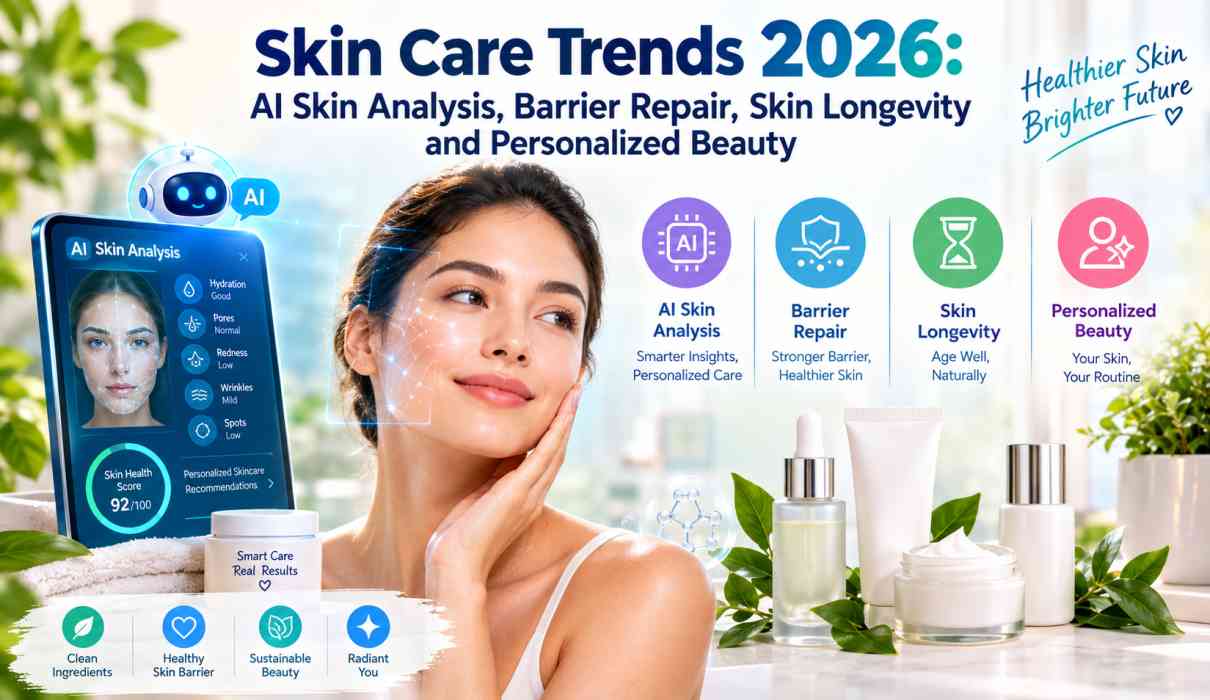
Skin Care Trends 2026: AI Skin Analysis, Barrier Repair, Skin Longevity and Personalized Beauty
The skincare industry is entering a more intelligent and science-focused era in 2026. Instead of simply following viral ingredients or complicated beauty routines, consumers are increasingly interested in long-term skin health, personalized solutions, stronger skin barriers, preventive care and evidence-based formulations. Technology is also becoming an important part of modern beauty, with AI-powered skin analysis and digital consultations helping people understand their individual skincare needs.
One of the biggest changes is the shift from quick fixes toward skin longevity. The goal is increasingly to maintain healthy, resilient and functional skin over time rather than simply trying to reverse visible signs of aging. Industry coverage in 2026 highlights longevity, cellular health and personalized, data-driven skincare as major developments shaping the category.
At the same time, skin barrier repair has become a central part of everyday skincare. Gentle cleansing, moisturization, sun protection and carefully selected active ingredients are replacing unnecessarily aggressive routines for many consumers. Together, these developments are creating a new approach to beauty: smarter, simpler, more personalized and focused on sustainable skin health.
1. AI Skin Analysis Is Transforming Personalized Skincare
Artificial intelligence is becoming one of the most interesting technologies in modern skincare. AI-powered tools can analyze photographs or other skin data to identify visible concerns such as pigmentation, uneven tone, wrinkles, pores, redness and texture.
Instead of recommending the same routine to everyone, AI-supported systems can help create more individualized skincare suggestions. Some platforms combine facial imaging, questionnaires and consumer information to produce recommendations based on specific concerns and goals.
The broader beauty-tech industry is moving toward predictive and data-driven personalization, with AI diagnostics and biotechnology increasingly influencing how products and services are developed.
AI skin analysis does not replace professional dermatological diagnosis, but it can be useful as a starting point for understanding skincare needs. Consumers should still consult qualified healthcare professionals when they have persistent, painful, rapidly changing or medically concerning skin conditions.
2. Skin Barrier Repair Becomes a Skincare Priority
The skin barrier is one of the most important foundations of healthy-looking skin. It helps maintain moisture and provides protection against external irritants and environmental stress.
When the barrier becomes compromised, people may experience dryness, tightness, redness, sensitivity, flaking or increased irritation. This is why barrier-focused skincare has become such a major theme in 2026.
Current skincare coverage points toward more sophisticated barrier-repair products featuring ingredients such as ceramides, lipids, niacinamide, glycerin, panthenol and other soothing or moisturizing components.
The trend is also encouraging consumers to simplify their routines. Using numerous exfoliating acids, strong actives and frequent treatments simultaneously can increase irritation for some people. A balanced routine that protects the skin barrier can provide a stronger foundation for other skincare products.
3. Skin Longevity Is Replacing the Traditional Anti-Aging Mindset
One of the defining skincare trends of 2026 is skin longevity.
Traditional anti-aging skincare often focused on reducing the appearance of wrinkles, pigmentation and other visible signs. Skin longevity takes a broader approach by emphasizing the preservation of skin health, resilience and function over time.
The concept is increasingly connected with preventive skincare, cellular health, barrier protection, collagen support and consistent sun protection. Industry reports describe this as a movement toward maintaining healthy skin rather than relying primarily on corrective treatments later.
This does not mean traditional anti-aging ingredients are disappearing. Instead, established ingredients such as retinoids, vitamin C, peptides and antioxidants are being incorporated into more sophisticated formulations and delivery systems. Allure’s 2026 trend coverage similarly highlights the combination of established ingredients with newer formulation technologies.
4. Personalized Beauty Is Becoming More Important
The idea that one skincare routine works for everyone is becoming increasingly outdated.
Skin type, age, climate, lifestyle, sensitivity, pigmentation, environmental exposure and personal goals can all influence skincare requirements. Personalized beauty attempts to account for these differences.
In 2026, personalization can involve AI skin analysis, online consultations, customized product combinations, diagnostic imaging and professional treatment plans. British Vogue’s 2026 skincare coverage identifies diagnostic-driven personalization as an important direction for both at-home and clinical skincare.
Personalization is also becoming more practical. Rather than buying an entire collection of products, consumers can increasingly focus on a smaller number of products designed around specific needs.
5. Science-Backed Ingredients Continue to Lead
Another major trend in skincare is a renewed interest in scientific evidence.
Consumers are becoming more knowledgeable about ingredients and increasingly want to understand what a product actually does. This is encouraging brands to focus on clinically studied ingredients, formulation quality and transparent product claims.
Retinoids, vitamin C, peptides, niacinamide, ceramides, antioxidants and sunscreen remain important parts of modern skincare. Newer ingredients and technologies are also receiving attention, including ectoin, PDRN, exosomes, growth-factor-related technologies and advanced delivery systems. However, evidence and regulatory status can vary significantly between ingredients and products, so consumers should avoid assuming that a trending ingredient automatically has proven benefits.
The broader 2026 industry direction emphasizes biology, delivery technology and longevity rather than simply introducing a new ingredient for marketing purposes.
6. Gentle Skincare Is Replacing Overly Aggressive Routines
More products do not necessarily mean better skincare.
In recent years, consumers have often experimented with strong exfoliants, multiple acids, retinoids and numerous active ingredients. In 2026, the trend is moving toward more balanced routines that prioritize skin comfort and barrier health.
This means gentle cleansers, effective moisturizers, appropriate active ingredients and daily sun protection can become the foundation of a routine. Current trend reports describe a move away from aggressive approaches and toward streamlined skincare focused on maintaining long-term skin health.
For many people, consistency may be more practical than constantly changing products. A simple routine that can be followed regularly is often easier to maintain than an elaborate regimen with numerous steps.
7. Sunscreen Remains Essential for Long-Term Skin Health
Sun protection continues to be one of the most important areas of skincare.
Modern sunscreen products are increasingly designed to fit comfortably into everyday routines. Tinted formulas, lightweight textures, serum-like products and formulas combining sunscreen with moisturizing or antioxidant ingredients are expanding consumer choices.
In 2026, skincare coverage also points to increasing consumer interest in year-round SPF rather than treating sunscreen as something used only during vacations or summer.
For a skin-longevity approach, sun protection is especially important because ultraviolet exposure contributes to premature photoaging and other forms of skin damage. Choosing an appropriate broad-spectrum sunscreen and using it consistently can therefore be an important part of a long-term skincare strategy.
8. Regenerative and Professional Skincare Treatments Are Growing
The boundary between skincare and aesthetic treatments is becoming increasingly connected.
Professional treatments such as LED therapy, microneedling, radiofrequency procedures and collagen-stimulating treatments continue to attract interest among consumers seeking gradual improvements in skin quality.
Biostimulators and other regenerative approaches are also receiving attention because they are associated with the broader shift toward natural-looking, long-term results. Vogue’s 2026 reporting identifies regenerative treatments and collagen stimulation as important parts of the skin-longevity conversation.
However, professional procedures should be evaluated carefully. Treatments can have risks, contraindications and different levels of evidence, so consultation with a qualified dermatologist or appropriately trained medical professional is important.
9. Peptides and Advanced Formulations Continue to Expand
Peptides have become an increasingly visible part of modern skincare.
These ingredients are being incorporated into serums, moisturizers, eye products and other formulations aimed at supporting the appearance and condition of the skin. In 2026, peptides are also being combined with advanced delivery systems and other active ingredients.
The broader trend is not simply about adding more ingredients. Formulation technology is becoming increasingly important because the effectiveness and tolerability of a skincare product depend on how ingredients are delivered and formulated.
This is part of a larger shift toward products designed to be both effective and gentle, particularly for consumers who want long-term routines rather than short-lived cosmetic effects.
10. Skincare and Wellness Are Becoming More Connected
Modern skincare is increasingly being viewed as part of overall wellness.
Sleep, nutrition, stress, physical activity, environmental exposure and lifestyle habits can all influence how skin looks and feels. This has encouraged beauty brands and consumers to think beyond topical products.
The growing popularity of skin longevity reflects this broader change. Instead of separating beauty from wellness, consumers are increasingly interested in approaches that connect everyday habits with long-term skin health.
This does not mean skincare products can replace healthy lifestyle habits or medical care. Rather, skincare is becoming one component of a wider personal wellness routine.
11. Sustainable and Smarter Beauty Products
Sustainability remains relevant to the future of skincare.
Consumers are paying greater attention to packaging, ingredient sourcing, product waste and refill systems. Brands are exploring concentrated formulas, recyclable packaging, refillable containers and more efficient product designs.
At the same time, personalization could potentially reduce unnecessary product purchases. Instead of buying numerous products based on generalized beauty trends, consumers may increasingly select products according to their specific concerns.
The result could be a skincare market that focuses more on quality, functionality and long-term value rather than simply increasing the number of products in a bathroom cabinet.
12. What Will Skincare Look Like in the Future?
The future of skincare is likely to combine technology with fundamental dermatological principles.
AI may help consumers analyze visible skin characteristics and receive personalized recommendations. Digital consultations may make professional advice more accessible. Advanced formulations may improve ingredient delivery, while diagnostic tools may provide increasingly detailed information about skin condition.
At the same time, the fundamentals are unlikely to disappear: gentle cleansing, moisturization, appropriate active ingredients, healthy lifestyle habits and sun protection will continue to form the foundation of effective skincare.
The most important change may therefore be a move toward precision rather than excess. Instead of constantly searching for the next viral product, consumers can focus on understanding their skin and selecting evidence-based products that fit their needs.
How to Build a Modern Skincare Routine in 2026
A practical 2026 skincare routine does not need to be complicated. A basic approach can include:
- Gentle cleansing: Remove dirt, excess oil and makeup without unnecessarily irritating the skin.
- Targeted treatment: Select evidence-based active ingredients according to individual concerns.
- Moisturization: Support hydration and the skin barrier with an appropriate moisturizer.
- Daily sun protection: Use suitable broad-spectrum sunscreen consistently.
- Personalization: Adjust products according to skin type, sensitivity, climate and goals.
- Professional advice: Seek dermatological guidance for persistent or medically significant concerns.
- Consistency: Give a suitable routine enough time to assess its effects rather than changing products constantly.
Conclusion
Skin Care Trends 2026 are moving the beauty industry toward a more personalized, science-focused and health-conscious future. AI skin analysis is helping introduce data-driven personalization, while barrier repair is reminding consumers that healthy skin begins with a strong foundation.
At the same time, skin longevity is changing how people think about aging. Instead of focusing exclusively on correcting visible signs, the modern approach emphasizes prevention, resilience, hydration, collagen support, sun protection and long-term skin health.
Personalized beauty, advanced formulations, peptides, professional treatments, sustainable products and wellness-focused skincare are also shaping the industry. Yet the central lesson remains relatively simple: effective skincare does not have to be complicated.
The future of beauty is likely to be less about chasing every new trend and more about understanding individual skin needs, choosing evidence-based solutions and building consistent habits. In 2026 and beyond, the most meaningful skincare innovations may be those that combine AI technology, dermatological science, barrier protection and personalized care to support healthier-looking skin for the long term.