

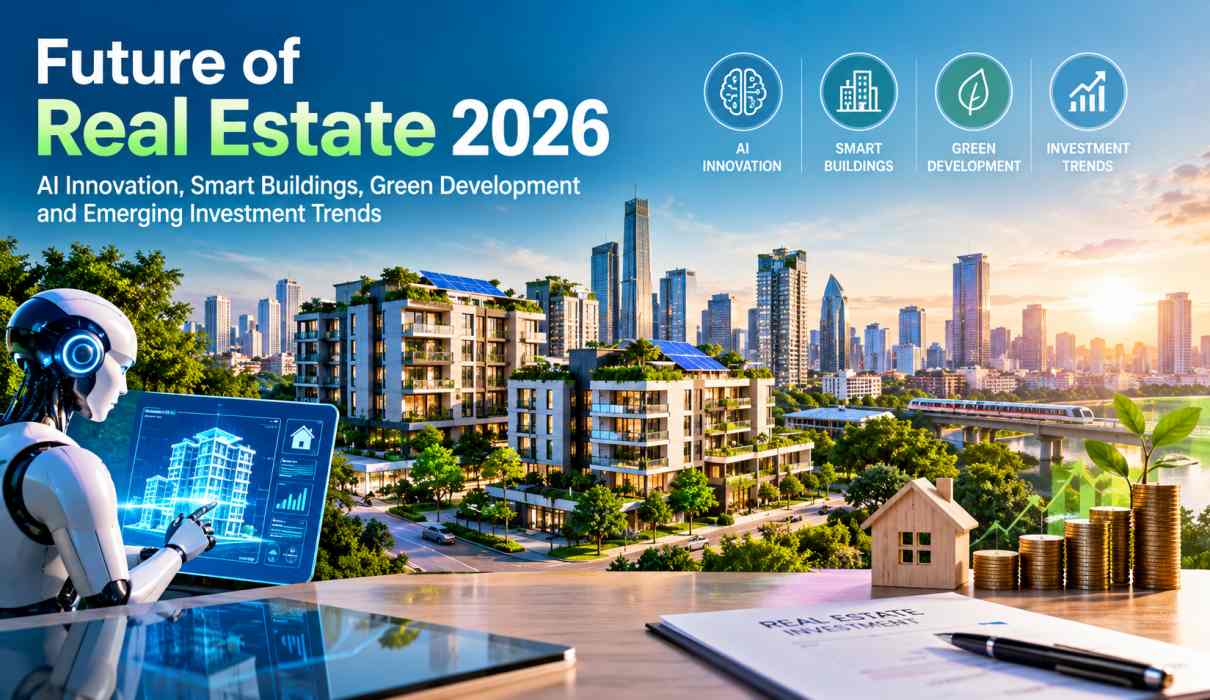
Future of Real Estate 2026: AI Innovation, Smart Buildings, Green Development and Emerging Investment Trends
The future of real estate in 2026 is being shaped by rapid technological innovation, changing consumer expectations, sustainability goals, and evolving investment strategies. Property markets around the world are moving beyond traditional ideas of location, construction and ownership. Today, technology, energy efficiency, digital services and data-driven decision-making are becoming important parts of modern real estate.
Artificial intelligence (AI), Internet of Things (IoT) devices, smart building systems, sustainable construction and flexible property models are transforming how residential and commercial spaces are designed, developed, managed and marketed. At the same time, investors are paying closer attention to emerging cities, infrastructure development, rental demand, green assets and properties that can adapt to future needs.
For buyers, developers, landlords and investors, understanding these real estate trends in 2026 can provide valuable insight into how the property industry is changing. From AI-powered property management to energy-efficient buildings, the sector is becoming increasingly connected, intelligent and sustainability-focused.
AI Innovation Is Transforming Real Estate
Artificial intelligence is one of the most important technologies influencing the future of real estate in 2026. AI can process large amounts of property, financial, demographic and market data much faster than traditional methods, helping businesses make more informed decisions.
Real estate companies are increasingly using AI for property searches, customer service, market analysis, lead generation, pricing analysis and property management. AI-powered platforms can analyze historical transactions, rental trends, neighborhood characteristics and other datasets to identify patterns that may be difficult to detect manually.
For property buyers, AI can make property discovery more personalized. Digital platforms can recommend homes or commercial properties based on location preferences, budgets, amenities and lifestyle requirements. Virtual assistants can also answer common questions and help prospective buyers navigate property listings.
AI is also becoming useful for developers. Data-driven systems can help analyze potential locations, estimate demand and support decisions about building design and development. As AI tools become more sophisticated, their role in real estate is likely to expand across the property lifecycle.
Smart Buildings Are Becoming the New Standard
Smart buildings are another major part of the real estate trends 2026 landscape. These buildings use connected technologies to monitor and manage systems such as lighting, heating, cooling, security, elevators and energy consumption.
IoT sensors can collect real-time information about occupancy, temperature, air quality, equipment performance and energy usage. Building management systems can then use this information to improve operational efficiency.
For commercial properties, smart technology can improve the workplace experience. Occupancy sensors can help organizations understand how different areas of a building are being used, while automated lighting and climate controls can adjust conditions according to occupancy.
In residential properties, smart home features are becoming increasingly common. Connected security systems, smart lighting, automated climate controls, digital locks and energy-monitoring systems can provide convenience and greater control for homeowners.
The growth of smart buildings also creates opportunities for property owners. Better monitoring and automation can potentially reduce unnecessary energy consumption, improve maintenance planning and extend the useful life of building equipment.
Green Development Is Reshaping Construction
Sustainability has become a central theme in the future of real estate. Developers, governments, investors and consumers are increasingly focused on reducing the environmental impact of buildings.
Green development can include energy-efficient designs, renewable energy systems, water-saving technologies, sustainable construction materials, waste reduction and improved indoor environmental quality.
Solar power is becoming particularly relevant for properties seeking to reduce dependence on conventional electricity. Rooftop solar installations, energy-efficient appliances, battery storage and smart energy-management systems can contribute to more efficient buildings.
Water management is another important area. Rainwater harvesting, efficient plumbing systems, wastewater treatment and landscaping designed to reduce water consumption can help properties use resources more responsibly.
Sustainable construction is also influencing material selection. Developers are exploring materials with lower environmental impacts, recycled components and construction approaches designed to reduce waste.
Green buildings can offer benefits beyond environmental performance. Energy-efficient properties may have lower operating costs, while comfortable indoor environments can improve the experience of residents and workers.
Energy Efficiency Will Influence Property Value
Energy performance is becoming an increasingly important consideration when evaluating real estate. Buildings that consume large amounts of energy may face higher operating costs, while efficient properties can potentially provide long-term savings.
In 2026, buyers and investors may increasingly examine factors such as energy consumption, insulation, renewable-energy capacity, building automation and efficiency certifications when assessing properties.
This trend is particularly important for commercial real estate. Office buildings, shopping centers, hotels and industrial properties can have significant energy requirements. Improving energy efficiency can therefore become an important part of asset management.
For developers, incorporating efficiency during the design stage can be more effective than making major improvements after construction. This is encouraging the development of buildings designed around passive cooling, natural lighting, efficient ventilation and intelligent energy management.
Flexible Workspaces Are Changing Commercial Real Estate
The way people work continues to influence commercial property demand. Flexible and hybrid working models have encouraged businesses to reconsider how much traditional office space they need and how that space should be designed.
Modern offices are increasingly being developed as flexible environments rather than rows of permanent desks. Collaboration areas, meeting rooms, shared facilities, technology-enabled workspaces and employee amenities are becoming important features.
Flexible workspace providers are also expanding options for businesses that require shorter commitments or adaptable office arrangements. Startups, freelancers, remote teams and larger companies may all benefit from flexible workspace models.
This transformation does not necessarily mean that physical offices are becoming irrelevant. Instead, it is changing the purpose of the workplace. Offices are increasingly expected to support collaboration, innovation, company culture and employee interaction.
As a result, commercial properties that can adapt to changing workplace requirements may remain relevant in an evolving market.
Residential Real Estate Is Becoming More Technology-Driven
Technology is also changing residential property. Modern homebuyers increasingly look beyond traditional features such as size and location and may consider connectivity, security, energy efficiency and smart-home capabilities.
Smart locks, video doorbells, connected security cameras, automated lighting and smart appliances can create more connected living environments.
Homeowners can also use technology to monitor electricity and water consumption. Smart meters and energy-management platforms can provide information that helps households identify inefficient usage.
Another emerging trend is technology-enabled property management. Digital portals can allow residents to pay rent, submit maintenance requests, communicate with property managers and access building services.
These developments are contributing to a more convenient and digitally connected residential real estate experience.
Emerging Cities Could Create New Opportunities
Real estate investment has historically focused heavily on established metropolitan markets. However, infrastructure development, employment growth and urban expansion can create opportunities in emerging cities and developing urban corridors.
New highways, rail networks, airports, business districts and industrial projects can influence property demand by improving connectivity and encouraging economic activity.
For investors, emerging markets can provide opportunities across residential, commercial, logistics and mixed-use real estate. However, growth potential should always be considered alongside factors such as infrastructure quality, employment conditions, local regulations, supply levels and long-term demand.
The development of new business hubs can also create demand for housing, offices, retail spaces and supporting services. This makes infrastructure planning an important factor in understanding the future of regional property markets.
Real Estate Investment Is Becoming More Data-Driven
Data is playing a growing role in property investment decisions. Investors can use market information to study rental yields, vacancy levels, transaction activity, demographic changes, infrastructure projects and economic conditions.
AI and analytics platforms can help organize and interpret large datasets, making it easier to compare properties and markets.
Technology can also support property portfolio management. Investors with multiple assets can monitor rental income, operating expenses, maintenance requirements and occupancy through digital platforms.
However, technology does not eliminate investment risk. Property markets remain influenced by interest rates, economic cycles, regulations, construction costs, employment and local demand. Data should therefore complement, rather than replace, careful research and professional advice.
REITs and Alternative Real Estate Investments
The real estate investment landscape is also becoming more diverse. Real Estate Investment Trusts, or REITs, allow investors to gain exposure to income-producing real estate without directly purchasing an entire property.
REITs can provide exposure to sectors such as offices, retail, logistics facilities, warehouses, data centers and residential properties, depending on the market and structure.
Meanwhile, alternative real estate sectors are receiving greater attention. Data centers, logistics facilities, senior living communities, student housing and specialized industrial properties can benefit from structural changes in technology and demographics.
The expansion of e-commerce and digital services, for example, has increased interest in logistics infrastructure and data-related real estate. These specialized sectors demonstrate how technological and economic trends can influence property demand.
PropTech Is Modernizing Property Management
Property technology, commonly called PropTech, is changing how real estate companies operate. Digital platforms can streamline property listings, customer communication, leasing, payments, maintenance and reporting.
Virtual tours can allow prospective buyers or tenants to explore properties remotely. Digital contracts can simplify administrative processes, while automated communication tools can improve customer support.
Property managers can use software to track maintenance requests, monitor building systems and manage financial information.
Blockchain technology has also attracted attention in real estate because of its potential applications in digital records and transactions. While adoption varies by market, the broader movement toward digital property services is likely to continue.
Climate Resilience Is Becoming More Important
Climate-related risks are influencing real estate planning and development. Flooding, extreme heat, water shortages and severe weather can affect buildings, infrastructure and property values.
As a result, climate resilience is becoming part of modern property planning. Developers may consider drainage systems, flood-resistant designs, heat-reduction strategies, efficient water management and resilient infrastructure.
Urban planning is also changing. Green spaces, tree cover, shaded public areas and sustainable transportation can contribute to more comfortable and resilient communities.
For investors, understanding environmental risks may become increasingly important when evaluating long-term property performance.
The Future of Real Estate Will Focus on Adaptability
One of the defining characteristics of the future of real estate in 2026 is adaptability. Buildings and communities need to respond to changing technologies, demographics, work patterns, environmental conditions and consumer expectations.
A successful modern property may need to serve multiple purposes throughout its lifecycle. Office buildings may incorporate flexible layouts. Residential developments may include coworking spaces and digital services. Retail properties may combine shopping, entertainment, dining and community experiences.
Adaptable design can help buildings remain useful as market conditions change. This can be particularly valuable for long-term investors and developers.
What Buyers and Investors Should Watch in 2026
People evaluating real estate opportunities in 2026 can consider several important factors:
- Location and connectivity: Access to transportation, employment centers and essential services remains fundamental.
- Technology: Smart-home and smart-building capabilities can influence usability and operating efficiency.
- Sustainability: Energy and water efficiency may become increasingly important for long-term costs and demand.
- Market fundamentals: Employment, population growth, rental demand and property supply should be examined carefully.
- Infrastructure: New transport and commercial developments can influence future property demand.
- Flexibility: Buildings that can adapt to changing uses may have greater long-term relevance.
- Operating costs: Maintenance, energy and service expenses can affect the economics of a property.
- Regulations: Local planning, taxation and property regulations can significantly affect investment outcomes.
Rather than focusing on a single trend, buyers and investors can evaluate how several factors work together.
Conclusion
The future of real estate in 2026 is being shaped by AI innovation, smart buildings, green development, flexible spaces, digital services and evolving investment strategies. Technology is changing how properties are designed and managed, while sustainability is becoming increasingly important in construction and asset management.
AI can support data-driven decisions, smart buildings can improve operational management, and green development can help address energy and environmental challenges. At the same time, emerging cities, specialized property sectors, flexible workspaces and digital investment platforms are creating new areas of interest across the real estate industry.
The property market will continue to vary from one region to another, and no single technology or investment trend will determine the future of every property. Nevertheless, real estate is clearly moving toward a more connected, efficient, sustainable and adaptable model.
For developers, property owners, buyers and investors, understanding these real estate trends in 2026 can help them evaluate how properties may perform in a rapidly changing environment. The strongest long-term opportunities will increasingly depend not only on where a property is located, but also on how efficiently, intelligently and sustainably it can serve the needs of the future.