

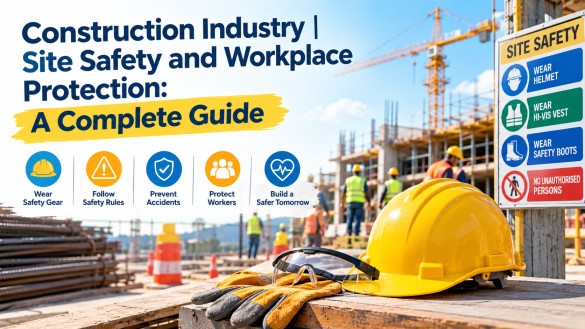
Construction Industry | Site Safety and Workplace Protection: A Complete Guide
The construction industry plays an essential role in modern society. From residential buildings and commercial properties to roads, bridges, industrial facilities, and large infrastructure projects, construction workers help create the spaces and systems communities depend on every day. However, construction sites can also involve significant workplace hazards, making site safety and workplace protection essential priorities for contractors, employers, supervisors, and workers.
Construction activities often involve heavy machinery, elevated work areas, electrical systems, moving vehicles, power tools, temporary structures, hazardous materials, and constantly changing working conditions. Without appropriate safety procedures, even routine tasks can result in serious injuries or property damage.
A strong construction safety program is therefore more than a collection of rules. It is a workplace culture in which everyone understands hazards, follows established procedures, communicates effectively, and takes responsibility for maintaining a safe environment.
This guide explores important construction site safety practices, common workplace hazards, personal protective equipment, worker training, emergency preparedness, and strategies for creating safer construction sites.
Why Construction Site Safety Matters
Construction site safety protects workers while also supporting productivity, project quality, and business continuity.
Workplace accidents can lead to injuries, equipment damage, project delays, legal consequences, increased insurance costs, and reduced employee morale. Preventing accidents is generally more effective than responding to their consequences.
A well-organized construction safety program identifies potential hazards before work begins and establishes practical methods for controlling them.
Safety should be considered during project planning rather than introduced only after construction starts. Project managers and contractors can evaluate site conditions, equipment requirements, work schedules, worker qualifications, and potential hazards before assigning tasks.
When safety becomes part of the planning process, workers are more likely to understand that protecting people is a fundamental part of completing the project successfully.
Common Hazards in the Construction Industry
Construction sites can contain many different hazards. Some risks are obvious, while others may develop as work progresses.
Falls From Heights
Falls are among the most serious construction hazards. Workers may be exposed to elevated surfaces, ladders, scaffolding, roofs, platforms, and temporary structures.
Employers should evaluate elevated work areas and implement appropriate fall-prevention or fall-protection measures according to applicable safety requirements.
Guardrails, properly installed scaffolding, suitable platforms, fall-restraint systems, and personal fall-protection equipment may be used depending on the task and local regulations.
Workers should also be trained to recognize fall hazards and inspect relevant equipment before use.
Struck-By Hazards
Workers can be injured by falling objects, moving equipment, vehicles, swinging loads, or construction materials.
Good site organization can reduce these risks. Designated pedestrian routes, equipment exclusion zones, warning signs, communication procedures, and appropriate protective equipment can help separate workers from dangerous operations.
Tools and materials used at elevated locations should also be secured appropriately to reduce the possibility of objects falling onto people below.
Electrical Hazards
Electrical systems are another major area of concern on construction sites.
Temporary power supplies, exposed conductors, damaged cables, electrical tools, and improperly installed equipment can create risks of electric shock, burns, fires, or other injuries.
Only qualified personnel should perform electrical work where required by local regulations. Electrical equipment should be inspected and maintained, and workers should understand the hazards associated with energized systems.
Before work begins, teams should identify electrical sources and establish appropriate controls.
Heavy Machinery and Equipment
Construction projects frequently use excavators, cranes, loaders, forklifts, concrete equipment, cutting tools, and other machinery.
Improper operation or inadequate communication around heavy equipment can create serious risks.
Equipment operators should have appropriate training and authorization. Workers on foot should remain aware of equipment movement and use designated routes where available.
Where visibility is limited, communication systems or trained spotters may be necessary.
Routine equipment inspections can also help identify mechanical problems before they become safety issues.
Personal Protective Equipment
Personal protective equipment, commonly known as PPE, is an important component of construction workplace protection.
Depending on the task and hazards present, PPE may include hard hats, safety footwear, eye protection, hearing protection, gloves, high-visibility clothing, respiratory protection, and fall-protection equipment.
PPE should not be considered a replacement for eliminating or controlling hazards. It is one part of a broader safety strategy.
Workers should receive appropriate instruction on how to select, wear, inspect, maintain, and store their PPE.
Damaged or unsuitable equipment should be removed from service and replaced according to applicable requirements.
Construction Worker Training
Training is one of the most effective ways to improve construction safety.
Workers should understand the hazards associated with their tasks and know how to use equipment safely. Training should be appropriate to the worker’s responsibilities, experience, language needs, and the specific conditions of the project.
Important topics may include:
- Hazard identification
- Safe equipment operation
- Fall protection
- Electrical safety
- PPE use
- Material handling
- Emergency procedures
- Fire prevention
- Hazardous materials
- Site communication
- Housekeeping and access routes
Training should not be limited to new employees. Refresher training can be valuable when work conditions change, new equipment is introduced, or safety concerns are identified.
Conducting a Construction Site Risk Assessment
Risk assessment allows project teams to identify potential hazards before workers are exposed to them.
A basic assessment can begin by examining each stage of the project and asking several questions.
What could go wrong? Who could be affected? How serious could the outcome be? What controls can reduce the likelihood or severity of the hazard?
For example, if workers need to operate near moving vehicles, the project team could establish designated pedestrian paths, traffic controls, barriers, communication procedures, and appropriate visibility measures.
Risk assessments should be reviewed regularly because construction sites change continuously. A safe arrangement during one phase of a project may not remain suitable during another.
The Importance of Good Housekeeping
Housekeeping is sometimes overlooked because it appears simple, but it can have a significant effect on construction safety.
Loose materials, debris, tools, cables, spills, and poorly organized storage areas can create trip, slip, fire, and access hazards.
Workers should keep work areas organized and remove unnecessary materials when practical.
Walkways, emergency exits, fire equipment, and access routes should remain clear.
Good housekeeping also makes it easier for workers to identify hazards and move safely around the site.
Safe Material Handling
Construction materials can be heavy, awkward, sharp, unstable, or difficult to move.
Improper lifting techniques can contribute to strains and other injuries. Teams should assess material-handling tasks and consider mechanical assistance where appropriate.
Materials should be stored securely and in a way that reduces the possibility of collapse or falling objects.
Workers should understand safe lifting techniques and know when to request assistance.
Planning material deliveries can also reduce congestion and prevent unnecessary movement across busy work areas.
Scaffolding and Ladder Safety
Scaffolds and ladders are frequently used for access and elevated work.
They should be suitable for their intended purpose and used according to applicable safety requirements and manufacturer instructions.
Scaffolding should be properly assembled, inspected, and maintained by competent personnel as required.
Ladders should be positioned securely and used appropriately for the task.
Workers should avoid improvised access methods such as unstable boxes, makeshift platforms, or unsuitable materials.
Small shortcuts can create significant risks when working at height.
Fire Prevention on Construction Sites
Construction sites can contain combustible materials, fuels, temporary electrical systems, hot-work activities, and other potential fire sources.
Fire prevention should begin with identifying possible ignition sources and combustible materials.
Where hot work is performed, appropriate precautions should be established based on the hazards and applicable regulations.
Fire extinguishers and emergency equipment should be accessible, maintained, and appropriate for the expected hazards.
Workers should also know evacuation procedures and emergency assembly locations.
Keeping emergency access routes clear is essential for both workers and emergency responders.
Hazardous Materials and Chemical Safety
Some construction projects involve paints, solvents, adhesives, fuels, cleaning products, insulation materials, or other substances that may present health or safety hazards.
Workers should understand the risks associated with the materials they use and follow applicable handling, storage, labeling, and disposal requirements.
Safety information for hazardous products should be accessible to workers as required by local regulations.
Appropriate ventilation, protective equipment, safe storage, and exposure-control procedures can help reduce risks.
Workers should never assume that a chemical is harmless simply because it is commonly used.
Communication and Workplace Safety
Clear communication is essential on construction sites, particularly where multiple contractors and teams work simultaneously.
Workers should know who is responsible for safety decisions and how to report hazards or emergencies.
Daily briefings or toolbox talks can provide opportunities to discuss planned activities, changing site conditions, equipment movements, weather concerns, and specific hazards.
Communication becomes particularly important when teams work around cranes, vehicles, excavation areas, electrical systems, or other high-risk operations.
A workplace where employees feel comfortable reporting hazards can identify problems before accidents occur.
Emergency Preparedness
Even a well-managed construction site needs an emergency plan.
Possible emergencies may include serious injuries, fires, electrical incidents, structural failures, severe weather, chemical exposure, or other unexpected events.
An emergency plan should explain how workers can report incidents, evacuate the area, contact emergency services, and reach designated assembly points.
Emergency contact information should be easily accessible.
Workers should also understand their roles during emergencies. Regular drills or practice exercises can help identify weaknesses in emergency procedures.
Protecting Workers From Heat and Weather
Outdoor construction workers may be exposed to extreme heat, cold, rain, wind, or other weather conditions.
Heat can contribute to dehydration, fatigue, reduced concentration, and potentially serious heat-related illness.
Employers can reduce heat-related risks through appropriate work scheduling, access to drinking water, rest opportunities, shaded or cooler areas where practical, and worker awareness.
Cold, rain, strong winds, and storms can create additional hazards, particularly when workers operate at heights or around electrical equipment.
Weather conditions should be considered when planning daily construction activities.
Building a Strong Safety Culture
Rules and equipment alone cannot create a safe construction workplace. Safety culture is equally important.
A strong safety culture begins with leadership. Managers and supervisors should demonstrate through their actions that safety is a priority.
Workers should be encouraged to report hazards, ask questions, and stop work when they identify serious safety concerns according to workplace procedures.
Positive safety behavior should be recognized, while unsafe practices should be addressed promptly and fairly.
When workers see that management takes safety seriously, they are more likely to do the same.
Technology and Modern Construction Safety
Technology is increasingly supporting construction workplace protection.
Digital safety management platforms can help teams document inspections, report hazards, track training, and manage corrective actions.
Wearable devices, cameras, sensors, drones, and other technologies may also help monitor site conditions and identify potential hazards.
Building information modeling and digital project planning can support safer coordination by allowing teams to identify certain conflicts before physical work begins.
Technology should complement, rather than replace, competent supervision, worker training, and established safety procedures.
How Contractors Can Improve Site Safety
Contractors can strengthen construction safety by taking a proactive approach.
Start with thorough project planning and hazard identification. Make sure workers have appropriate training and equipment before beginning their tasks.
Conduct regular site inspections and correct hazards promptly. Maintain machinery and safety equipment according to applicable requirements.
Encourage workers to report unsafe conditions without fear of retaliation.
It is also important to coordinate safety responsibilities when multiple companies or subcontractors work on the same site. Everyone should understand how their activities may affect other workers.
Continuous improvement should be part of the safety process. Lessons from inspections, near misses, incidents, and worker feedback can help prevent similar problems in the future.
The Future of Construction Site Safety
The construction industry is continuing to adopt new technologies, materials, planning methods, and safety practices.
Automation may reduce worker exposure to certain hazardous tasks. Digital monitoring systems can provide faster information about site conditions. Improved training methods, including simulations and virtual learning, may make safety education more accessible.
At the same time, fundamental safety principles will remain important. Hazard identification, effective controls, communication, appropriate equipment, training, and responsible supervision will continue to form the foundation of workplace protection.
The future of construction safety will likely combine traditional safety practices with innovative technology and better data-driven decision-making.
Conclusion
Construction industry site safety and workplace protection are essential for creating productive, responsible, and sustainable work environments. Construction sites involve changing conditions and a wide range of potential hazards, but many risks can be reduced through effective planning, training, communication, equipment maintenance, and hazard control.
Employers and contractors should make safety part of every stage of a project, from initial planning through completion. Workers should receive appropriate training, use required protective equipment, report hazards, and follow established procedures.
A safe construction site is not created by one person or one piece of equipment. It depends on cooperation between project managers, supervisors, contractors, subcontractors, and workers.
By building a strong safety culture and continuously improving workplace practices, the construction industry can reduce preventable incidents while creating healthier and more secure environments for everyone involved in the work.