

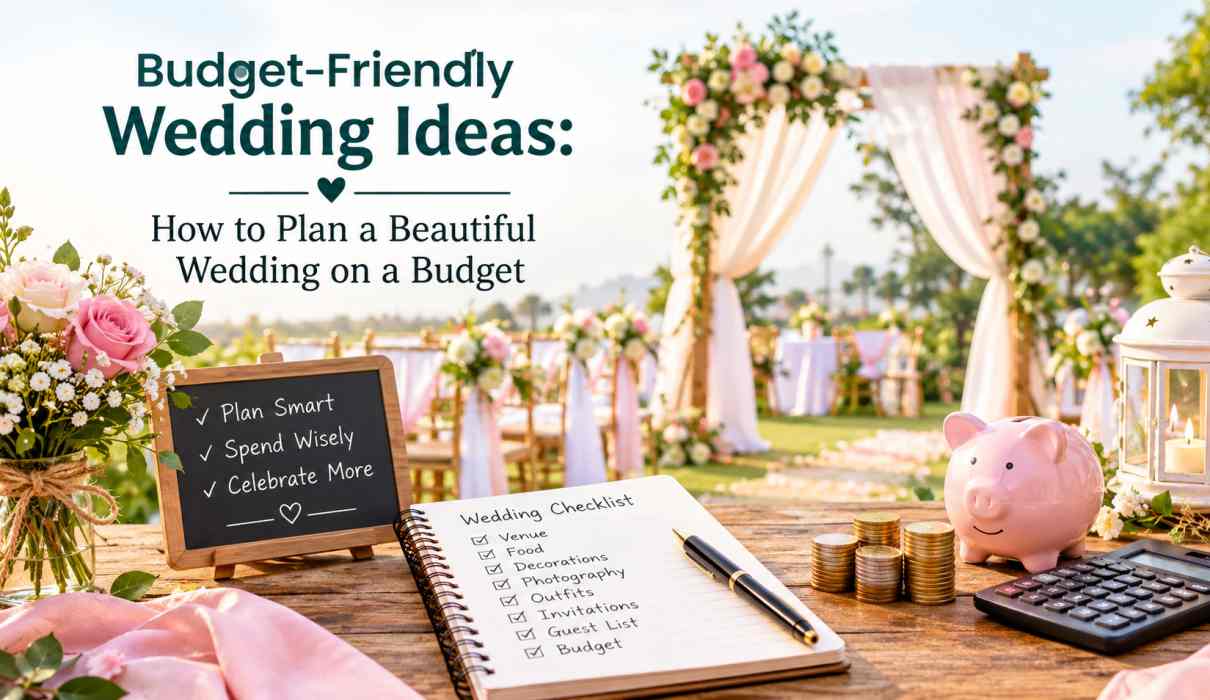
Budget-Friendly Wedding Ideas: How to Plan a Beautiful Wedding on a Budget
A wedding is one of the most memorable celebrations in life, but creating a beautiful experience does not necessarily require spending a fortune. With thoughtful planning, smart budgeting, and a little creativity, couples can enjoy a stylish and meaningful wedding without putting unnecessary pressure on their finances.
Whether you are planning an intimate ceremony or a larger celebration, budget-friendly wedding ideas can help you make the most of every rupee. From choosing the right venue and wedding decorations to managing food, clothing, photography, and guest lists, there are many ways to reduce expenses while keeping the celebration special.
This guide explores practical wedding planning tips on a budget to help you organize a memorable event without compromising on the moments that matter most.
1. Start With a Realistic Wedding Budget
The first step toward planning an affordable wedding is deciding exactly how much you can comfortably spend. Avoid starting your planning by booking vendors or venues before establishing a budget.
Create a list of major wedding expenses, such as:
- Venue and accommodation
- Food and catering
- Wedding clothes
- Jewellery and accessories
- Photography and videography
- Decorations
- Invitations
- Makeup and hairstyling
- Entertainment
- Transportation
- Wedding rituals and ceremony expenses
- Gifts and miscellaneous costs
Once you have listed everything, assign an estimated amount to each category. Keep a small emergency fund for unexpected expenses.
A clear budget gives you a framework for making decisions. If one category becomes more expensive than expected, you can adjust another area instead of overspending overall.
2. Decide What Matters Most
Not every wedding expense has the same importance to every couple. Some couples may consider photography essential, while others may prioritize food, décor, clothing, or entertainment.
Make three categories:
Must-have: Expenses that are essential for your wedding.
Important: Things you would like to include if the budget allows.
Optional: Extras that can be removed without affecting the overall celebration.
For example, if photography is a top priority, you might choose a simpler decoration package. If the venue is especially important, you could reduce spending on entertainment.
This approach helps you spend money on experiences that genuinely matter rather than following every wedding trend.
3. Choose an Affordable Wedding Venue
The venue can account for a significant portion of the wedding budget. Choosing a practical location can therefore make a major difference.
Instead of automatically selecting an expensive banquet hall or luxury hotel, consider alternatives such as:
- Community halls
- Small event venues
- Restaurants with private spaces
- Family properties
- Garden venues
- Temple or cultural spaces, where appropriate
- Smaller hotels
- Outdoor locations with suitable facilities
Consider getting married during an off-season period or on a weekday if it works for your guests. Some venues may offer different rates depending on the date, timing, or package.
When comparing venues, look beyond the basic rental price. Ask about cleaning charges, service fees, electricity, furniture, parking, catering restrictions, and decoration costs. A venue with a lower headline price may become expensive after additional charges.
4. Keep the Guest List Focused
One of the simplest ways to save money on a wedding is to manage the guest list carefully.
Every additional guest can increase spending on food, seating, invitations, transportation, and sometimes venue size. Instead of inviting everyone you know, create a guest list based on close family, friends, and people who genuinely share your relationship.
You can divide your list into:
- Immediate family
- Close relatives
- Close friends
- Professional or social contacts
- Optional invitations
If your budget is limited, an intimate wedding can offer several advantages. You may be able to spend more on food quality, photography, décor, or guest experiences while keeping the overall cost manageable.
5. Save Money With Digital Invitations
Traditional printed invitations can be beautiful, but they also involve printing, design, delivery, and sometimes multiple rounds of revisions.
For many guests, digital wedding invitations can be a practical alternative. You can create attractive invitations with modern designs and share them through messaging apps or email.
Digital invitations can include:
- Wedding date and time
- Venue details
- Maps and directions
- Ceremony information
- RSVP instructions
- Dress-code information
- Wedding website or event details
If you prefer printed invitations for close family members or important guests, consider using a hybrid approach. Print a limited number of premium invitations while using digital invitations for the rest.
6. Choose Simple and Elegant Wedding Decorations
A beautiful wedding does not require excessive decoration. In fact, simple décor can often create a more elegant atmosphere.
Focus your decoration budget on areas that guests will notice most, such as:
- The ceremony backdrop
- Main entrance
- Couple’s seating area
- Dining area
- Photography background
- Stage or main event area
Use flowers, greenery, candles, fabric, lights, and reusable decorative elements strategically rather than decorating every corner.
For example, a simple floral arrangement combined with warm lighting and attractive fabric can create a sophisticated setting without requiring a large décor budget.
Choose a consistent colour palette so that inexpensive decorative elements look coordinated rather than random.
7. Consider Seasonal Flowers and Local Décor
Flowers can become expensive when specific varieties are unavailable locally or are out of season.
Ask your decorator or florist about seasonal flowers and locally available options. These can often provide attractive arrangements at a lower cost.
You can also mix fresh flowers with:
- Green foliage
- Artificial flowers
- Fabric installations
- Potted plants
- Paper decorations
- Simple lighting
Instead of covering every table with elaborate floral arrangements, use smaller centrepieces and focus larger arrangements on important visual areas.
8. Plan the Wedding Menu Carefully
Food is another major wedding expense. Rather than offering an extremely large menu, concentrate on quality and variety that your guests will actually enjoy.
Discuss different catering packages and ask whether the price changes according to the number of dishes.
A well-planned menu might include:
- Selected welcome drinks
- A few appetizers
- Main-course options
- Rice or bread choices
- Vegetarian and non-vegetarian dishes, if appropriate
- Desserts
- Tea or coffee
Avoid adding dishes simply because they are traditional at large weddings if they are not necessary for your celebration.
Also consider the event timing. A wedding ceremony held between standard meal times may require a lighter menu than a full lunch or dinner event.
9. Find Affordable Wedding Outfits
Wedding clothing can consume a large part of the budget, especially when multiple outfits are purchased for different ceremonies.
Instead of buying every outfit from premium designer collections, consider mixing high-end and affordable pieces.
You can also:
- Rent certain outfits
- Reuse family jewellery
- Choose versatile clothing
- Buy during seasonal sales
- Select outfits that can be worn again
- Customize simpler garments with accessories
For example, a simple bridal outfit can look distinctive when paired with statement jewellery, footwear, and carefully selected accessories.
The same principle applies to the groom’s clothing. A well-fitted traditional or formal outfit can look polished without requiring an extremely expensive designer label.
10. Be Strategic With Wedding Photography
Photography is one area where it is worth comparing several options carefully. You want to preserve important memories, but there are ways to control costs.
Ask photographers for customized packages instead of automatically choosing their largest package.
Consider what you actually need:
- Ceremony photography
- Couple portraits
- Family photographs
- Reception coverage
- Short video
- Traditional wedding album
- Digital photographs
If you have a limited budget, prioritize professional coverage during the most important parts of the wedding.
Before booking, check the photographer’s portfolio, editing style, deliverables, coverage hours, and additional charges. A clear agreement can prevent unexpected costs later.
11. Reduce Entertainment Costs
Entertainment can add significantly to wedding expenses. Instead of booking several performers, choose one or two activities that suit your celebration.
Depending on the type of wedding, options may include:
- A DJ
- A small live music group
- Traditional musicians
- A curated playlist
- Family performances
- Simple games for guests
Personal performances by friends and family can also make the event more memorable without adding significant costs.
12. Choose Meaningful DIY Wedding Details
DIY wedding projects can help reduce expenses while adding a personal touch.
You could create:
- Welcome signs
- Table numbers
- Photo displays
- Simple centrepieces
- Guest-book decorations
- Wedding favour packaging
- Ceremony signage
However, DIY does not always mean free. Consider the cost of materials and your available time before starting a project.
The best DIY ideas are usually simple, repeatable, and easy to prepare in advance.
13. Consider a Smaller Wedding Cake
A large multi-tiered wedding cake may be visually impressive but can become expensive, especially when elaborate decoration is involved.
Consider a smaller decorated cake for the cake-cutting ceremony along with additional desserts for guests.
Other options include:
- Cupcakes
- Dessert tables
- Traditional sweets
- Mini pastries
- Simple single-tier cakes
Choose a dessert option that fits the style of your wedding and your guest preferences.
14. Compare Vendors Before Booking
Never book the first vendor you contact simply because their portfolio looks attractive.
Compare at least a few options for major services such as:
- Catering
- Photography
- Decoration
- Makeup
- Entertainment
- Transportation
Ask for detailed quotations and check what is included. Two vendors may offer similar-looking packages at different prices because one includes additional services or charges separately for them.
Also ask about cancellation policies, overtime charges, delivery fees, taxes, and payment schedules.
15. Avoid Unnecessary Wedding Extras
Wedding planning can easily become influenced by trends and social media. New ideas appear constantly, but not every trend is necessary for your celebration.
Before paying for an extra service, ask:
Will this improve the guest experience or create a meaningful memory?
If the answer is no, consider removing it.
Examples of potentially optional expenses include elaborate wedding favours, excessive signage, multiple photo booths, oversized floral installations, luxury transportation, and complicated entertainment setups.
A simpler wedding can still look sophisticated when the design is consistent and thoughtfully planned.
16. Use a Wedding Budget Spreadsheet
A simple spreadsheet can make wedding finances much easier to manage.
Create columns for:
| Expense | Estimated Cost | Actual Cost | Amount Paid | Remaining |
|---|---|---|---|---|
| Venue | ₹ | ₹ | ₹ | ₹ |
| Catering | ₹ | ₹ | ₹ | ₹ |
| Decoration | ₹ | ₹ | ₹ | ₹ |
| Photography | ₹ | ₹ | ₹ | ₹ |
| Clothing | ₹ | ₹ | ₹ | ₹ |
| Invitations | ₹ | ₹ | ₹ | ₹ |
| Makeup | ₹ | ₹ | ₹ | ₹ |
| Transportation | ₹ | ₹ | ₹ | ₹ |
| Miscellaneous | ₹ | ₹ | ₹ | ₹ |
Update the spreadsheet whenever you make a payment. This gives you a clear picture of your remaining budget and reduces the risk of unexpected overspending.
17. Ask About Wedding Packages
Some venues and vendors offer packages that combine multiple services. These may include venue rental, catering, decoration, furniture, and other facilities.
Packages can simplify planning, but do not automatically assume they are cheaper. Compare the total package price against the cost of booking individual services.
Also check whether you can remove services you do not need. A customizable package may provide better control over your spending.
18. Plan Early to Avoid Last-Minute Expenses
Last-minute decisions often cost more. Early planning gives you time to compare prices, negotiate where appropriate, identify alternatives, and book services according to your priorities.
Create a timeline for major decisions:
9–12 months before: Set budget, choose date, prepare guest list, research venues.
6–9 months before: Book venue, photographer, caterer, and major vendors.
3–6 months before: Finalize outfits, invitations, décor, and entertainment.
1–3 months before: Confirm guest numbers, schedules, transportation, and vendor details.
Final weeks: Make final payments, confirm timings, prepare emergency supplies, and review the complete wedding schedule.
19. Make the Wedding About the Experience
The most important part of a wedding is not how much money is spent. It is the opportunity to celebrate with the people who matter.
Instead of trying to impress guests with expensive extras, focus on making the event comfortable, organized, welcoming, and meaningful.
Good food, clear communication, comfortable seating, smooth scheduling, thoughtful music, and genuine hospitality can make a much stronger impression than unnecessary luxury.
Conclusion
Planning a beautiful wedding on a budget is completely possible with careful preparation and thoughtful spending. The key is not to eliminate everything that makes a wedding special, but to decide where your money will create the most value.
Start by setting a realistic budget, creating a focused guest list, comparing vendors, choosing an affordable venue, and prioritizing the elements that matter most to you. Simple decorations, digital invitations, seasonal flowers, practical wedding outfits, carefully planned menus, and customized vendor packages can all help reduce costs.
Most importantly, remember that a memorable wedding does not have to be an extravagant wedding. With the right budget-friendly wedding ideas, creativity, and organization, you can create a celebration that feels beautiful, personal, and meaningful while keeping your finances under control.
A well-planned wedding is ultimately about celebrating a new beginning—and that is something money cannot measure.