

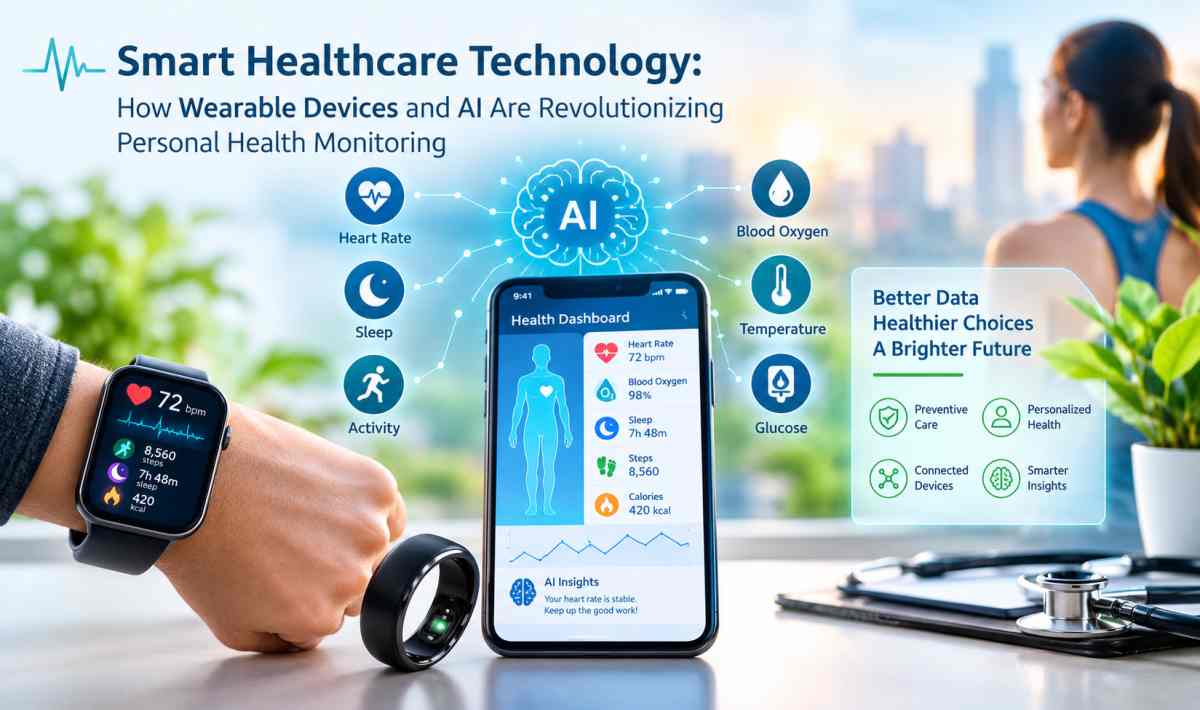
Smart Healthcare Technology: How Wearable Devices and AI Are Revolutionizing Personal Health Monitoring
Introduction
Healthcare is experiencing a remarkable digital transformation as artificial intelligence, wearable devices, and connected medical technologies change how people monitor their health. Traditional healthcare has often focused on diagnosing and treating diseases after symptoms appear. Today, smart healthcare technology is creating opportunities for continuous health monitoring, earlier identification of potential problems, and more personalized healthcare experiences.
From smartwatches that track heart rate to AI-powered applications that analyze sleeping patterns, digital health innovations are becoming increasingly accessible. These technologies help individuals understand their daily health habits while providing healthcare professionals with additional information to support medical decisions.
The growing adoption of wearable health devices, remote patient monitoring, and artificial intelligence is also encouraging a shift toward preventive healthcare.
However, smart healthcare devices have limitations. Their measurements are not always accurate, and most consumer wearables cannot replace professional medical assessments.
This article explores how wearable devices and AI are revolutionizing personal health monitoring, their benefits, emerging innovations, challenges, and future opportunities.
1. What Is Smart Healthcare Technology?
Smart healthcare technology refers to digital tools, connected devices, artificial intelligence, and advanced monitoring systems designed to improve healthcare delivery and personal wellness management.
These technologies collect, process, and analyze health-related information to provide insights into physical activity, sleep, cardiovascular indicators, and other aspects of well-being.
Common examples include:
- Smartwatches and fitness trackers
- AI-powered health monitoring applications
- Connected blood pressure monitors
- Continuous glucose monitoring systems
- Smart sleep monitoring devices
- Remote patient monitoring platforms
- Digital healthcare consultation services
Many smart healthcare solutions use Internet of Things (IoT) connectivity to exchange information between devices, smartphones, and healthcare platforms.
For example, a smartwatch may record heart rate measurements throughout the day and display trends through a mobile application.
Some medical-grade systems can also securely transmit information to healthcare professionals, supporting more informed clinical assessments.
The main objective of smart healthcare technology is to make health information more accessible, useful, and actionable.
2. The Growing Importance of Wearable Health Devices
Wearable health devices have become an important part of modern digital healthcare.
These compact electronic devices are designed to be worn on the body while collecting information about selected physiological measurements and everyday activities.
Smartwatches and Fitness Trackers
Smartwatches are among the most recognizable examples of wearable technology in healthcare.
Depending on their features, they can monitor:
- Heart rate and activity trends
- Daily steps and movement
- Estimated calories burned
- Sleep duration and patterns
- Blood oxygen estimates
- Exercise sessions and recovery indicators
Some advanced smartwatches also offer electrocardiogram features or notifications about potentially irregular heart rhythms.
However, the availability and medical reliability of these functions vary between devices. A smartwatch notification does not automatically establish a medical diagnosis.
Smart Rings
Smart rings offer a compact alternative to traditional wrist-based wearables.
They commonly track sleep duration, resting heart rate, temperature trends, and physical activity.
Their lightweight design makes them convenient for individuals who prefer less noticeable health monitoring devices.
Medical Wearable Sensors
Medical-grade wearable sensors can support the monitoring of specific health conditions.
Examples include continuous glucose monitors and certain wearable cardiac monitoring systems.
Unlike general fitness trackers, these devices may be designed for specific clinical purposes and require appropriate medical guidance.
As wearable technology advances, these devices are helping individuals and healthcare professionals observe selected health indicators over time.
3. How Artificial Intelligence Is Transforming Personal Health Monitoring
Artificial intelligence is becoming a major component of modern smart healthcare systems.
Wearable devices generate considerable amounts of information, but raw measurements alone may not provide meaningful insights.
AI-powered systems can help identify patterns, organize information, and highlight changes that deserve attention.
AI-Powered Health Data Analysis
Artificial intelligence algorithms can examine information collected from wearable sensors.
For example, an AI-supported application may analyze changes in resting heart rate, sleep duration, and physical activity.
The application might identify unusual patterns and encourage users to review their health information.
However, these patterns can have many explanations, and AI-generated observations should not be treated as definitive medical conclusions.
Personalized Health Recommendations
Some AI-powered healthcare applications offer recommendations based on individual activity patterns and personal goals.
These may include suggestions related to sleep routines, physical activity, hydration reminders, and general wellness habits.
Personalization can make digital health tools more relevant to individual needs.
Nevertheless, automated recommendations should be evaluated carefully, particularly when users have existing medical conditions.
Predictive Healthcare Analytics
Predictive analytics uses historical and current information to estimate the likelihood of particular outcomes.
In healthcare research, predictive models are being developed to help identify patients who may benefit from additional monitoring.
Their effectiveness depends on data quality, clinical validation, and appropriate use.
AI predictions are not guarantees, and many promising systems still require further evaluation before widespread clinical adoption.
4. Real-Time Health Monitoring and Its Benefits
One of the most valuable developments in smart healthcare technology is the ability to monitor selected health indicators regularly.
Traditional health assessments often provide measurements at individual appointments.
Connected monitoring devices can provide additional information between these visits.
Continuous Heart Rate Monitoring
Many wearable devices track heart rate during rest, exercise, and daily activities.
Reviewing trends over time may help individuals understand how their heart rate responds to different activities.
Certain medically validated devices can also support the investigation of specific cardiac concerns.
However, consumer devices may produce inaccurate readings because of movement, sensor placement, or other factors.
Blood Pressure Monitoring
Connected blood pressure monitors allow users to record readings and review trends through digital applications.
For individuals who have been advised to monitor their blood pressure, validated upper-arm monitors are generally preferable to unvalidated wearable estimates.
Regular home measurements can provide useful information for discussions with healthcare professionals.
Blood Glucose Monitoring
Continuous glucose monitoring technology measures glucose levels in interstitial fluid through a small sensor.
These systems can help eligible individuals with diabetes understand glucose trends and make treatment decisions according to their care plans.
Continuous glucose monitors are medical devices, and their use should follow appropriate professional guidance.
Together, these technologies can improve access to health information while supporting more informed healthcare conversations.
5. Smart Healthcare Technology and Preventive Healthcare
Preventive healthcare focuses on reducing health risks, supporting healthy habits, and identifying potential problems early.
Smart healthcare technology can contribute to these goals by making selected health measurements easier to observe.
Encouraging Health Awareness
Wearable devices provide users with regular information about their activity, sleep, and other wellness indicators.
This increased awareness may encourage individuals to develop consistent health-supporting habits.
For example, daily movement reminders can help people recognize long periods of inactivity.
Supporting Early Medical Evaluation
Some wearable devices can detect measurements or patterns that warrant further assessment.
An irregular rhythm notification, for instance, may encourage someone to consult a qualified healthcare professional.
Such alerts are not diagnostic and may produce false positives or miss genuine problems.
Improving Long-Term Health Management
Digital monitoring tools can help individuals maintain records of selected measurements over extended periods.
These records may support conversations about treatment effectiveness, lifestyle changes, and ongoing health concerns.
Preventive healthcare still depends on professional screening, vaccinations, appropriate medical advice, and established healthy habits.
Wearable technology is a supporting tool rather than a replacement for these essential services.
6. The Role of IoT in Smart Healthcare Systems
The Internet of Things is another important technology supporting digital healthcare innovation.
IoT refers to networks of connected devices capable of collecting and exchanging information.
In healthcare, connected systems can link monitoring devices with smartphones, medical platforms, and authorized healthcare professionals.
Connected Healthcare Devices
Examples of connected healthcare technology include smart blood pressure monitors, digital thermometers, glucose monitoring systems, and certain medical sensors.
These devices can automatically organize measurements and reduce the need for manual recordkeeping.
Remote Patient Monitoring
Remote patient monitoring allows healthcare teams to review selected patient measurements outside traditional medical facilities.
Depending on the program, patients may use connected devices to measure blood pressure, glucose levels, weight, or other indicators.
Healthcare professionals can then evaluate the information and determine whether follow-up is necessary.
Remote monitoring can be particularly useful for certain chronic disease management programs.
However, successful implementation requires reliable connectivity, appropriate clinical oversight, secure data handling, and patient education.
7. AI and Wearable Technology in Mental Wellness
Digital health innovation is also influencing mental wellness support.
Some wearable devices and applications monitor indicators associated with stress and recovery, including heart rate variability, sleep patterns, and activity levels.
These measurements may help users reflect on their routines and identify situations associated with changes in their well-being.
Stress Awareness Features
Certain wearable applications estimate stress levels using physiological signals.
Although these features can encourage awareness, they cannot reliably determine a person’s emotional state or diagnose mental health conditions.
Sleep and Recovery Tracking
Sleep monitoring devices estimate sleep duration and, in some cases, different sleep stages.
This information may help individuals recognize inconsistent sleep schedules.
However, consumer sleep-stage estimates are not equivalent to professional sleep studies.
Digital Mental Wellness Applications
AI-supported applications may provide guided relaxation exercises, mindfulness activities, and general wellness reminders.
These tools can complement healthy routines but should not replace qualified mental healthcare when professional support is needed.
8. Benefits of Smart Healthcare Technology
The integration of AI, wearable devices, and digital monitoring systems offers several potential advantages.
Greater Convenience
Individuals can review selected health measurements without visiting a healthcare facility for every reading.
Improved Health Awareness
Regular access to personal health information may encourage greater attention to daily wellness habits.
Personalized Monitoring
Digital platforms can display trends and recommendations based on the information collected by individual devices.
Better Communication
When information is accurate and appropriately shared, digital health records can support more productive discussions between patients and healthcare professionals.
Support for Chronic Disease Care
Clinically appropriate remote monitoring programs may help healthcare teams follow selected patients between appointments.
These benefits depend on device reliability, user understanding, healthcare access, and appropriate professional involvement.
9. Challenges and Limitations of Smart Healthcare Devices
Despite their potential, smart healthcare technologies face several important challenges.
Data Privacy and Security
Wearable devices can collect sensitive health-related information.
Users should understand how their information is stored, processed, and shared.
Strong passwords, updated software, appropriate permissions, and trustworthy providers can help reduce privacy risks.
Measurement Accuracy
Not all consumer wearables provide medical-grade measurements.
Results may be affected by movement, environmental conditions, sensor positioning, and device design.
Cost and Accessibility
Advanced monitoring devices and subscription services may be expensive.
Limited internet access and digital literacy can also create barriers.
Excessive Dependence on Technology
Frequent monitoring may sometimes create unnecessary concern, particularly when users misunderstand normal fluctuations.
Health information should be interpreted in context rather than treated as a constant measure of personal well-being.
AI Reliability
AI systems may produce inaccurate recommendations or perform differently across populations.
Clinical validation, transparency, and human oversight remain essential for safe healthcare applications.
10. Smart Healthcare Technology in India
India offers significant opportunities for digital healthcare development because of its large population, expanding digital infrastructure, and growing interest in accessible medical services.
Telemedicine, connected monitoring devices, and digital health platforms may help improve access to selected healthcare services.
The Ayushman Bharat Digital Mission is one important initiative supporting India’s digital health ecosystem.
Its broader objective includes enabling interoperable digital health services and supporting consent-based sharing of health information.
Wearable technology and remote monitoring could also complement healthcare delivery in areas where specialist services are less accessible.
However, implementation challenges remain.
Affordable devices, reliable internet connectivity, regional language support, privacy protection, and professional medical oversight are important considerations.
For Indian consumers, choosing appropriately validated devices and consulting qualified healthcare professionals remain essential.
11. Future Trends in Smart Healthcare Technology
Several emerging developments may influence the next generation of personal health monitoring.
Advanced AI Health Assistants
Future AI-supported applications may offer more sophisticated explanations of health trends and help users organize information for medical appointments.
Improved Wearable Sensors
Researchers and manufacturers are working to improve sensor accuracy, comfort, battery efficiency, and monitoring capabilities.
Personalized Digital Healthcare
Connected systems may increasingly combine information from medical records, wearable devices, and individual care plans.
Smarter Remote Monitoring
Healthcare organizations may expand monitoring programs for patients who benefit from regular follow-up outside hospitals.
Greater Focus on Responsible AI
Future healthcare innovation will also require stronger attention to privacy, clinical evidence, algorithmic fairness, and regulatory oversight.
These developments are promising, but their clinical value will depend on rigorous testing and responsible implementation.
12. How to Choose the Right Smart Healthcare Device
Selecting an appropriate device depends on personal needs and the intended purpose.
Before purchasing a wearable health device, consider the following factors:
- Monitoring purpose: Identify whether the device is intended for fitness, general wellness, or a specific medical requirement.
- Accuracy and validation: Look for independent testing and relevant regulatory authorization when medical claims are involved.
- Comfort: Choose a device suitable for regular use.
- Battery performance: Consider how frequently the device requires charging.
- Data privacy: Review the manufacturer’s privacy practices and information-sharing settings.
- Compatibility: Confirm that the device works with your smartphone and preferred applications.
- Professional guidance: Consult a healthcare professional before relying on a device for medical monitoring or treatment decisions.
The most expensive device is not necessarily the most appropriate option.
Conclusion
Smart healthcare technology is changing how individuals access and understand personal health information. Wearable devices, artificial intelligence, and connected monitoring systems are creating new opportunities for preventive healthcare, remote patient monitoring, and personalized wellness support.
Smartwatches, medical sensors, AI-powered applications, and digital healthcare platforms can help users observe health trends and communicate relevant information to healthcare professionals.
However, accuracy, privacy, affordability, and responsible medical interpretation remain essential considerations.
As innovation continues, the most valuable smart healthcare solutions will be those that combine reliable technology with evidence-based medical care.
Rather than replacing doctors, wearable devices and AI have the potential to support better-informed patients and more connected healthcare services.
The future of personal health monitoring will depend not simply on collecting more data, but on using trustworthy information to improve health decisions and outcomes.
Frequently Asked Questions (FAQs)
1. What is smart healthcare technology?
Smart healthcare technology includes connected medical devices, wearable sensors, artificial intelligence, and digital platforms that support health monitoring and healthcare delivery.
2. How do wearable devices help monitor personal health?
Wearable devices collect selected measurements such as heart rate, physical activity, and sleep duration. Some medical-grade devices also support monitoring for specific health conditions.
3. Can AI-powered smartwatches detect diseases?
Certain smartwatches can identify patterns that may warrant medical evaluation. However, most consumer devices cannot independently diagnose diseases, and professional assessment remains necessary.
4. What are the main benefits of AI in healthcare?
AI can help analyze health information, identify patterns, support clinical workflows, and assist healthcare professionals with selected decisions when systems are appropriately validated.
5. Are wearable health monitoring devices accurate?
Accuracy varies according to the device, measurement, and conditions of use. Medical decisions should rely on appropriately validated technology and professional guidance.
6. What is the future of smart healthcare technology in India?
India may see further growth in digital health services, telemedicine, connected medical devices, and AI-supported monitoring. Progress will depend on affordability, infrastructure, privacy safeguards, and clinical quality.