

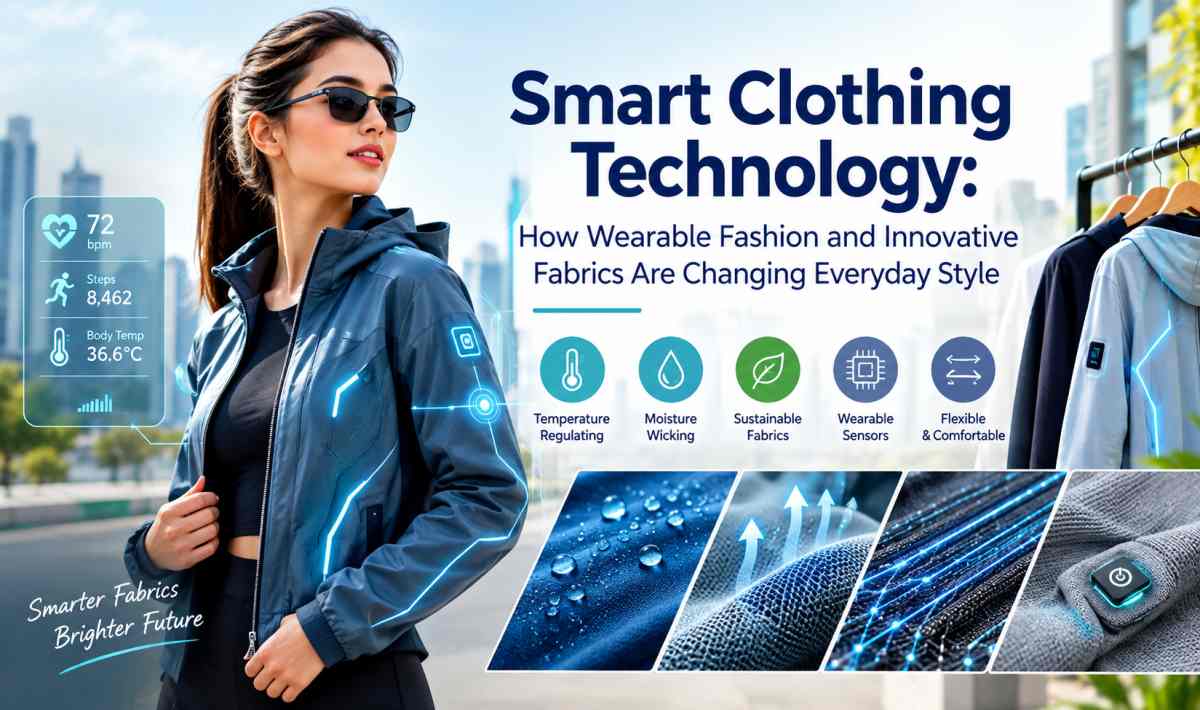
Smart Clothing Technology: How Wearable Fashion and Innovative Fabrics Are Changing Everyday Style
The fashion industry is experiencing a remarkable transformation as technology becomes an important part of modern clothing. From temperature-regulating fabrics to garments equipped with intelligent sensors, smart clothing technology is changing how people experience comfort, functionality, and personal style. Clothing is no longer limited to appearance and protection; innovative designs are introducing features that can respond to environmental conditions, support physical activity, and improve everyday convenience.
As consumers become increasingly interested in personalized experiences, sustainable materials, and functional fashion, wearable technology is creating exciting opportunities for designers and manufacturers. Smart textiles, electronic fabrics, and advanced manufacturing techniques are helping fashion brands explore clothing that combines traditional craftsmanship with modern innovation.
The development of smart clothing technology also reflects a broader movement toward practical fashion solutions. Whether someone is commuting, exercising, traveling, or working, intelligent clothing has the potential to make everyday activities more comfortable.
This article explores how wearable fashion and innovative fabrics are transforming the clothing industry, their benefits, emerging applications, challenges, and the future of smart fashion.
What Is Smart Clothing Technology?
Smart clothing technology refers to garments that incorporate advanced materials, sensors, electronics, or responsive textile systems to provide functions beyond those of conventional clothing.
Unlike traditional garments, which primarily offer comfort, protection, and style, smart clothing may monitor movement, respond to temperature changes, or interact with digital devices.
Smart clothing generally falls into three categories:
1. Passive Smart Textiles
Passive smart textiles use specially engineered materials to provide additional functionality without electronic components.
Examples include:
- UV-protective fabrics
- Moisture-wicking sportswear
- Water-resistant clothing
- Temperature-regulating textiles
- Antimicrobial fabric treatments
These materials are already used in various clothing categories, including sportswear, outdoor fashion, and professional uniforms.
2. Active Smart Textiles
Active smart textiles respond to external conditions such as temperature, pressure, moisture, or movement.
For example, some fabrics use phase-change materials that absorb and release heat as temperatures fluctuate.
These innovations can help improve thermal comfort without requiring constant manual adjustments.
3. Electronic Smart Clothing
Electronic smart clothing integrates sensors, conductive threads, or other electronic components directly into garments.
Depending on the design, these clothes may collect movement data, monitor certain physiological signals, or connect with compatible applications.
Although many advanced products remain specialized or experimental, electronic clothing represents an important area of wearable technology development.
The Growing Importance of Wearable Fashion
Wearable fashion combines clothing design with practical technology. While smartwatches and fitness trackers have made wearable devices familiar, integrating technology directly into garments offers new possibilities.
Instead of carrying separate devices, consumers may eventually access selected functions through everyday clothing.
Several developments are encouraging interest in wearable fashion.
Increasing Demand for Functional Clothing
Modern consumers often prefer clothing that works across different activities. Comfortable office wear, versatile travel outfits, and performance-oriented casual clothing are examples of this trend.
Smart fabrics can support these preferences by introducing additional comfort and functionality.
Advancements in Textile Engineering
Developments in materials science are making it possible to create lighter, more flexible, and more responsive fabrics.
Researchers are exploring conductive yarns, stretchable electronics, and textile-based sensors that can operate while remaining integrated into clothing.
Interest in Personalized Experiences
Personalization is becoming an important part of fashion.
Smart clothing could eventually offer more individualized features, such as adjustable thermal comfort or movement-based feedback.
However, these capabilities vary significantly between products and should not be assumed to be available in all smart garments.
Innovative Fabrics Transforming Everyday Clothing
One of the most exciting aspects of smart clothing technology is the development of innovative fabrics.
These materials can improve clothing performance while allowing designers to maintain attractive and comfortable styles.
1. Temperature-Regulating Fabrics
Temperature-regulating textiles are designed to help manage heat and improve comfort.
Some use phase-change materials that temporarily store or release thermal energy. Others rely on moisture management, ventilation, or specialized fiber structures.
These fabrics may be useful in:
- Everyday casual clothing
- Outdoor jackets
- Sportswear
- Travel garments
- Work uniforms
Their effectiveness depends on fabric construction, environmental conditions, and garment design.
2. Moisture-Wicking and Breathable Materials
Moisture management is an important feature of modern performance clothing.
Moisture-wicking fabrics help move perspiration away from the skin, where it can evaporate more easily.
Breathable textile structures also support air and moisture movement.
These features are particularly valuable for active lifestyles and warm climates.
However, moisture-wicking performance does not automatically mean a fabric is environmentally sustainable. Material composition and manufacturing methods must also be considered.
3. Conductive Fabrics
Conductive textiles incorporate materials capable of transmitting electrical signals.
These may include conductive fibers, coated yarns, or specialized printed circuits.
Conductive fabrics can support the development of garments containing sensors or interactive features.
Potential applications include movement monitoring, textile-based controls, and connected accessories.
Engineers must still address durability, comfort, electrical safety, and washability before these technologies become widely practical.
4. Self-Cleaning and Stain-Resistant Fabrics
Innovative textile finishes can make garments more resistant to stains and certain types of contamination.
Some experimental self-cleaning fabrics use specialized surface structures or light-responsive materials.
Other fabrics rely on water-repellent coatings that reduce how easily liquids penetrate the material.
Although these technologies may reduce the frequency of certain cleaning tasks, most garments still require appropriate washing and maintenance.
Consumers should also consider the environmental characteristics of chemical finishes.
5. UV-Protective Textiles
UV-protective fabrics are designed to reduce ultraviolet radiation passing through clothing.
Their performance can depend on fiber type, fabric density, color, construction, and treatment.
Garments with a tested Ultraviolet Protection Factor, or UPF, provide a more meaningful indication of protection than general marketing claims.
UV-protective clothing is particularly useful for outdoor activities, travel, and daily exposure to sunlight.
How Smart Clothing Technology Is Changing Everyday Style
The influence of smart clothing technology extends beyond specialized equipment.
Designers are increasingly exploring ways to combine useful textile features with modern fashion aesthetics.
Comfortable Everyday Outfits
Innovative fabrics can help make daily clothing more comfortable through improved stretch, breathability, and moisture management.
For example, casual trousers made with flexible performance fabrics may support movement while maintaining a polished appearance.
Similarly, lightweight jackets can incorporate weather-resistant materials without relying on bulky construction.
Smarter Sportswear and Activewear
Sportswear is one of the most established areas for functional textile innovation.
Modern activewear frequently includes stretchable fabrics, moisture management, compression structures, and specialized ventilation.
Some electronic garments can also capture movement or physiological data.
These systems may support training analysis, although their accuracy and usefulness depend on the product and intended application.
Functional Office Fashion
Professional clothing is also becoming more versatile.
Stretch fabrics, wrinkle-resistant materials, and breathable constructions can help office wear remain comfortable throughout long working days.
Smart textile innovations may eventually introduce additional functions while preserving conventional formal styles.
Travel-Friendly Clothing
Travelers often value clothing that is lightweight, adaptable, and easy to maintain.
Innovative fabrics can offer benefits such as quick drying, wrinkle resistance, and improved comfort across changing environments.
These practical features make advanced textiles relevant even when garments contain no electronic components.
Smart Clothing and the Future of Sustainable Fashion
Sustainability is an increasingly important consideration in textile innovation.
Smart clothing technology may support more resource-conscious fashion, but technological advancement does not automatically make clothing environmentally friendly.
The environmental impact of a garment depends on its materials, production process, durability, use, and disposal.
Recycled and Lower-Impact Materials
Manufacturers are exploring recycled fibers and alternative textile materials to reduce dependence on certain virgin resources.
However, recycled content is only one aspect of sustainability.
Energy consumption, chemical processing, durability, and recyclability also influence a garment’s overall environmental performance.
Longer-Lasting Clothing
Durable garments can potentially reduce replacement frequency.
Advanced fabric engineering may improve resistance to abrasion, stretching, or repeated use.
Nevertheless, the environmental benefits depend on whether consumers actually use the garments for longer periods.
Reducing Unnecessary Washing
Some textile innovations may help clothing resist odors or stains, potentially allowing appropriate garments to be washed less frequently.
Any reduction in washing should still follow hygiene requirements and manufacturer instructions.
Challenges of Electronic Waste
Electronic smart clothing introduces additional sustainability concerns.
Embedded batteries, sensors, and conductive materials can make recycling more complicated.
Designing garments with removable electronic modules and repairable components may help address these challenges.
The Role of Artificial Intelligence in Smart Fashion
Artificial intelligence is creating new opportunities across the fashion industry.
When combined with wearable sensors and appropriate software, AI can help interpret information collected from smart garments.
Personalized Fitness Insights
Certain connected garments can record movement patterns or other signals.
AI-based systems may analyze this information to provide activity-related feedback.
However, consumers should distinguish general wellness features from medical-grade monitoring.
Intelligent Clothing Recommendations
AI-powered fashion platforms can recommend garments based on selected preferences, previous purchases, and available product information.
Such systems may help shoppers discover clothing suited to their activities and style preferences.
Adaptive Clothing Systems
Researchers are exploring clothing systems that respond to environmental conditions or user inputs.
In the future, some garments could use automated controls to adjust heating or other supported functions.
These applications remain dependent on reliable sensors, power systems, and safe garment construction.
Smart Clothing Applications Beyond Everyday Fashion
The potential applications of smart clothing technology extend into several industries.
Healthcare and Wellness
Researchers are developing textile-based systems capable of monitoring selected physiological signals.
These technologies could support remote observation and rehabilitation when appropriately validated.
However, consumer smart garments should not replace professional medical assessment.
Workplace Safety
Specialized clothing may incorporate sensors designed to detect movement, environmental conditions, or other workplace factors.
Potential applications include industrial environments, logistics, and physically demanding occupations.
Reliable performance and compliance with relevant safety standards are essential.
Sports and Professional Training
Advanced sports garments can help collect movement-related information during training.
Coaches and athletes may use appropriately validated systems to examine technique or activity patterns.
Accessibility and Adaptive Clothing
Innovative textiles and garment engineering can also improve accessibility.
Easy-to-use fastenings, flexible materials, and adaptable construction can make clothing more practical for people with different mobility or sensory needs.
Not every adaptive garment requires electronics; thoughtful design can be equally important.
Challenges Facing Smart Clothing Technology
Despite its potential, smart clothing faces several obstacles.
High production costs: Electronic components and specialized manufacturing processes can make advanced garments more expensive than conventional alternatives.
Washing and maintenance: Electronic systems must withstand movement, moisture, and repeated cleaning. Some products require electronic modules to be removed before washing.
Battery limitations: Connected garments may depend on rechargeable batteries, which introduce weight, maintenance, and replacement concerns.
Privacy and data security: Clothing that collects personal information must provide clear data-handling policies and appropriate security protections.
Durability: Sensors and conductive materials need to remain functional despite stretching, folding, and regular wear.
Consumer acceptance: People may hesitate to adopt smart clothing if it is uncomfortable, difficult to maintain, or offers limited practical value.
Addressing these challenges will be important for broader adoption.
Smart Clothing Technology Trends to Watch in 2027
Several emerging developments could influence wearable fashion in 2027 and beyond.
1. More Flexible Electronic Textiles
Researchers are working toward electronic components that bend and stretch more naturally with fabrics.
Improved flexibility could make connected clothing more comfortable.
2. Modular Smart Garments
Removable sensors and electronic modules may improve garment maintenance, repairability, and recycling.
This approach could also allow consumers to upgrade certain components without replacing the entire garment.
3. Advanced Thermal Management
New textile structures and responsive materials may offer improved temperature management for different environments.
4. Greater Integration of Fashion and Technology
Designers may increasingly collaborate with engineers to develop garments that combine functionality with attractive styling.
5. Improved Sustainability Standards
Growing attention to product durability, repairability, and environmental claims may encourage manufacturers to provide clearer information about smart textiles.
These are emerging directions rather than guaranteed developments, and widespread adoption will depend on affordability and performance.
How to Choose the Right Smart Clothing
Consumers interested in smart clothing should focus on practical value rather than technology claims alone.
Before purchasing, consider the garment’s intended purpose, comfort, maintenance requirements, and material quality.
For electronic clothing, check battery life, compatibility, data privacy practices, and whether components can be removed or repaired.
For functional fabrics, look for clearly explained performance features and relevant testing information.
Choosing clothing that suits everyday activities is often more useful than selecting a product simply because it contains advanced technology.
Frequently Asked Questions About Smart Clothing Technology
1. What is smart clothing technology?
Smart clothing technology involves garments made with advanced textiles, sensors, electronics, or responsive materials that provide additional functions beyond conventional clothing.
2. What are examples of smart clothing?
Examples include temperature-regulating jackets, moisture-wicking sportswear, UV-protective garments, and specialized clothing with integrated movement sensors.
3. Is smart clothing expensive?
Prices vary considerably. Basic functional fabrics are widely available, while garments containing sophisticated electronic systems are often more expensive.
4. Can smart clothing be washed?
Many smart garments are washable, but care requirements differ. Consumers should always follow manufacturer instructions, particularly when electronic components are involved.
5. Is smart clothing environmentally friendly?
Not necessarily. Environmental performance depends on materials, manufacturing, durability, maintenance, and end-of-life management.
6. What is the future of wearable fashion?
Wearable fashion may become more comfortable, adaptable, and connected as textile engineering and electronic technologies develop. Affordability, privacy, and durability will remain important factors.
Conclusion
Smart clothing technology is opening new possibilities for the future of fashion by combining innovative fabrics, practical functionality, and modern design.
From breathable everyday clothing and temperature-regulating textiles to sensor-equipped garments, wearable fashion is expanding what clothing can offer.
Although advanced electronic garments still face challenges involving cost, durability, maintenance, and privacy, continued research may make these technologies more accessible.
At the same time, sustainability must remain a central consideration as manufacturers develop increasingly complex materials and connected products.
Ultimately, the future of smart clothing will depend on creating garments that provide meaningful benefits while remaining comfortable, attractive, reliable, and practical.
As textile innovation continues, everyday fashion may become more responsive to people’s activities, preferences, and changing environments—demonstrating how technology and thoughtful design can work together to improve the clothing experience.