

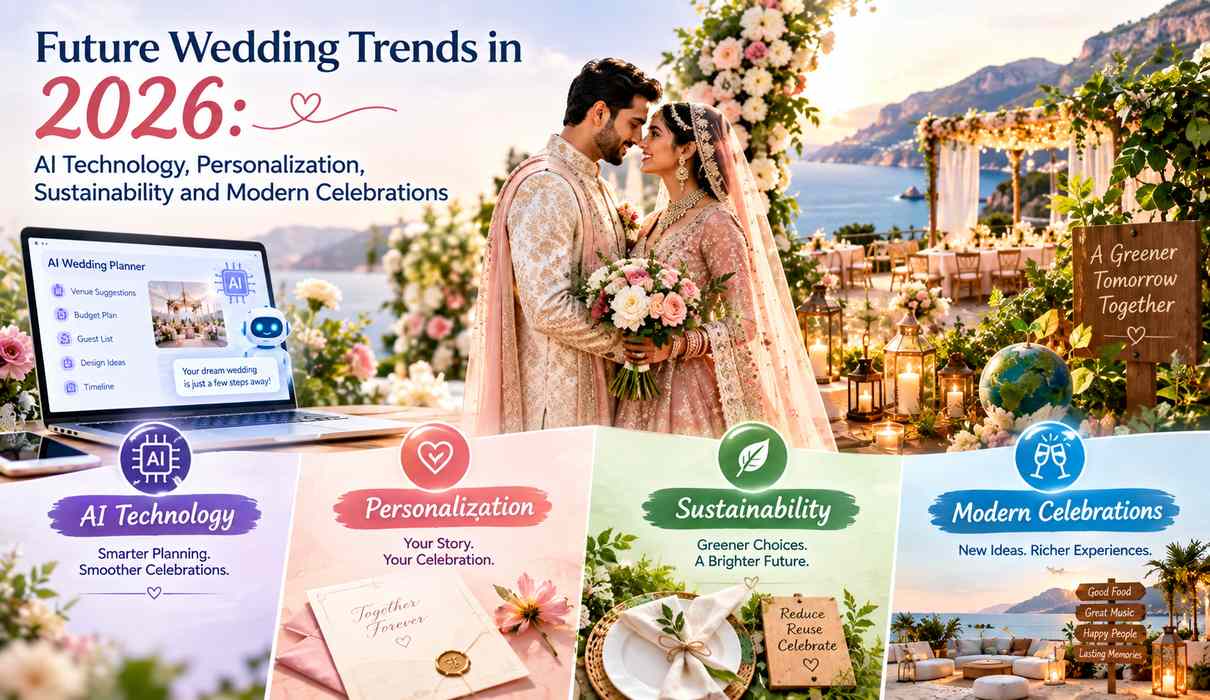
Future Wedding Trends in 2026: AI Technology, Personalization, Sustainability and Modern Celebrations
Weddings in 2026 are entering a new era where tradition meets technology, creativity meets sustainability, and grand celebrations are increasingly shaped by personal meaning. Couples are no longer simply following established wedding formulas. Instead, they are looking for celebrations that reflect their personalities, relationships, cultural backgrounds and lifestyle choices.
The future wedding trends in 2026 are centered around personalization, artificial intelligence, intimate celebrations, sustainable choices, immersive guest experiences and smarter wedding planning. Technology is helping couples organize complex events, while modern design and thoughtful details are making weddings more memorable.
One of the clearest changes is the movement away from copy-and-paste celebrations. Current wedding trend reports describe 2026 as a year of intentionality, with couples prioritizing authentic details and experiences over simply recreating viral wedding aesthetics.
AI is also becoming part of the planning process. A 2026 Zola report says 54% of couples surveyed use AI in some way for wedding planning, although many still prefer to keep important decisions human-led.
From AI wedding planning tools and eco-friendly décor to destination weddings and personalized guest experiences, here are the major modern wedding trends in 2026 that are shaping the future of celebrations.
1. AI-Powered Wedding Planning
Artificial intelligence is becoming one of the most interesting developments in modern wedding planning.
Planning a wedding involves hundreds of decisions, including guest management, budgets, schedules, invitations, vendors, travel arrangements, menus and event timelines. AI tools can help couples organize these tasks more efficiently.
AI can assist with:
- Wedding budget planning
- Guest-list organization
- RSVP management
- Invitation wording
- Wedding timelines
- Vendor comparisons
- Menu suggestions
- Destination research
- Seating arrangements
- Wedding website content
- Personalized recommendations
The advantage of AI is not necessarily replacing wedding planners or family members. Instead, it can reduce repetitive administrative work and help couples make faster decisions.
In India, AI is increasingly being used for practical wedding operations such as guest communication, RSVP follow-ups and multilingual wedding content.
The future of wedding planning will likely combine AI efficiency with human creativity and emotional judgment.
2. Personalization Becomes the New Definition of Luxury
One of the strongest wedding trends in 2026 is personalization.
For years, luxury weddings were often associated with huge venues, elaborate décor, celebrity entertainment and extremely large guest lists. Today, the meaning of luxury is changing.
Modern couples increasingly want weddings that tell their own story.
Personalization can appear in many ways:
- Custom wedding invitations
- Personalized décor
- Meaningful family traditions
- Signature cocktails
- Curated menus
- Custom wedding hashtags
- Personalized guest gifts
- Couple-inspired entertainment
- Unique ceremony rituals
- Customized wedding outfits
Recent Indian wedding coverage describes this shift as a move from visual grandeur toward more personal storytelling, bespoke details and emotional connection.
This means couples can create memorable celebrations without necessarily making every element expensive. The key is making the wedding feel authentic.
3. Intimate and Micro-Weddings Continue to Grow
Large weddings will certainly remain popular, particularly in India, but intimate celebrations are becoming an increasingly important option.
A smaller wedding can provide greater flexibility and allow couples to spend more attention on individual guests.
Instead of inviting hundreds or thousands of people, couples may choose a carefully selected group of family members and close friends.
Benefits of intimate weddings include:
- Better guest interaction
- More personalized hospitality
- Greater venue flexibility
- Better food and entertainment experiences
- Easier event management
- More opportunities for meaningful conversations
- Potentially better budget control
The trend does not necessarily mean couples want less luxury. Instead, many are choosing quality over quantity.
This is particularly visible in destination weddings, where smaller guest lists can make travel and accommodation arrangements more manageable.
4. Destination Weddings Become More Experience-Focused
Destination weddings remain a major trend in 2026.
However, the modern destination wedding is about more than simply selecting an attractive location. Couples are increasingly turning the wedding into a complete travel and hospitality experience.
Popular destination wedding concepts include:
- Beach weddings
- Palace weddings
- Mountain celebrations
- Heritage weddings
- Resort weddings
- Nature-focused ceremonies
- International destination weddings
Indian destinations such as Udaipur, Jaipur, Goa, Jaisalmer and Rishikesh continue to offer different styles, from royal architecture and beaches to nature-based intimate celebrations.
A destination wedding can also include welcome dinners, local sightseeing, cultural performances, wellness activities and farewell brunches.
The result is a multi-day celebration rather than a single wedding ceremony.
5. Sustainable Weddings Become Mainstream
Sustainability is moving from a niche concept to a mainstream part of modern wedding planning in 2026.
Couples are increasingly thinking about the environmental impact of decorations, food, travel, invitations and event waste.
Sustainable wedding ideas include:
- Locally sourced flowers
- Seasonal décor
- Reusable structures
- Digital invitations
- Minimal printed materials
- Plant-based or biodegradable décor
- Reusable tableware
- Food-waste reduction
- Local vendors
- Sustainable wedding favors
- Reusable or rented décor elements
Indian wedding trend reports also highlight growing interest in locally sourced flowers, reusable materials, biodegradable confetti, digital invitations and better food-waste management.
Sustainability can also make weddings more distinctive. Natural materials, local craftsmanship and seasonal flowers can create a warmer and more authentic atmosphere.
6. Eco-Friendly Décor and Natural Design
Wedding décor in 2026 is becoming more thoughtful.
Instead of filling every available space with artificial flowers and oversized installations, some couples are choosing natural textures, greenery, handcrafted elements and locally inspired designs.
Popular concepts include:
- Botanical décor
- Earth-inspired color palettes
- Natural wood
- Bamboo structures
- Handmade textiles
- Local flowers
- Potted plants
- Sustainable lighting
- Minimalist mandaps
- Reusable installations
For Indian weddings, traditional materials and regional craftsmanship can work particularly well with sustainable design.
A locally inspired wedding can simultaneously support artisans, reduce transportation requirements and create a stronger connection with the destination.
7. Guest Experience Becomes More Important
One of the biggest shifts in wedding trends 2026 is the growing focus on guests.
Couples are increasingly asking a simple question: How will our guests feel?
This has led to greater attention to comfortable seating, quality food, easy transportation, entertainment, personalized gifts and interactive activities.
Modern guest experiences can include:
- Welcome hampers
- Personalized itineraries
- Interactive food stations
- Live entertainment
- Cultural experiences
- Photo and video booths
- Wellness activities
- Comfortable transportation
- Personalized guest favors
- After-party experiences
Vogue’s 2026 wedding trend coverage similarly identifies guest experience as a major priority, with couples emphasizing interactive moments, curated food and immersive entertainment rather than focusing only on how the wedding looks in photographs.
8. Technology-Enabled Guest Communication
Technology is making wedding communication much easier.
Couples can now use wedding websites, mobile-friendly invitations, messaging platforms and digital RSVP systems to keep guests updated.
Digital tools can provide:
- Event schedules
- Venue maps
- Dress codes
- Travel information
- Accommodation details
- RSVP forms
- Meal preferences
- Transportation updates
- Wedding photos
- Important announcements
For large or destination weddings, centralized digital communication can significantly reduce confusion.
AI can further personalize messages and help wedding teams communicate with guests in multiple languages.
9. Personalized Wedding Fashion
Wedding fashion is also becoming more individualistic in 2026.
Instead of simply following established bridal and groom fashion formulas, couples are experimenting with silhouettes, fabrics, colors and styling.
In Indian wedding fashion, contemporary blouse designs, structured silhouettes and modern interpretations of traditional clothing are gaining attention.
Personalization can include:
- Custom embroidery
- Family motifs
- Meaningful symbols
- Modern blouse designs
- Heritage jewelry
- Customized footwear
- Coordinated couple outfits
- Contemporary traditional wear
The objective is to create wedding fashion that looks beautiful while also reflecting the couple’s personality.
10. Storytelling Through Wedding Photography and Video
Wedding photography is becoming increasingly focused on storytelling.
Couples are moving away from photographs that feel overly staged and toward candid moments that capture genuine emotions.
Modern wedding photography may focus on:
- Natural expressions
- Family interactions
- Behind-the-scenes moments
- Emotional ceremonies
- Documentary-style photography
- Cinematic wedding films
- Short-form social videos
- Same-day edits
Social media has also influenced wedding photography, but the strongest trend is not simply creating content for online platforms. It is documenting moments that couples can revisit years later.
11. Immersive Entertainment and Interactive Celebrations
Traditional wedding entertainment is being combined with more interactive experiences.
Instead of relying entirely on a stage performance, couples may create entertainment zones throughout the venue.
Examples include:
- Live music
- Interactive performances
- Cultural shows
- DJ experiences
- Personalized dance performances
- Interactive food stations
- Creative photo areas
- Games
- Live artists
- Themed after-parties
This creates a wedding environment where guests participate instead of simply watching.
12. Smarter Wedding Budget Management
Even when couples want a luxurious wedding, financial planning remains important.
AI and digital tools can make it easier to categorize expenses and identify where money is being spent.
A practical wedding budget can include:
| Category | Typical Planning Focus |
|---|---|
| Venue | Location, accommodation and event spaces |
| Food | Menu quality and guest preferences |
| Décor | Design, flowers and installations |
| Photography | Photography and cinematography |
| Fashion | Bridal and groom outfits |
| Entertainment | Music and performances |
| Travel | Transportation and destination costs |
| Invitations | Digital or printed communication |
| Gifts | Guest favors and family gifts |
The goal is not necessarily to spend less. It is to spend intentionally on the experiences that matter most.
13. Wellness and Comfort Enter Wedding Planning
Modern couples are increasingly aware that weddings can be physically demanding.
This is encouraging planners to think about guest and couple wellness.
Ideas include:
- Comfortable seating
- Hydration stations
- Quiet areas
- Wellness activities
- Spa sessions
- Healthy food options
- Temperature-conscious venue planning
- Comfortable footwear
- Relaxed event schedules
Destination weddings can particularly benefit from wellness-focused experiences because guests may be traveling for several days.
14. Cultural Traditions With a Modern Touch
Technology and modern design do not mean abandoning tradition.
Instead, many couples are finding new ways to preserve meaningful cultural customs while adapting them to modern lifestyles.
A traditional ceremony might be combined with:
- Contemporary décor
- Modern fashion
- Personalized rituals
- Multilingual ceremonies
- Digital storytelling
- Modern music
- Family heritage displays
This balance between tradition and innovation is especially important for Indian weddings, where families often want to preserve cultural rituals while couples want greater freedom in designing the celebration.
15. The Future of Weddings Will Be More Intentional
The biggest lesson from future wedding trends in 2026 is that weddings are becoming more intentional.
Couples are increasingly asking whether a tradition, decoration, activity or expense genuinely adds meaning to the celebration.
This is why personalization, sustainability, intimate weddings and guest experiences are growing together.
A smaller wedding can feel more luxurious when guests receive exceptional hospitality. Sustainable décor can look more elegant when it uses natural materials. AI can make planning easier without replacing human decisions.
The future is therefore not about technology versus tradition. It is about combining the best of both.
How to Plan a Future-Ready Wedding in 2026
Couples planning a wedding this year can follow a few practical steps:
- Define your priorities first – Decide what matters most: food, photography, venue, entertainment, fashion or guest experience.
- Use AI for repetitive tasks – Let technology help with research, schedules, guest management and brainstorming.
- Personalize important details – Include elements that represent your relationship and family.
- Choose sustainable vendors – Ask about local sourcing, reusable décor and waste management.
- Think about your guests – Make travel, accommodation and event information simple.
- Avoid unnecessary trends – A trend should support your wedding, not control it.
- Build a realistic budget – Keep a contingency fund for unexpected costs.
- Protect the emotional experience – Leave enough time to actually enjoy your wedding day.
Conclusion
The future wedding trends in 2026 show that modern celebrations are becoming smarter, more personal and more meaningful. Artificial intelligence is simplifying wedding planning, while personalization is changing how couples define luxury. Sustainability is influencing décor and vendor choices, and intimate destination celebrations are creating richer experiences for couples and guests.
The most successful weddings will not necessarily be the biggest or most expensive. They will be the celebrations that feel authentic to the people getting married.
As technology continues to develop, AI will become an increasingly useful planning assistant. However, the emotional decisions behind a wedding will remain deeply human. Love, family, culture, friendship and shared memories cannot be automated.
That is ultimately what makes the modern wedding in 2026 different: technology can make the process smarter, sustainability can make it more responsible, and personalization can make it more memorable—but the heart of the celebration remains the couple and the people they choose to share it with.