

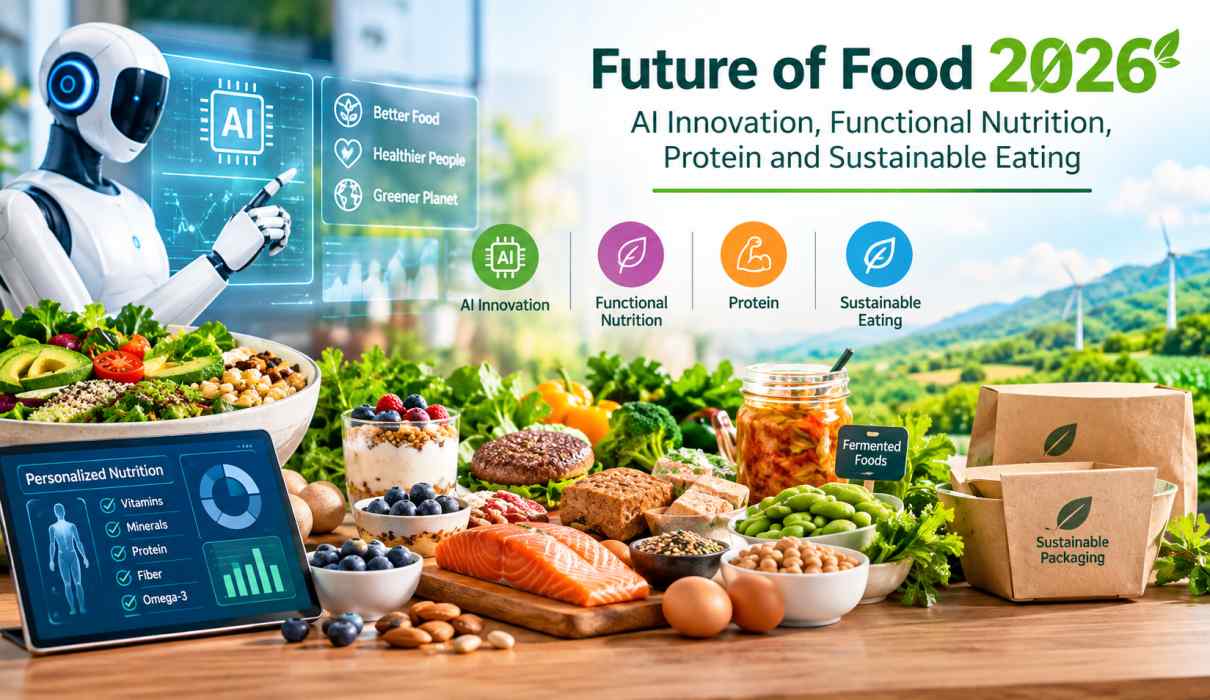
Future of Food 2026: AI Innovation, Functional Nutrition, Protein and Sustainable Eating
The food industry is entering a new era in 2026, shaped by technology, changing consumer preferences, health awareness and environmental priorities. From artificial intelligence and personalized nutrition to functional foods, alternative proteins, fermentation and sustainable food production, the way people discover, prepare and consume food is evolving rapidly.
The future of food in 2026 is not simply about introducing new ingredients. It is about creating food that delivers greater nutritional value, supports healthier lifestyles, reduces environmental impact and uses technology to improve efficiency across the food supply chain.
Consumers are increasingly interested in foods that fit specific health goals, convenient eating habits and sustainable lifestyles. At the same time, food manufacturers, restaurants, retailers and technology companies are exploring innovative ways to produce better food while responding to global challenges such as resource scarcity, food waste and climate change.
This article explores the major food trends shaping 2026, including AI-powered food innovation, functional nutrition, protein-rich foods, fermentation, sustainable eating and personalized food experiences.
The Future of Food in 2026
Food is becoming more connected with technology and personal wellness than ever before. Traditional meals remain important, but consumers are also looking for products that provide convenience, nutritional benefits and new experiences.
The modern food industry is increasingly focused on several key priorities:
- Health and wellness
- High-protein nutrition
- Functional ingredients
- Personalized diets
- Artificial intelligence
- Sustainable production
- Food waste reduction
- Fermented and naturally produced foods
- Plant-based and alternative proteins
- Convenient meal solutions
These trends are influencing everything from food manufacturing and grocery shopping to restaurant menus and home cooking.
1. AI Is Transforming Food Innovation
Artificial intelligence is becoming one of the most important technologies influencing the future of food. Food companies can use AI to analyze consumer preferences, develop new products, improve supply chains and identify emerging food trends.
AI can process large amounts of information and help businesses understand what consumers are searching for, purchasing and discussing. This can make food product development faster and more data-driven.
AI can also support recipe development. By analyzing ingredients, nutritional information and consumer preferences, AI-powered systems can suggest combinations of ingredients and develop concepts for new products.
Another important application is quality control. Computer vision and machine learning can help identify defects in food products, monitor production processes and improve consistency.
In restaurants and food delivery, AI can also contribute to demand forecasting. Better predictions can help businesses prepare appropriate quantities of food and potentially reduce unnecessary waste.
As AI technology develops, its role in food will likely expand from behind-the-scenes manufacturing into more personalized consumer experiences.
2. Functional Nutrition Becomes More Important
One of the strongest developments in food is the growing interest in functional nutrition. Consumers increasingly want food to provide benefits beyond basic calories and nutrients.
Functional foods are generally associated with ingredients or nutritional properties that may support specific aspects of health and well-being. Examples include foods containing fiber, probiotics, prebiotics, vitamins, minerals, omega-3 fatty acids and plant compounds.
In 2026, functional nutrition is becoming more closely connected with everyday eating. Instead of relying exclusively on specialized supplements, consumers are increasingly interested in incorporating beneficial ingredients into familiar foods and beverages.
Functional drinks are an important part of this trend. Products featuring ingredients such as probiotics, electrolytes, botanical extracts or added vitamins are becoming increasingly visible across the beverage market.
However, consumers are also becoming more knowledgeable. Clear labeling, credible nutritional information and scientifically supported claims are increasingly important when choosing functional products.
3. Protein Remains a Major Food Trend
Protein continues to be a major focus of modern nutrition. Consumers are looking for convenient ways to include more protein in their daily diets, particularly through breakfast foods, snacks, beverages and ready-to-eat meals.
The growing popularity of high-protein products is influencing food innovation across multiple categories.
Protein can be found in traditional sources such as eggs, dairy, fish, poultry and meat, as well as plant-based sources including beans, lentils, peas, soy, nuts and seeds.
Food manufacturers are incorporating protein into products such as yogurt, snack bars, cereals, bakery products, beverages and prepared meals.
The future of protein is likely to involve greater variety rather than a single dominant source. Consumers may increasingly combine conventional animal proteins with plant-based and other emerging protein options according to personal preferences, affordability and dietary goals.
4. Plant-Based Food Continues to Evolve
Plant-based food is moving beyond basic meat alternatives. Modern food innovation is exploring vegetables, legumes, grains, seeds, mushrooms, sea plants and other plant ingredients in new ways.
The emphasis is increasingly shifting toward products that provide recognizable ingredients, appealing textures and useful nutritional profiles.
Plant-based foods can include everything from dairy alternatives and meat substitutes to vegetable-based snacks, protein products and innovative prepared meals.
An important development is the focus on reducing highly processed formulations while improving taste and nutritional quality.
Consumers may increasingly look for plant-based products that combine convenience with simple ingredients and adequate protein.
5. Fermentation Is Returning to the Spotlight
Fermentation is one of the oldest food-production techniques, but it has become an important modern food trend.
Traditional fermented foods such as yogurt, kimchi, sauerkraut, kefir, miso and various regional foods have long been part of different culinary cultures. Modern food technology is now exploring fermentation for new applications.
Fermentation can be used to develop distinctive flavors, textures and food characteristics. It is also being investigated as a tool for producing alternative proteins and food ingredients.
Precision fermentation is particularly interesting because it uses microorganisms and controlled processes to produce specific ingredients.
The combination of traditional fermentation knowledge and modern biotechnology could create new possibilities for food production.
At the consumer level, fermented foods are also connected with interest in gut health and diverse eating patterns. This makes fermentation an important intersection between food culture, nutrition and technology.
6. Personalized Nutrition Gains Momentum
The idea of one diet being suitable for everyone is increasingly being challenged by personalized approaches to nutrition.
People have different lifestyles, food preferences, activity levels and nutritional requirements. Technology is making it easier to create food recommendations that are more closely aligned with individual needs.
AI, wearable devices, health applications and nutritional databases can potentially contribute to personalized food planning.
For example, digital platforms can analyze dietary information and provide meal suggestions based on a person’s stated goals and preferences.
In the future, personalized nutrition could become increasingly integrated with grocery shopping, meal planning and food delivery.
However, consumers should distinguish between personalized recommendations and medical advice. Nutrition decisions involving health conditions should be discussed with qualified healthcare professionals.
7. Sustainable Eating Becomes Mainstream
Sustainability is another major factor shaping the future of food. Consumers, businesses and policymakers are increasingly considering how food production affects land, water, energy use, packaging and waste.
Sustainable eating does not necessarily mean following one specific diet. It can involve a variety of practices, including choosing seasonal foods, reducing unnecessary waste, using more plant-based ingredients and supporting efficient food production.
Food companies are also examining ways to improve resource efficiency throughout their operations.
Sustainable packaging is another important area. Businesses are exploring recyclable, reusable and lower-impact packaging options while trying to maintain food safety and product quality.
The challenge is to create sustainable food systems that remain practical, affordable and accessible to consumers.
8. Food Waste Reduction and Circular Food Systems
Food waste is a significant challenge across the global food system. In 2026, reducing waste is becoming an increasingly important part of food innovation.
Technology can help businesses forecast demand more accurately, monitor inventory and identify products approaching their best-before dates.
Restaurants and retailers can use improved inventory systems to reduce overproduction. Consumers can also reduce household waste through meal planning, appropriate storage and creative use of leftovers.
The idea of a circular food system takes this further by attempting to keep resources in use for longer. Food by-products may potentially be transformed into new ingredients, animal feed, compost or other useful materials.
Innovative companies are exploring ways to turn food-processing leftovers into ingredients for snacks, beverages and other products.
9. Smart Food Production and Agriculture
The future of food begins long before products reach supermarkets. Agriculture is becoming increasingly connected with technology.
Sensors, satellite systems, automation, robotics and data analytics can help farmers monitor crops and resources.
Precision agriculture aims to use information to make farming decisions more efficiently. Technology can help monitor soil conditions, irrigation requirements and crop health.
Controlled-environment agriculture, including advanced greenhouses and indoor growing systems, is another area attracting attention. These systems can provide greater control over growing conditions and potentially support food production closer to consumers.
The combination of agricultural technology and food innovation could create more connected food supply chains.
10. Convenience Remains a Powerful Driver
Despite growing interest in nutrition and sustainability, convenience remains essential.
Modern consumers often have limited time for meal preparation. As a result, ready-to-eat meals, meal kits, nutritious snacks, convenient beverages and simplified cooking solutions remain important.
The future of convenience food is likely to focus on balancing speed with nutritional quality.
Consumers may increasingly expect convenient foods to contain recognizable ingredients, adequate protein, useful nutrients and appealing flavors.
This creates opportunities for food businesses to develop products that make healthy eating easier without sacrificing taste or convenience.
11. Global Flavors and Culinary Innovation
Food trends in 2026 are also being influenced by global culinary traditions.
Consumers are becoming more curious about regional ingredients, traditional cooking techniques and international flavors. Social media, travel and food delivery platforms have made it easier for people to discover cuisines from around the world.
This is encouraging restaurants and food manufacturers to experiment with new flavor combinations.
Traditional ingredients may also be incorporated into modern products, creating a connection between food heritage and contemporary innovation.
The future of food is therefore likely to be both technological and cultural, combining advanced science with traditional culinary knowledge.
12. Transparency and Clean Labels Matter
Consumers are paying greater attention to what goes into their food.
Clear ingredient lists, nutritional information and responsible product claims can influence purchasing decisions. People increasingly want to understand how products are made and where ingredients come from.
Food brands that communicate clearly can build stronger relationships with consumers.
Transparency can also extend to sustainability. Information about sourcing, packaging and production practices may become increasingly important as consumers consider the wider impact of their food choices.
The Role of Technology in the Food Supply Chain
The transformation of food is not limited to products. Technology is changing the entire supply chain.
Digital systems can connect farmers, manufacturers, distributors, retailers and consumers. Data can help businesses track inventory, predict demand and optimize logistics.
Blockchain and other traceability technologies may also support greater visibility in certain food supply chains.
Automation can improve efficiency in food processing and warehouses, while robotics can assist with repetitive tasks.
Together, these technologies are creating a more connected food ecosystem.
What Consumers Can Expect From Food in 2026
The food experience of 2026 is likely to be more personalized, technology-driven and health-conscious.
Consumers can expect to see continued growth in:
- High-protein foods and beverages
- Functional nutrition products
- Fermented foods
- Plant-based ingredients
- AI-assisted food development
- Personalized meal recommendations
- Sustainable packaging
- Food waste reduction solutions
- Smart agriculture
- Convenient healthy meals
- Global flavors and culinary experimentation
However, not every trend will become mainstream. Consumer acceptance will ultimately depend on factors such as taste, affordability, convenience, nutritional value and trust.
Conclusion
The future of food in 2026 is being shaped by a combination of artificial intelligence, nutrition science, biotechnology, sustainability and changing consumer expectations.
AI is helping food companies develop products and improve operations. Functional nutrition is encouraging consumers to think about the benefits of everyday foods. Protein remains a major focus, while fermentation and alternative ingredients are opening new possibilities for food innovation.
At the same time, sustainable eating, food-waste reduction and smarter agriculture are becoming increasingly important as the industry considers its environmental responsibilities.
The most significant change may be the growing connection between food, technology and personal well-being. Instead of focusing only on taste or convenience, the food industry is increasingly exploring how products can meet broader nutritional, environmental and lifestyle needs.
As these trends continue to develop, 2026 represents an important stage in the evolution of the global food industry. The next generation of food will likely combine better nutrition, smarter technology, sustainable production and diverse culinary experiences, creating new opportunities for consumers and businesses alike.