

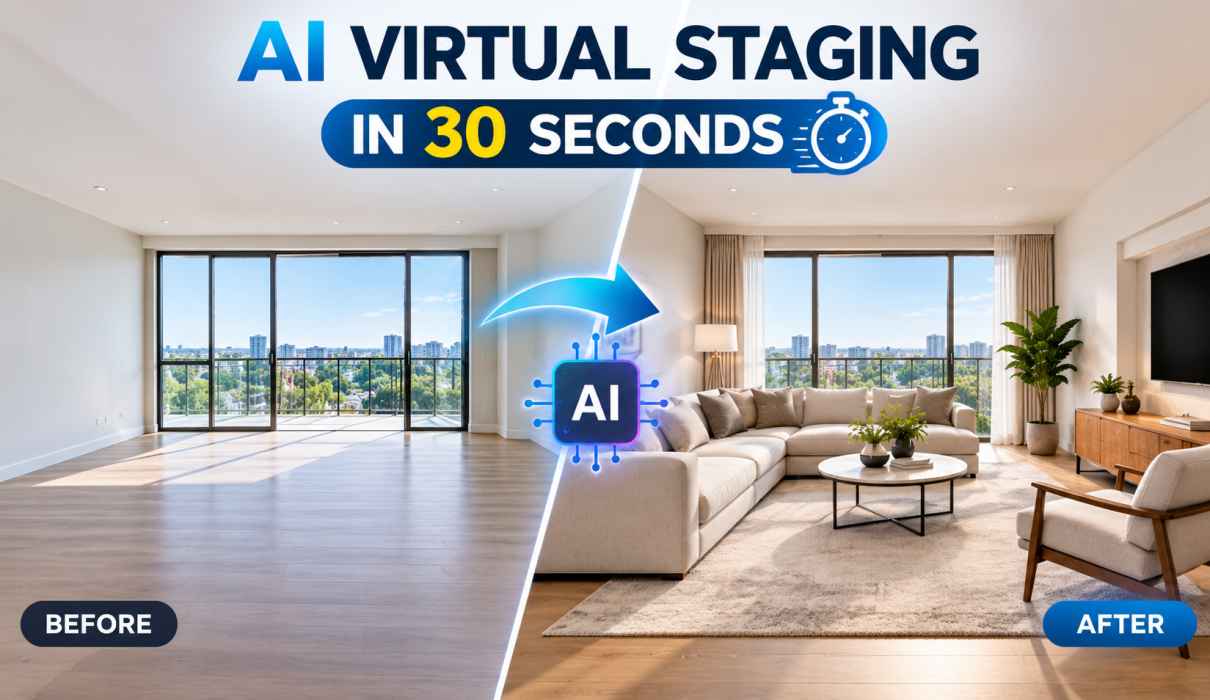
AI Virtual Staging in 30 Seconds
Empty rooms are hard to sell. Buyers struggle to judge size, flow, and potential, and listing photos of bare floors and blank walls rarely inspire anyone to book a showing. Traditional staging fixes this, but it is costly, slow, and logistically complicated. Now there is a faster way: AI virtual staging in 30 seconds.
In this guide, you will learn how AI virtual staging in 30 seconds works, why it is changing real estate marketing, which mistakes to avoid, and how to get professional-looking results every time.
What Is AI Virtual Staging?
Virtual staging is the digital process of adding furniture, decor, and styling to photos of empty or outdated rooms. Instead of hiring movers and renting sofas, you upload a photo and software places everything for you.
AI takes this a step further. Using machine learning, the software recognizes walls, floors, windows, and room dimensions, then chooses and places furniture that fits the space and style. Many modern platforms can deliver AI virtual staging in 30 seconds or less, compared with days of waiting for a human designer or weeks of arranging physical staging.
Times vary by tool, image size, and server load, but the point is clear: what once took days can now happen while you wait.
Why AI Virtual Staging in 30 Seconds Is a Game Changer
1. Speed That Matches the Market
Real estate moves quickly. A listing that goes live a day sooner can capture more attention during its most valuable window. With AI virtual staging in 30 seconds, agents can upload photos in the morning and publish a fully staged listing by lunch.
2. Dramatically Lower Costs
Physical staging can cost thousands of dollars per property, plus monthly rental fees for furniture. Virtual staging typically costs a small fraction of that, and AI-powered options are often cheaper still. For agents handling many listings, the savings add up fast.
3. Better Buyer Engagement
Homes that look furnished help buyers imagine daily life: where the sofa goes, how a dining table fits, whether the second bedroom works as an office. This emotional connection can lead to more clicks, more inquiries, and stronger offers.
4. Flexibility for Every Buyer
One empty room can be shown in multiple styles. A modern look for young professionals, a cozy traditional style for families, a minimalist layout for downsizers. AI virtual staging in 30 seconds makes testing different looks quick and low-risk.
5. No Disruption to Occupied or Vacant Homes
There is no need to coordinate deliveries, move heavy furniture, or disturb tenants and sellers. Everything happens on a screen.
How AI Virtual Staging in 30 Seconds Works
The process is simple enough for anyone to use, even without design or technical skills.
Step 1: Upload a Quality Photo
Use a bright, well-lit, high-resolution photo of the empty room. Shoot from a corner at roughly chest height so walls, floors, and windows are clearly visible.
Step 2: Choose Room Type and Style
Select the room, such as living room, bedroom, kitchen, or home office, and pick a design style like modern, Scandinavian, farmhouse, luxury, or coastal.
Step 3: Let the AI Generate
The system analyzes the room’s geometry, lighting, and perspective, then places furniture, rugs, art, and accessories. This is the stage where AI virtual staging in 30 seconds earns its name, as results often appear within moments.
Step 4: Review and Refine
Check the output carefully. Many tools let you swap furniture, change colors, remove items, or regenerate with a different style until you are happy.
Step 5: Download and Publish
Export the final images and add them to your listing, website, social media posts, and brochures.
Who Can Benefit?
- Real estate agents: Make listings stand out on crowded portals and social feeds.
- Home sellers: Boost appeal without paying for expensive staging.
- Property developers: Showcase off-plan or newly built units before furnishing them.
- Short-term rental hosts: Present spaces attractively to attract bookings.
- Photographers and marketers: Offer staging as an added service.
- Interior designers: Quickly present concepts to clients.
Tips for Getting Professional Results
The technology is fast, but your input still matters. Follow these tips to get the most from AI virtual staging in 30 seconds.
Start with great photography. Poor lighting, clutter, or distorted angles lead to unrealistic results. Clean the room, open the curtains, and use a wide-angle lens carefully.
Match the style to your target buyer. A luxury penthouse needs different furniture than a starter apartment. Think about who is likely to buy or rent.
Keep furniture in proportion. Oversized pieces can make a room look bigger than it is, which can frustrate buyers at viewings. Choose scale-appropriate items.
Do not over-decorate. Leave breathing room. A few well-chosen pieces look more natural than a crowded space.
Check the details. Look for odd shadows, floating objects, or blurred edges. Regenerate or edit if something looks off.
Stage the key rooms first. Prioritize the living room, primary bedroom, and kitchen or dining area, as these influence buyers most.
Disclosure and Ethics: Be Transparent
Virtual staging is widely accepted in real estate, but honesty is essential. Rules differ by region and listing platform, and some require staged images to be labeled. As a general best practice:
- Clearly mark staged photos as “virtually staged” or include a disclaimer.
- Show original, unstaged photos alongside edited ones when possible.
- Never use staging to hide defects such as damage, stains, or structural problems.
- Do not change permanent features like windows, flooring, or room size.
Transparency builds trust, protects you from complaints, and ensures buyers are not disappointed during viewings. Check your local regulations and listing site policies before publishing.
Common Mistakes to Avoid
- Using low-quality photos. Blurry or dark images produce weak results, no matter how smart the AI is.
- Choosing mismatched styles. A rustic farmhouse sofa in a sleek city loft feels wrong and hurts credibility.
- Ignoring room function. Furniture should make sense for the layout and purpose of the space.
- Skipping the review stage. Always inspect results before publishing. Small errors can undermine trust.
- Overpromising. Staged images should reflect what the space can realistically hold.
AI Virtual Staging vs. Traditional Staging
Speed: AI virtual staging in 30 seconds beats physical staging, which can take days or weeks to arrange.
Cost: Digital options are generally far cheaper than renting furniture and paying staging crews.
Flexibility: You can change styles instantly online, while physical staging requires moving real items.
Experience: Physical staging offers a real, tangible feel during in-person viewings, which virtual staging cannot replicate.
For many sellers, the best approach is a combination: virtual staging for online marketing, with light physical touches for showings when budget allows.
The Future of AI Virtual Staging
The technology is evolving rapidly. Expect more realistic lighting, better furniture libraries, tighter control over placement, and features such as virtual walkthroughs and video staging. As quality improves and costs fall, AI virtual staging in 30 seconds is likely to become a standard step in listing preparation rather than a nice extra.
Frequently Asked Questions
Is AI virtual staging in 30 seconds really that fast? Many platforms produce a first result in around 30 seconds or less. Exact timing depends on the tool, image size, and complexity, and you may spend extra time reviewing or refining.
How realistic are the results? Quality has improved significantly. With good source photos, results can look convincing, though occasional glitches still appear, so a quick manual check is wise.
Does virtual staging help homes sell? Staged listings generally attract more online attention because buyers connect with furnished spaces. Results vary by market, price range, and property condition.
Is virtual staging legal and ethical? Yes, when disclosed honestly and not used to mislead buyers. Always follow local rules and platform guidelines.
Can I stage any room? Most tools handle common rooms such as living areas, bedrooms, kitchens, and offices. Complex layouts or unusual angles may need extra adjustments.
Conclusion
Selling a property is about helping people see what is possible. AI virtual staging in 30 seconds turns empty rooms into inviting homes at a fraction of the traditional cost and time, giving agents, owners, and developers a powerful edge in a competitive market.
Start with strong photos, choose styles that fit your buyers, stay honest about what is staged, and review every result before it goes live. Do that, and AI virtual staging in 30 seconds can become one of the most effective tools in your marketing toolkit.