

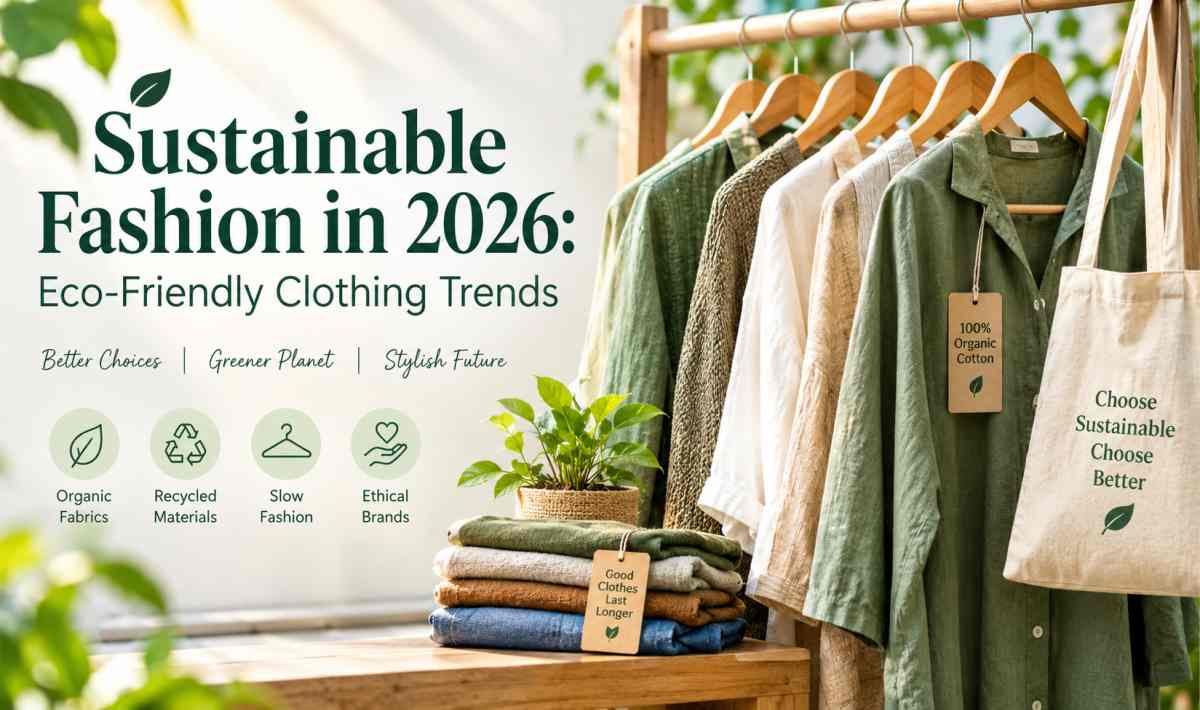
Sustainable Fashion in 2026: Eco-Friendly Clothing Trends
Fashion is more than just clothing. It reflects personal style, culture, creativity, and lifestyle choices. However, the way clothes are designed, manufactured, purchased, and discarded can have significant environmental and social consequences. As awareness of textile waste, resource consumption, and responsible manufacturing grows, sustainable fashion is becoming an important part of the modern fashion industry.
In 2026, sustainable fashion is about finding a better balance between style, quality, affordability, and environmental responsibility. Consumers are exploring durable garments, natural fabrics, second-hand clothing, recycled materials, and locally produced designs. At the same time, fashion brands are looking for ways to reduce waste, improve production processes, and provide clearer information about their products.
India has a particularly interesting role in this transition. Its traditional handloom industry, textile recycling networks, natural fibres, and skilled artisans provide a strong foundation for more responsible clothing production. Recent government initiatives have also highlighted textile recycling, cleaner manufacturing, and circular textile systems as important areas of development.
This guide explores the leading sustainable fashion trends in 2026, the materials shaping eco-friendly clothing, and practical ways consumers can build a more responsible wardrobe without sacrificing personal style.
What Is Sustainable Fashion?
Sustainable fashion refers to designing, producing, purchasing, using, and disposing of clothing in ways that aim to reduce environmental harm and encourage responsible social practices.
Traditional fashion systems often follow a linear model: raw materials are collected, products are manufactured, clothes are purchased, and unwanted garments are discarded. Sustainable fashion encourages a more circular approach in which clothing is designed to last longer, repaired when necessary, reused by other people, or recycled into new materials.
Sustainable fashion involves several important principles:
- Environmentally responsible materials: Choosing suitable fibres and fabrics with lower overall environmental impacts.
- Ethical manufacturing: Supporting safe working conditions, fair treatment, and responsible supply chains.
- Durable clothing: Purchasing garments that maintain their usefulness over time.
- Waste reduction: Repairing, reusing, donating, and recycling unwanted textiles.
- Responsible consumption: Buying clothes thoughtfully instead of purchasing every new trend.
Sustainable fashion does not mean that every garment must be organic, handmade, or expensive. It means considering the entire life cycle of clothing and making better choices where practical.
Why Sustainable Fashion Matters in 2026
The global fashion industry depends on extensive supply chains involving agriculture, fibre production, spinning, dyeing, garment manufacturing, packaging, transportation, and retail. Each stage can use resources and create waste.
Textile waste is a particularly important concern because unwanted garments may be discarded even when their materials could still be reused or recovered. Synthetic fibres can also release microfibres during washing, while some textile-processing methods can contribute to water pollution if wastewater is not properly treated.
The environmental impact of a garment depends on several factors, including its material, manufacturing process, durability, transportation, care requirements, and end-of-life treatment. Therefore, no single fabric or label automatically makes a product sustainable.
Sustainable fashion can help address these challenges by encouraging longer product lifetimes, better resource management, safer production practices, and more effective textile recovery.
For consumers, it also offers practical advantages. Durable clothes may provide better long-term value, versatile garments can simplify everyday dressing, and repairing favourite pieces can reduce unnecessary replacement purchases.
Top Sustainable Fashion Trends in 2026
1. Organic and Responsibly Sourced Fabrics
Organic cotton, linen, hemp, and other responsibly sourced fibres continue to attract attention from designers and consumers interested in sustainable clothing.
Organic cotton is grown according to organic agricultural standards, which restrict certain synthetic pesticides and fertilisers. However, its total environmental impact still depends on water use, processing, transportation, and garment durability.
Linen, produced from flax, is valued for its lightweight texture, breathability, and natural appearance. Hemp is another versatile fibre that can be used in shirts, trousers, dresses, and casual clothing.
Consumers should remember that natural does not automatically mean sustainable. Farming practices, land use, dyeing methods, and production conditions all matter. Looking for reliable certification and transparent sourcing information can help shoppers make more informed decisions.
2. Slow Fashion and Timeless Wardrobes
Slow fashion is an approach that prioritises quality, longevity, and thoughtful purchasing over constantly changing trends.
Instead of buying numerous inexpensive garments that may quickly lose their appeal, consumers can focus on clothing that suits their lifestyle and can be worn in different combinations.
Examples include plain T-shirts, classic shirts, comfortable trousers, versatile jackets, neutral-coloured dresses, and well-made traditional garments.
A capsule wardrobe is one practical application of slow fashion. It contains a carefully selected collection of clothing pieces that coordinate easily with one another.
For example, a few shirts, two pairs of trousers, a versatile jacket, and comfortable everyday footwear can create many combinations without requiring a large wardrobe.
Slow fashion does not require avoiding trends entirely. It encourages selecting trends that genuinely fit personal preferences and are likely to remain useful.
3. Recycled Fabrics and Textile Innovation
Recycled textiles are becoming an important part of the sustainable fashion conversation. These materials can come from manufacturing scraps, discarded clothing, or other recovered textile resources.
Recycled cotton can be incorporated into new yarns and fabrics, although fibre quality and length may limit how much material can be recycled into certain products. Recycled polyester is used in activewear, jackets, bags, and other applications requiring particular performance characteristics.
However, recycled polyester is not impact-free. Synthetic fabrics can still release microfibres during washing, and recycling systems vary in their ability to recover materials efficiently.
Emerging textile innovations also include improved fibre-sorting methods, chemical recycling research, and the development of materials from agricultural residues or other renewable feedstocks.
In 2026, the important trend is not simply using recycled materials but improving traceability, material quality, recyclability, and the ability to recover clothing after use.
4. Second-Hand Clothing and Fashion Resale
Buying pre-owned clothing is one of the most accessible ways to participate in sustainable fashion.
Thrift stores, clothing exchanges, resale platforms, and family wardrobe swaps allow garments to remain useful for longer. This can reduce the need for new production when second-hand purchases genuinely replace new clothing purchases.
Pre-owned fashion also gives consumers opportunities to discover distinctive styles, vintage designs, and quality garments at different price points.
In India, traditional practices such as passing clothing between family members, reusing garments, and altering older outfits already demonstrate the value of extending clothing life.
To shop second-hand effectively, check garment condition, stitching, buttons, zippers, fabric quality, and care instructions. Choose pieces that fit your needs and can be worn regularly.
Resale is most beneficial when clothing is kept in circulation rather than purchased impulsively and discarded shortly afterward.
5. Upcycling and Creative Clothing Customisation
Upcycling transforms unwanted or unused materials into products with a new purpose or improved value.
In fashion, this might involve turning old jeans into bags, using fabric scraps for patchwork, converting oversized shirts into new silhouettes, or combining leftover materials to create unique accessories.
Unlike conventional recycling, which may break materials down into fibres or other inputs, upcycling can preserve more of a garment’s existing structure.
This trend encourages creativity and makes personal style less dependent on purchasing new products.
Small businesses and independent designers can also use leftover fabric to produce limited collections, accessories, and home textiles. Such practices may reduce manufacturing waste, provided the remaining materials are suitable for the new products.
Consumers can begin with simple customisation, such as replacing buttons, adding decorative patches, adjusting hems, or transforming an unused garment with help from a tailor.
6. Indian Handloom and Traditional Craft Fashion
India’s handloom and handicraft traditions offer valuable opportunities for sustainable fashion when production is managed responsibly.
Khadi, handwoven cotton, regional silk traditions, block printing, embroidery, and other textile crafts connect clothing with local knowledge and skilled craftsmanship.
Handloom products can support artisan livelihoods, preserve cultural heritage, and provide distinctive alternatives to mass-produced designs. Their environmental performance, however, depends on factors such as fibre sourcing, dyeing, finishing, water use, and product longevity.
Contemporary designers are combining traditional textiles with modern silhouettes to create everyday shirts, dresses, jackets, sarees, kurtas, and fusion outfits.
For Indian consumers, this makes it possible to explore sustainable style through locally made products while appreciating regional craftsmanship.
When buying handcrafted clothing, look for information about the maker, production location, materials, and care requirements. Supporting transparent and responsible businesses can help strengthen the connection between fashion and local communities.
7. Minimalist Fashion and Versatile Styling
Minimalist fashion focuses on simplicity, versatility, and functional design. It often features clean silhouettes, coordinated colours, practical layers, and garments that can be styled for different occasions.
A minimalist wardrobe may include white shirts, black trousers, neutral-coloured tops, classic denim, simple dresses, and reusable outerwear.
The environmental benefit comes from how these garments are selected and used, rather than from their appearance alone. A minimalist outfit is not automatically sustainable if it is made from poorly sourced materials or replaced frequently.
The best approach is to combine versatile design with durability and responsible purchasing.
For example, a single well-made shirt might work for school or work, family gatherings, casual outings, and travel when paired with different garments and accessories.
This approach helps consumers get more use from the clothing they already own.
8. Natural Dyes and Cleaner Textile Processing
Dyeing and finishing are important stages in textile manufacturing because they can require water, energy, and chemical inputs.
Natural dyes made from selected plants or other biological sources are attracting interest among designers exploring traditional and alternative colouring methods. Examples include indigo, madder, and certain plant-derived pigments.
However, natural dyes are not automatically environmentally superior. Their impacts depend on the source of the dye, farming requirements, extraction methods, mordants, colour durability, and wastewater treatment.
Modern textile manufacturers are also exploring cleaner production techniques, improved dyeing efficiency, safer chemicals, and water-reuse systems.
For consumers, responsible dyeing is often difficult to assess from appearance alone. Clear product information, credible certifications, and transparent manufacturing practices are more useful indicators than labels such as “natural” or “green” without supporting evidence.
9. Clothing Rental and Sharing Services
Clothing rental allows people to use garments temporarily instead of purchasing items needed for only one occasion.
This can be useful for wedding events, parties, formal functions, photoshoots, and special celebrations. Rental services may offer access to occasionwear that would otherwise remain unused for long periods.
Clothing sharing among friends and family can provide a similar benefit without the expense of buying additional garments.
Nevertheless, the environmental impact of rental depends on garment durability, cleaning practices, packaging, transportation, and the number of times an item is used.
A rental model is most useful when it extends the life of clothing and replaces unnecessary purchases rather than creating additional consumption.
10. Transparency, Traceability, and Sustainable Labels
Consumers increasingly want to understand where their clothes come from and how they are made. This has encouraged interest in traceability, supplier information, product certifications, and clearer environmental claims.
Useful information may include fibre composition, manufacturing location, care instructions, recycled content, and details about the brand’s supply chain.
Certifications can help verify particular claims, but each certification covers specific criteria. For example, a standard may focus on organic fibres, chemical management, or social responsibility rather than guaranteeing that a product is sustainable in every respect.
Consumers should be cautious of vague claims such as “100% green,” “zero impact,” or “completely eco-friendly” when no evidence is provided.
In 2026, credible communication and measurable improvements are more valuable than sustainability marketing alone.
Best Eco-Friendly Fabrics for Sustainable Clothing
Choosing a suitable fabric is an important part of responsible fashion, but material selection should consider the full production process and how the finished garment will be used.
| Fabric | Common uses | Important consideration |
|---|---|---|
| Organic cotton | T-shirts, shirts, dresses | Check certification and processing practices |
| Linen | Summer clothing, trousers, shirts | Consider cultivation, finishing, and durability |
| Hemp | Shirts, jackets, casual wear | Check fibre processing and fabric blends |
| Recycled cotton | Denim, T-shirts, blended fabrics | Recycled fibre quality can vary |
| Recycled polyester | Sportswear, bags, outerwear | Microfibre release and end-of-life recycling remain concerns |
| Responsibly sourced wool | Sweaters, coats | Animal welfare, land use, and processing matter |
| Reused or upcycled textiles | Unique clothing and accessories | Quality depends on the source material and construction |
The best fabric is one that suits the intended purpose, lasts through repeated use, and can be maintained appropriately.
How to Build a Sustainable Wardrobe on a Budget
Sustainable fashion does not have to involve replacing your entire wardrobe or purchasing expensive designer clothing. Everyday habits often make a meaningful difference.
1. Shop Your Existing Wardrobe
Before buying anything new, review the clothes you already own. You may find forgotten garments that can be restyled or combined in different ways.
2. Make a Shopping List
Identify genuine wardrobe gaps before visiting stores or shopping online. This helps reduce impulse purchases and duplicate items.
3. Prioritise Quality and Fit
Check stitching, seams, fabric weight, zippers, and buttons. A garment that fits comfortably and withstands regular wear is more likely to remain useful.
4. Repair Clothes When Possible
Replace missing buttons, repair small tears, fix loose seams, and ask a tailor to adjust garments when appropriate. Minor repairs can extend a garment’s useful life.
5. Wash Clothes Carefully
Follow the care label, avoid unnecessarily frequent washing, and air-dry garments when suitable. Wash synthetic clothing carefully to help reduce fibre shedding, and consider a suitable microfibre-catching solution if available.
6. Buy Second-Hand or Exchange Clothing
Explore pre-owned options, organise clothing swaps, or pass usable garments to others who need them.
7. Donate or Recycle Responsibly
Give wearable clothing to suitable donation programmes. For damaged textiles, look for legitimate textile collection or recycling options rather than assuming every donation centre accepts unusable garments.
8. Research Brands Before Buying
Review product details, material composition, manufacturing information, return policies, and evidence supporting environmental claims.
Small, consistent choices are more practical than trying to achieve a perfect sustainable wardrobe immediately.
Sustainable Fashion in India: Opportunities and Challenges
India has a broad textile ecosystem that includes cotton production, spinning, weaving, garment manufacturing, handloom crafts, embroidery, and textile recovery.
These capabilities create opportunities to develop more circular and resource-efficient fashion systems.
A June 2026 article from India Today highlighted growing consumer interest in garment durability, responsible sourcing, quality, and brand transparency. At the same time, affordability and uncertainty about sustainability claims remain challenges for shoppers.
India’s textile policy discussions have also increasingly focused on recycling and circularity. In August 2026, the Ministry of Textiles described initiatives supporting textile waste management, recycled fibres, sustainable manufacturing, and circular-economy innovation.
These developments matter because sustainable fashion requires more than consumer awareness. It also depends on collection systems, suitable recycling technologies, skilled workers, reliable standards, investment, and cooperation across the supply chain.
Important challenges remain. Responsibly produced garments may be expensive for some households, environmental claims can be difficult to verify, and blended fabrics can be challenging to recycle. Informal textile recovery systems also need appropriate infrastructure and safe working conditions.
Progress will depend on making sustainable options practical, trustworthy, durable, and accessible to a wide range of consumers.
The Future of Sustainable Fashion
The future of sustainable fashion is likely to involve a combination of better materials, improved manufacturing, circular business models, digital traceability, repair services, and more informed consumer choices.
Artificial intelligence and data tools may help manufacturers forecast demand, manage inventory, identify defects, and reduce avoidable overproduction. Digital product information could also make it easier to understand garment composition and care requirements.
At the same time, recycling technologies may improve the recovery of fibres from discarded textiles. Designers may increasingly consider repairability and recyclability during the original design process.
These developments should be viewed as opportunities rather than guarantees. Their real environmental value will depend on implementation, energy sources, material recovery rates, product quality, and whether they reduce overall resource consumption.
Ultimately, the most effective sustainable fashion system is one that produces useful clothing, treats workers responsibly, minimises avoidable waste, and keeps materials in circulation for as long as practical.
Conclusion
Sustainable fashion in 2026 is about making thoughtful decisions throughout the life of clothing, from selecting materials to caring for garments and managing them when they are no longer needed.
Eco-friendly fabrics, slow fashion, recycled textiles, second-hand shopping, upcycling, Indian handloom crafts, and transparent supply chains are all contributing to a broader discussion about responsible style.
Consumers do not need to follow every trend or replace every item in their wardrobe. Buying only what is needed, choosing durable garments, repairing clothing, and reusing existing materials are practical starting points.
For India, sustainable fashion offers opportunities to combine traditional textile knowledge with modern production methods and recycling technologies. With stronger transparency, responsible manufacturing, and accessible choices, fashion can move towards a future that values both creativity and resource efficiency.
The most sustainable wardrobe is not necessarily the newest or most expensive one. It is the wardrobe that serves its owner well, lasts longer, and avoids unnecessary waste.
Frequently Asked Questions (FAQs)
1. What is sustainable fashion in 2026?
Sustainable fashion in 2026 focuses on durable clothing, responsible materials, ethical manufacturing, waste reduction, reuse, repair, and recycling throughout the clothing life cycle.
2. What are the top eco-friendly clothing trends in 2026?
Key trends include slow fashion, organic and responsibly sourced fabrics, recycled textiles, second-hand clothing, upcycling, traditional handloom fashion, minimalist styling, and greater supply-chain transparency.
3. Which fabrics are best for sustainable fashion?
Organic cotton, linen, hemp, recycled cotton, and responsibly sourced wool can be suitable options. The best choice depends on production methods, durability, processing, intended use, and end-of-life options.
4. Is sustainable fashion expensive?
Not necessarily. Repairing clothes, buying second-hand, exchanging garments, and using existing wardrobe pieces can be affordable ways to adopt sustainable fashion. Higher-quality new clothing may cost more initially but can offer better value when it lasts longer.
5. How can I make my wardrobe more sustainable?
Start by buying fewer unnecessary items, choosing versatile clothing, repairing damaged garments, washing clothes according to care labels, purchasing pre-owned items, and donating or recycling clothing responsibly.
6. Why is sustainable fashion important in India?
It can help address textile waste, encourage more efficient resource use, support traditional artisans, promote responsible manufacturing, and create opportunities for textile reuse and recycling.
7. Is organic cotton always sustainable?
No. Organic cotton follows specific agricultural standards, but the overall impact also depends on water use, processing, dyeing, transportation, durability, and how the garment is eventually handled.
8. What is the difference between slow fashion and fast fashion?
Fast fashion typically emphasises rapid production and frequent trend changes. Slow fashion prioritises thoughtful purchasing, durable products, longer garment life, and responsible production.
9. Can recycled polyester be considered eco-friendly?
Recycled polyester can reduce demand for virgin polyester in some applications, but it still has environmental impacts, including potential microfibre shedding. Its benefits depend on material sourcing, manufacturing, garment lifespan, and disposal or recycling options.
10. What is the easiest way to start sustainable fashion?
Begin with your existing wardrobe. Wear clothes for longer, repair them when needed, avoid unnecessary purchases, and choose durable or second-hand garments when you genuinely need something new.