

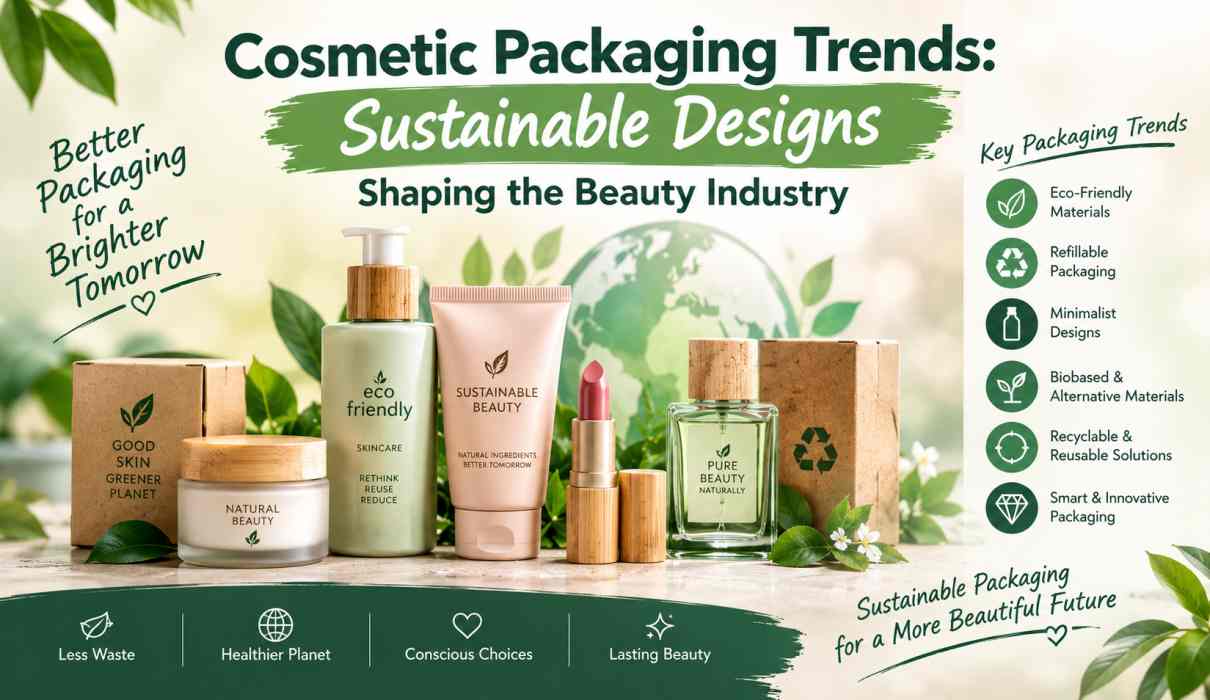
Cosmetic Packaging Trends: Sustainable Designs Shaping the Beauty Industry
The beauty industry is changing rapidly, and cosmetic packaging trends are becoming an increasingly important part of how brands develop, market, and sell their products. Packaging is no longer viewed only as a way to protect cosmetics. It also influences brand identity, consumer experience, product functionality, and environmental considerations.
From skincare bottles and makeup containers to perfume boxes and haircare packaging, beauty brands are exploring ways to reduce unnecessary materials, improve recyclability, introduce refill systems, and create more efficient packaging designs.
Growing consumer awareness about waste and environmental impact is encouraging cosmetic companies to reconsider traditional packaging models. At the same time, brands need packaging that remains attractive, durable, hygienic, practical, and cost-effective.
This has created a new generation of sustainable cosmetic packaging that combines design with functionality and environmental considerations.
In this article, we explore the major cosmetic packaging trends shaping the beauty industry, the materials being explored by brands, the growth of refillable packaging, and the key considerations for businesses developing sustainable beauty products.
Why Cosmetic Packaging Matters
Packaging plays several important roles in the cosmetics industry.
First, it protects the product from contamination, damage, moisture, light, and other external factors. This is particularly important for skincare products, fragrances, makeup, and formulations containing sensitive ingredients.
Second, packaging communicates a brand’s identity. Colors, shapes, typography, materials, and finishes can influence how consumers perceive a product.
Third, packaging affects convenience. Consumers increasingly expect products to be easy to open, carry, store, dispense, and use.
Finally, packaging can influence a company’s environmental footprint. The materials used, amount of packaging, manufacturing process, transportation requirements, and end-of-life options all contribute to the overall impact of a product.
For these reasons, cosmetic packaging design is becoming a strategic consideration rather than simply a visual exercise.
The Rise of Sustainable Cosmetic Packaging
One of the most important developments in the beauty industry is the growing interest in sustainable packaging.
Traditional cosmetic products can involve multiple packaging layers, including containers, caps, pumps, labels, boxes, inserts, and protective wrapping. When these components are difficult to separate or recycle, disposal can become more complicated.
Sustainable packaging aims to address some of these challenges through approaches such as:
- Using fewer materials
- Selecting recyclable materials
- Increasing recycled content where suitable
- Developing refillable containers
- Reducing unnecessary outer packaging
- Improving packaging efficiency
- Designing products for longer use
- Exploring alternative materials
However, sustainable packaging does not mean simply replacing one material with another. Brands need to evaluate the complete packaging system, including manufacturing, transportation, product protection, consumer use, and disposal.
1. Minimalist Packaging Designs
Minimalist packaging is becoming increasingly popular in cosmetics.
Instead of using multiple decorative layers, brands can focus on simple structures, limited materials, clear labeling, and functional design.
Minimalism can provide several advantages:
- Less material usage
- Lower packaging complexity
- Easier product storage
- Cleaner visual identity
- Potentially simpler recycling
Minimalist packaging can also create a premium appearance. Simple typography, neutral designs, and carefully selected materials can communicate a modern brand identity without excessive decoration.
However, brands should ensure that reducing packaging does not compromise product protection or safety.
2. Refillable Cosmetic Packaging
Refillable packaging is one of the most significant trends in sustainable beauty.
Instead of purchasing an entirely new container every time a product runs out, consumers can keep the original outer container and purchase a replacement refill.
This model is being explored across categories such as:
- Face creams
- Body care
- Fragrances
- Makeup
- Haircare
- Cleansers
- Serums
A successful refill system needs to be convenient. If refilling is difficult, messy, expensive, or confusing, consumers may be less likely to use it.
Brands therefore need to consider the complete refill experience, including how the replacement is purchased, transported, stored, inserted, and disposed of.
3. Recycled Plastic in Beauty Packaging
Plastic remains widely used in cosmetics because it can be lightweight, durable, versatile, and suitable for many product formats.
Rather than eliminating plastic entirely, some packaging strategies focus on using recycled plastic content where technically and commercially appropriate.
Recycled plastic can be used in selected bottles, jars, tubes, and other packaging components.
The challenge is ensuring that recycled materials meet the required standards for product protection, appearance, durability, and compatibility with the formulation.
Brands also need to communicate material claims accurately so consumers understand what type of recycled content is being used.
4. Glass Packaging
Glass has long been associated with premium beauty products, particularly perfumes, skincare products, and luxury cosmetics.
It can provide a high-end appearance and can be reused or recycled in suitable collection systems.
However, glass is heavier than many plastic alternatives. This can increase transportation weight and associated logistics requirements.
Therefore, choosing glass should involve more than considering its premium appearance or recyclability. Brands should evaluate the entire packaging system and the practical requirements of transportation and product use.
5. Paper-Based Cosmetic Packaging
Paper and paperboard are widely used for cosmetic cartons, outer boxes, inserts, and promotional packaging.
One important trend is reducing unnecessary secondary packaging and designing boxes that use fewer materials.
Paper-based packaging can also support strong branding because it provides a flexible surface for printing and graphic design.
For brands, the challenge is balancing appearance and sustainability with durability, moisture resistance, and product protection.
Paper-based materials may not be appropriate for every cosmetic application, particularly when direct contact with certain formulations creates technical challenges.
6. Biobased and Alternative Materials
The cosmetics industry is also exploring materials derived partly or entirely from renewable resources.
Depending on the application, these can include materials made using plant-based feedstocks or other alternative raw materials.
The term “biobased,” however, does not automatically mean that a package is biodegradable or compostable.
These characteristics are different and should not be treated as interchangeable.
Brands should clearly communicate the actual properties of their packaging rather than relying on broad environmental terminology.
7. Concentrated and Solid Beauty Products
Another packaging-related trend is the growth of concentrated or solid cosmetic formats.
Products such as solid shampoo bars, concentrated cleansers, solid perfumes, and other water-reduced formulations can require different packaging approaches from traditional liquid products.
Reducing water content may potentially reduce product weight and packaging requirements, depending on the formulation and product design.
Some solid beauty products can also use relatively simple paper-based packaging.
However, product performance, hygiene, shelf life, consumer convenience, and storage requirements remain important considerations.
8. Monomaterial Packaging
Cosmetic packaging often contains multiple materials. A bottle might include plastic, metal components, different polymers, adhesives, labels, and other elements.
This complexity can make recycling more difficult.
Monomaterial packaging attempts to use primarily one material family for components that would otherwise be difficult to separate.
Simplifying packaging construction can potentially improve sorting and recycling compatibility, depending on local recycling infrastructure.
The important point is that recyclable design depends not only on the material itself but also on collection, sorting, processing, and local recycling systems.
9. Lightweight Packaging
Reducing the amount of material used in packaging is another important approach.
Lightweight bottles, thinner containers, smaller boxes, and optimized structural designs can reduce the amount of raw material required.
Lower package weight can also reduce transportation requirements because more products can potentially be moved using the same logistical capacity.
However, lightweighting should be carefully engineered. Packaging still needs to withstand manufacturing, shipping, storage, and consumer use.
A package that breaks easily can create product waste and undermine the intended environmental benefits.
10. Reusable Packaging Systems
Some beauty brands are exploring packaging systems designed for repeated use.
Reusable containers can be particularly relevant for products purchased frequently.
The success of reusable packaging depends heavily on consumer behavior and logistics. Customers need clear instructions about how to clean, return, refill, or reuse the container.
A reusable system also needs an efficient supply chain. If returning or refilling the packaging requires excessive transportation or complicated procedures, the environmental benefits may be reduced.
11. Smart and Connected Packaging
Technology is also entering cosmetic packaging.
QR codes and digital features can provide consumers with additional information about:
- Product ingredients
- Usage instructions
- Product authenticity
- Recycling guidance
- Manufacturing information
- Brand stories
- Refill instructions
Smart packaging can improve transparency without requiring large amounts of printed information directly on the container.
Digital information can also help brands communicate packaging disposal instructions that may vary by region.
12. Sustainable Packaging and Premium Beauty
Sustainability does not necessarily mean sacrificing luxury.
Beauty brands are experimenting with sophisticated sustainable packaging using carefully selected materials, elegant shapes, high-quality finishes, and refillable designs.
For premium products, packaging can become part of the long-term consumer experience.
A durable outer container combined with replaceable inner components can create a balance between luxury and material efficiency.
The challenge is designing a system that feels premium while remaining practical and responsible.
How Consumers Are Influencing Cosmetic Packaging
Consumer expectations are influencing packaging decisions across the beauty industry.
Many shoppers increasingly pay attention to:
- Packaging materials
- Recyclability
- Refillable options
- Product quantity
- Excessive packaging
- Ingredient transparency
- Brand environmental claims
However, consumer priorities differ by market and product category.
Convenience, price, appearance, product performance, hygiene, and durability remain important factors.
Successful cosmetic packaging therefore needs to balance sustainability with the complete customer experience.
Challenges of Sustainable Cosmetic Packaging
Although sustainable packaging offers opportunities, it also presents challenges.
Cost
Alternative materials, specialized manufacturing processes, and refill systems can require investment in new equipment or supply chains.
Product Compatibility
Not every cosmetic formula is compatible with every packaging material.
Packaging must protect the formulation throughout its shelf life.
Recycling Infrastructure
A package may technically be recyclable but still have limited practical recycling options depending on the local waste-management system.
Consumer Convenience
Sustainable packaging needs to be easy to understand and use. Complicated refill or return systems may reduce adoption.
Supply Chain Requirements
Changing packaging can affect suppliers, manufacturing processes, transportation, storage, and inventory management.
For these reasons, brands should evaluate sustainability across the entire packaging lifecycle rather than focusing on a single material.
How Cosmetic Brands Can Choose Better Packaging
Brands considering sustainable cosmetic packaging can follow a structured process.
Step 1: Understand the Product
Identify the formulation’s requirements, shelf life, sensitivity to light or air, and compatibility with packaging materials.
Step 2: Reduce Unnecessary Materials
Review every component and determine whether it is necessary for product protection, functionality, or legal labeling requirements.
Step 3: Evaluate Material Options
Compare different materials based on durability, availability, recyclability, weight, cost, and manufacturing requirements.
Step 4: Consider Refill or Reuse
For frequently purchased products, evaluate whether a refillable or reusable system could work.
Step 5: Study Local Recycling Systems
Packaging should be designed with realistic end-of-life options in the markets where the product will be sold.
Step 6: Communicate Clearly
Use accurate and understandable packaging information. Environmental claims should reflect the actual characteristics of the packaging.
The Future of Cosmetic Packaging
The future of cosmetic packaging is likely to involve a combination of design innovation, material development, technology, and changes in consumer behavior.
Refillable systems, lightweight containers, recycled materials, simplified packaging structures, digital information, and alternative materials are likely to remain important areas of development.
However, there is unlikely to be one packaging solution suitable for every cosmetic product.
A perfume bottle, facial serum, shampoo, lipstick, and body lotion all have different technical and consumer requirements.
The most effective approach is therefore to design packaging around the specific product while considering its complete lifecycle.
Conclusion
Cosmetic packaging trends are moving beyond appearance and branding toward functionality, material efficiency, reuse, recyclability, and improved consumer awareness.
Sustainable cosmetic packaging can take many forms, including refillable containers, lightweight designs, recycled materials, paper-based packaging, monomaterial structures, reusable systems, and alternative materials.
For beauty brands, the goal should not simply be to replace one material with another. Instead, companies should consider the entire packaging lifecycle, from raw material sourcing and manufacturing to transportation, consumer use, and end-of-life management.
As the beauty industry continues to evolve, packaging will remain an important area of innovation. Brands that combine attractive design, product protection, convenience, and thoughtful material choices can create packaging that meets both business and consumer needs.
Ultimately, the future of sustainable cosmetic packaging will depend on collaboration among beauty brands, packaging manufacturers, material innovators, retailers, consumers, and recycling systems. By focusing on practical solutions rather than marketing claims alone, the cosmetics industry can continue developing packaging that is both functional and better aligned with changing environmental expectations.