

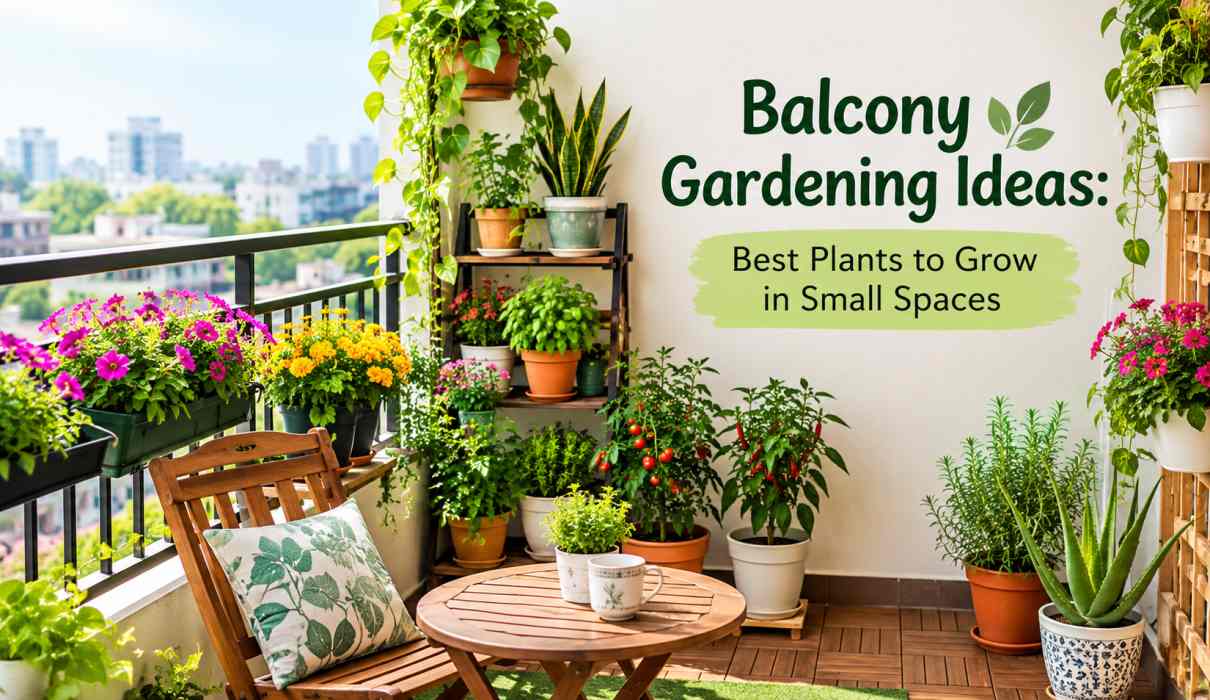
Balcony Gardening Ideas: Best Plants to Grow in Small Spaces
A balcony can become much more than an empty outdoor corner. With the right plants, containers, and arrangement, even a small balcony can be transformed into a beautiful green space. Balcony gardening is increasingly popular among apartment residents and people who want to enjoy nature without needing a large backyard or garden.
The good news is that you do not need a huge space or extensive gardening experience to create a thriving balcony garden. Choosing plants that suit your available sunlight, climate, container size, and daily routine can make balcony gardening simple and enjoyable.
Whether you have a compact apartment balcony, a sunny terrace, or a partially shaded outdoor space, there are plenty of plants that can grow successfully in containers. From flowering plants and herbs to leafy greens, succulents, and attractive foliage plants, small-space gardening offers many possibilities.
This guide explores some of the best plants for balconies, practical balcony gardening ideas, container tips, watering advice, and creative ways to make the most of limited space.
Why Balcony Gardening Is a Great Idea
Balcony gardening offers several benefits beyond adding greenery to your home. Plants can make an otherwise plain balcony feel more attractive, welcoming, and relaxing.
A balcony garden can also give you an opportunity to grow fresh herbs, vegetables, and flowers at home. Gardening provides a practical way to spend time outdoors and develop a connection with plants.
For apartment dwellers, balcony gardening is especially useful because it provides many of the advantages of gardening without requiring a traditional yard.
Some key benefits include:
- Makes small outdoor spaces more attractive
- Allows you to grow flowers, herbs, and vegetables
- Creates a refreshing green environment
- Provides an enjoyable gardening hobby
- Makes better use of unused balcony space
- Offers opportunities for creative home décor
- Can support pollinators when suitable flowering plants are grown
How to Choose Plants for a Small Balcony
Before purchasing plants, take a close look at your balcony. The amount of sunlight available is one of the most important factors determining which plants will grow successfully.
1. Check the Sunlight
Observe how much direct sunlight your balcony receives during the day.
A balcony receiving six or more hours of direct sunlight can accommodate many sun-loving plants. Balconies with only a few hours of sunlight should focus on plants that tolerate partial shade.
Also consider seasonal changes. The amount of sunlight reaching your balcony may change throughout the year because of the position of the sun and surrounding buildings.
2. Consider Your Climate
Choose plants that are suitable for your local weather conditions. Temperature, humidity, rainfall, and seasonal changes can all affect plant growth.
For Indian balconies, it is generally useful to consider plants that can handle the local climate rather than selecting plants solely because they look attractive.
3. Think About Container Size
Different plants need different amounts of root space. Small herbs can grow in relatively compact containers, while tomatoes, chillies, and larger ornamental plants may require deeper or wider pots.
Avoid placing a large plant in a tiny container simply because you have limited floor space. Instead, use vertical gardening and hanging planters to create additional growing areas.
4. Consider Maintenance
If you have a busy schedule, select low-maintenance plants. Succulents, certain foliage plants, herbs, and hardy flowering plants can be good choices depending on your balcony’s conditions.
A balcony garden should make your home more enjoyable rather than becoming a difficult daily responsibility.
Best Plants to Grow on a Small Balcony
1. Money Plant
Money plants are popular choices for balconies because they are versatile and can be trained to climb or trail.
They can be grown in pots, hanging baskets, or containers placed on shelves. Their attractive green foliage adds a natural appearance to small spaces.
Provide suitable indirect or filtered light and avoid keeping the soil constantly waterlogged.
2. Tulsi
Tulsi, also known as holy basil, is a practical plant for many Indian homes. It can be grown successfully in containers when provided with adequate sunlight and appropriate watering.
A sunny balcony can provide a convenient location for growing tulsi. Regularly harvesting leaves can also encourage healthy new growth.
3. Mint
Mint is one of the easiest herbs to grow in containers. It grows quickly and can spread aggressively, so keeping it in its own pot is often a good idea.
Mint generally prefers adequate moisture and suitable sunlight. You can keep a pot near the kitchen for convenient access to fresh leaves.
4. Aloe Vera
Aloe vera is well suited to container gardening and can be an excellent choice for people looking for a relatively low-maintenance plant.
It prefers bright light and well-draining soil. Because its leaves store water, aloe vera generally does not require frequent watering.
Avoid overwatering, particularly when growing it in a container with poor drainage.
5. Snake Plant
Snake plants are popular for indoor and balcony spaces because they are hardy and adaptable.
They can tolerate periods of lower light better than many other plants, although their exact growth and appearance depend on available conditions.
A compact snake plant can fit neatly into a corner, making it useful for balconies where floor space is limited.
6. Marigold
Marigolds can bring bright flowers and colour to a balcony garden. They are particularly suitable for sunny locations.
Grow them in containers with good drainage and provide adequate sunlight. Removing faded flowers can help maintain a neat appearance and encourage continued flowering.
7. Petunia
Petunias are attractive flowering plants that can work particularly well in containers and hanging baskets.
Their colourful blooms can turn a small balcony into a vibrant outdoor space. They generally perform best when provided with appropriate sunlight, good drainage, and regular care.
8. Pothos
Pothos is another useful choice for small spaces because of its trailing growth habit.
Instead of allowing it to occupy valuable floor space, you can place it on a shelf or use a hanging container. Its cascading stems can create a lush vertical effect.
9. Spider Plant
Spider plants are compact and attractive, making them useful for balconies and other small spaces.
Their long, arching leaves work well in hanging pots. They can add visual interest without requiring a large amount of floor area.
10. Chillies
If you want a productive balcony garden, consider growing chilli plants in containers.
A sunny balcony can provide a suitable environment for chilli plants when they receive sufficient light and are planted in well-draining soil.
Choose a container appropriate for the plant’s mature size and provide regular watering without creating waterlogged conditions.
11. Tomatoes
Tomatoes can be grown successfully in containers, especially compact or determinate varieties.
Because tomatoes generally need plenty of sunlight, they are best suited to sunny balconies. Some varieties may also require support as they grow.
Use a sufficiently large container and provide consistent watering and feeding throughout the growing period.
12. Coriander
Coriander is a practical herb for container gardening. It does not require a large amount of space and can be grown in shallow containers.
Sow seeds in batches rather than planting everything at once. This can help provide a more continuous supply of fresh leaves.
Creative Balcony Gardening Ideas for Small Spaces
Having limited space does not mean you have to limit the number of plants you grow. The key is to use the available area efficiently.
Use Vertical Gardening
Vertical gardening is one of the best solutions for a small balcony.
Install wall-mounted planters, plant shelves, vertical frames, or suitable trellises. Plants can be arranged at different heights instead of occupying the entire floor.
Climbing plants can also make use of vertical surfaces.
Add Hanging Planters
Hanging baskets can free up valuable floor space. They are particularly useful for trailing plants, flowering plants, and herbs.
Make sure hanging containers are securely installed and do not create safety hazards for people below.
Use Plant Stands
Tiered plant stands allow several pots to occupy approximately the same floor area.
Place smaller plants on upper levels and larger containers toward the bottom. This arrangement can create a layered appearance while making plants easier to access.
Grow Plants on Shelves
Narrow shelves can turn unused walls or corners into productive gardening areas.
Use shelves that are strong enough to support the combined weight of pots, soil, and water. Avoid overcrowding them.
Try a Balcony Herb Garden
A small collection of herbs can provide both greenery and practical value.
Consider growing herbs such as:
- Mint
- Coriander
- Basil
- Curry leaves
- Chives
- Oregano
- Parsley
Choose varieties according to your climate and available sunlight.
Best Containers for Balcony Gardening
The right container can make a significant difference to plant health.
Terracotta pots are popular because they are porous and have a natural appearance. Plastic containers are lightweight and easy to move. Fabric grow bags can also be useful for vegetables and herbs.
Whatever container you choose, make sure it has adequate drainage holes.
For balconies, weight is also an important consideration. Avoid placing excessive numbers of heavy containers in one area. Consider the structural capacity of your balcony and follow building or property-management guidelines where applicable.
Use Good Potting Soil
Garden soil taken directly from the ground may become compacted inside containers. A suitable container-growing medium should provide good drainage while retaining enough moisture for the plant.
Different plants have different soil requirements, so adjust the growing medium according to the type of plant.
Adding organic matter such as well-prepared compost can help support plant growth when used appropriately.
Balcony Plant Watering Tips
Watering is one of the most important parts of balcony gardening.
Do not automatically water every plant every day. Instead, check the moisture level of the growing medium and understand the requirements of each plant.
Plants growing in small containers may dry out more quickly than plants in larger containers. During hot weather, containers exposed to direct sunlight may also lose moisture faster.
At the same time, excessive watering can cause root problems. Always ensure that excess water can drain from the container.
Morning watering is often practical because it gives plants time to absorb moisture before the hottest part of the day.
How to Keep a Balcony Garden Healthy
A successful balcony garden requires regular but simple maintenance.
Prune Regularly
Remove dead, damaged, or overcrowded growth when appropriate. Pruning can help maintain the shape and appearance of certain plants.
Remove Dead Flowers
For many flowering plants, removing faded flowers can keep the plant looking tidy and may encourage additional blooms.
Watch for Pests
Check leaves, stems, and new growth regularly for signs of insects or disease. Early identification makes it easier to address problems.
Rotate Containers
If plants receive uneven sunlight, occasionally rotating containers can help different sides of the plant receive light.
Feed Plants Appropriately
Container plants have limited access to nutrients compared with plants growing in the ground. Appropriate fertilisation can therefore be important, especially for flowering and fruiting plants.
Always follow the directions for the specific fertiliser and plant.
Common Balcony Gardening Mistakes to Avoid
Even easy plants can struggle when basic requirements are overlooked.
One common mistake is overwatering. More water does not always mean healthier plants.
Another problem is choosing plants without considering sunlight. A plant that requires full sun may perform poorly on a shaded balcony.
Overcrowding is another issue. Leaving enough space between plants improves airflow and makes maintenance easier.
Using containers without drainage holes can also create serious problems. Excess water needs a way to escape.
Finally, avoid buying too many plants at once. Start with a few varieties, learn how they respond to your balcony conditions, and expand gradually.
Create a Beautiful Balcony Garden on a Budget
You do not need expensive gardening equipment to create an attractive balcony garden.
Start with a few healthy plants and basic containers. Reuse suitable containers where safe and practical, provided they have adequate drainage and are appropriate for the plant.
Use inexpensive shelves, plant stands, or simple vertical arrangements to maximise space.
You can also create a balanced appearance by combining plants with different heights, colours, textures, and growth habits.
For example, combine an upright foliage plant with a trailing plant and a colourful flowering plant. This can create visual variety without requiring many containers.
Final Thoughts
A small balcony can become a productive and relaxing green space with thoughtful planning. The key to successful balcony gardening is choosing plants that match your sunlight, climate, available space, and maintenance routine.
Start with easy plants such as money plant, tulsi, mint, aloe vera, snake plant, marigold, or suitable herbs. As you gain experience, you can experiment with vegetables, flowering plants, climbing varieties, and creative vertical gardening arrangements.
Remember that successful small-space gardening is not about having the largest number of plants. It is about choosing the right plants and giving each one suitable light, water, soil, and room to grow.
With a little creativity, even a compact apartment balcony can become a fresh, colourful, and enjoyable garden that brings nature closer to everyday life.