

Smart Home Technology: Benefits, Risks, and What Homeowners Need to Know
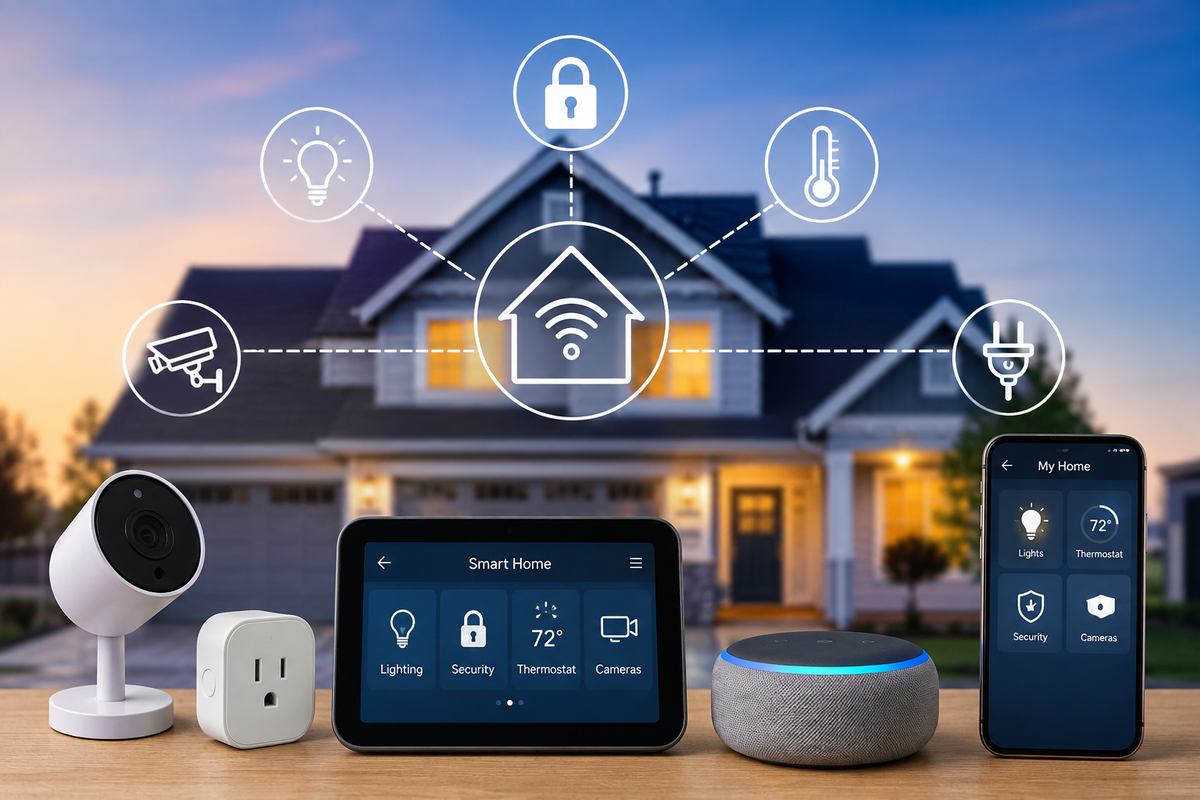
Smart home technology has moved from being a luxury feature to a practical part of modern living. From smart thermostats and connected lighting to security cameras, smart locks, voice assistants, and automated appliances, homeowners can now control many parts of their property through smartphones, apps, or voice commands.
The growing popularity of smart home technology is driven by convenience, energy management, security, and automation. However, connected devices also introduce important concerns, including privacy, cybersecurity, compatibility, ongoing costs, and dependence on internet services.
For homeowners considering a connected home, understanding both the advantages and potential drawbacks is essential. This guide explains the major smart home benefits and risks, the devices worth considering, and practical steps for creating a safer and more useful smart home.
What Is Smart Home Technology?
Smart home technology refers to internet-connected devices and systems that allow homeowners to monitor, control, automate, or manage different functions inside and around their homes. These devices typically communicate through Wi-Fi, Bluetooth, hubs, apps, or other wireless technologies.
Common examples include smart thermostats, connected light bulbs, smart plugs, video doorbells, security cameras, smart locks, robot vacuum cleaners, connected appliances, leak sensors, smoke detectors, and voice-controlled home assistants.
The key difference between a traditional household device and a smart device is connectivity and automation. A conventional light switch requires manual operation, while a smart light can be scheduled, controlled remotely, or triggered by motion or occupancy.
According to the Federal Trade Commission, internet-connected devices can provide convenience but may also create privacy and security risks if they are not properly protected.
Key Benefits of Smart Home Technology
1. Greater Convenience
Convenience is one of the biggest reasons homeowners adopt smart home devices. Instead of manually controlling individual appliances and systems, users can manage multiple functions from a smartphone or central platform.
For example, homeowners can turn lights off remotely, adjust the thermostat before arriving home, check a doorbell camera while traveling, or create schedules for appliances.
Automation can also reduce repetitive tasks. Smart lights can switch on at particular times, while sensors can trigger lighting when someone enters a room.
This makes home automation technology particularly useful for busy households looking to simplify everyday routines.
2. Improved Energy Management
Smart home devices can help homeowners understand and manage energy consumption. Smart thermostats, connected lighting, smart plugs, and energy monitors can provide information about how and when energy is being used.
ENERGY STAR notes that smart home energy management systems can use schedules, usage patterns, and occupancy information to help automate energy-saving actions.
Smart thermostats are particularly useful because they can automatically adjust heating and cooling based on schedules, occupancy, or user preferences. ENERGY STAR-certified smart thermostats are independently evaluated for energy savings using real-world data.
However, energy savings depend on the product, household behavior, climate, and how the system is configured. Simply installing a smart device does not automatically guarantee lower utility bills.
3. Enhanced Home Security
Smart security technology has changed how homeowners monitor their properties. Connected cameras, video doorbells, motion sensors, smart locks, and alarm systems can provide real-time alerts and remote access.
A homeowner might receive a notification when motion is detected near the entrance or check a camera while away from home. Smart locks can also provide temporary access codes for family members, guests, or service providers.
These features can provide greater visibility and control compared with traditional security equipment.
At the same time, security devices must themselves be secured properly. A poorly protected connected camera or smart lock can create privacy and cybersecurity concerns.
4. Remote Access and Control
One of the most useful smart home benefits is remote control. As long as a device and its service support remote connectivity, homeowners can manage certain functions while away.
For example, you may be able to check whether a garage door is closed, adjust your thermostat, turn off connected appliances, or review a video doorbell notification from your phone.
Remote access is especially useful for homeowners who travel frequently or own second homes.
5. Better Accessibility
Smart home technology can also make everyday tasks easier for people with mobility limitations, older adults, or anyone who finds certain physical controls difficult to operate.
Voice commands, automated lighting, smart locks, motorized blinds, and remotely controlled appliances can reduce the need to physically operate multiple devices.
This makes smart home automation more than a convenience feature. When thoughtfully designed, it can support greater independence and easier daily living.
Potential Risks of Smart Home Technology
While connected devices offer significant advantages, homeowners should understand the risks before creating a highly connected property.
1. Privacy Concerns
Smart devices can collect different types of information depending on their functions. Cameras may capture video, voice assistants may process audio commands, and occupancy-related devices may provide information about activity patterns.
The more connected devices a home contains, the more important it becomes to understand what information is collected, how it is used, where it is stored, and who may have access to it.
Before purchasing a product, homeowners should review its privacy policy and available privacy controls.
2. Cybersecurity Threats
Cybersecurity is one of the most important smart home risks. Every internet-connected device can potentially become part of a larger digital network.
The FTC recommends securing the home router, changing default passwords, using encryption, installing updates, and enabling two-factor authentication where available.
A compromised smart device may expose account information or provide an attacker with a pathway into other connected systems. The risk can become greater when homeowners reuse passwords or leave old devices connected to the network.
3. Dependence on Internet and Cloud Services
Many smart home devices depend on internet connections, mobile apps, cloud platforms, or manufacturer servers. If the internet goes down or a cloud service becomes unavailable, certain features may stop working.
There is also a longer-term concern: manufacturers may eventually discontinue products or software support. The FTC has warned that when technical support and security updates end, connected devices can become outdated and potentially vulnerable.
For this reason, homeowners should consider how essential a device is before making it dependent on a cloud service.
4. Compatibility Problems
Not every smart home product works seamlessly with every ecosystem. A homeowner may purchase devices from several manufacturers and discover that some features cannot be integrated.
Before buying multiple products, check whether they support the same platform, communication standards, or smart home ecosystem.
Compatibility should be considered at the beginning rather than after a house has accumulated numerous disconnected devices.
5. Upfront and Ongoing Costs
Smart home technology can become expensive when homeowners attempt to automate everything at once. Cameras, locks, thermostats, sensors, hubs, smart appliances, and subscription services can add up quickly.
Some devices also require monthly or annual fees for cloud storage, advanced security features, or monitoring.
A better approach is to identify specific problems you want to solve and purchase technology accordingly.
How to Make a Smart Home Safer
The good news is that homeowners can take practical steps to reduce many smart home security risks.
Start with the router because it connects many of the devices throughout the home. Use a strong, unique administrator password and Wi-Fi password, enable modern wireless security, and keep router firmware updated. The FTC specifically recommends changing default router credentials and checking for updates.
Next, secure individual smart devices. Change default passwords, use unique credentials, activate two-factor authentication when available, and install software updates.
It is also useful to remove devices you no longer use. An old connected camera, smart speaker, or appliance that remains linked to an account can become an unnecessary security concern.
For additional protection, consider placing compatible IoT devices on a separate guest or IoT network rather than putting every connected product on the same network as sensitive computers and personal devices.
What to Look for When Buying Smart Home Devices
Choosing the right product is just as important as configuring it correctly. Before purchasing a smart device, consider:
- Security features: Look for encryption, secure authentication, two-factor authentication, and regular software updates.
- Privacy controls: Understand what data the device collects and whether settings can be adjusted.
- Update support: Check whether the manufacturer provides ongoing security and software updates.
- Compatibility: Confirm that the device works with your existing smart home ecosystem.
- Offline functionality: Determine what happens if the internet connection fails.
- Subscription costs: Check whether important features require recurring payments.
- Energy performance: For energy-related devices, look for credible efficiency certifications where applicable.
These considerations can help homeowners avoid purchasing products based solely on appearance, price, or a long list of features.
Should You Make Your Entire Home Smart?
Not necessarily. A smart home does not need to contain dozens of connected products.
For many homeowners, starting with a few high-value devices is the better strategy. A smart thermostat can improve temperature management, smart lighting can simplify routines, and a video doorbell can provide useful security alerts.
Once these systems are working reliably, additional devices can be added based on genuine household needs.
A simple, well-secured smart home is often more useful than a complicated system filled with devices that are rarely used.
Final Thoughts
Smart home technology can make homes more convenient, efficient, secure, and accessible. Remote control, automation, energy monitoring, smart security, and personalized routines can all improve the everyday homeowner experience.
However, connected living comes with responsibilities. Privacy concerns, cybersecurity threats, compatibility issues, subscription costs, internet dependence, and discontinued support are important factors to consider before investing in smart devices.
The best approach is to build a smart home gradually. Choose reputable products, understand their privacy policies, keep software updated, secure your router and accounts, and purchase devices that solve real problems.
When convenience is balanced with security and thoughtful planning, smart home technology can become a practical part of modern homeownership rather than simply another collection of connected gadgets.