

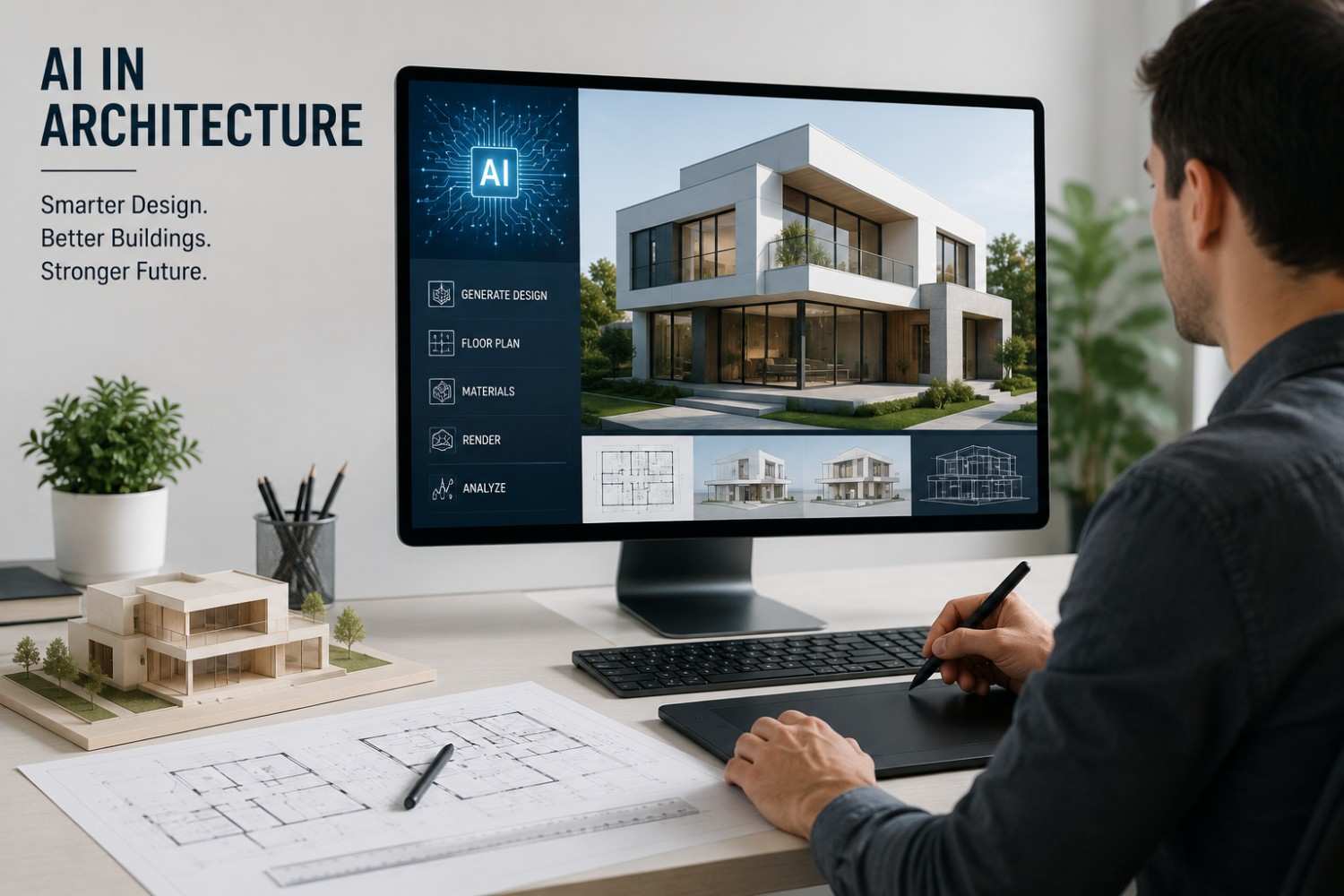
How AI Is Transforming Modern Architecture Design in 2026
The architecture industry is evolving faster than ever, and one of the biggest drivers of this transformation is AI architecture. Artificial intelligence is no longer just a futuristic concept—it has become a practical tool that helps architects, designers, and construction professionals create smarter, more efficient, and visually impressive buildings.
In 2026, AI is changing every stage of architectural design, from initial planning and concept generation to visualization, sustainability analysis, and project management. By combining human creativity with machine intelligence, architects can design better spaces while reducing costs and improving productivity.
In this article, we’ll explore how AI architecture is transforming modern building design and why it’s becoming an essential part of the industry.
What Is AI Architecture?
AI architecture refers to the use of artificial intelligence technologies in architectural planning, design, visualization, and construction workflows. AI-powered software analyzes large amounts of design data, understands project requirements, and generates intelligent design suggestions in minutes.
Instead of spending hours creating multiple design concepts manually, architects can now use AI to generate several layouts, optimize floor plans, improve natural lighting, and evaluate building performance before construction even begins.
This technology allows professionals to focus more on creativity while AI handles repetitive and time-consuming tasks.
Faster Design with AI-Powered Automation
Traditional architectural design often involves multiple revisions before reaching the final concept. AI significantly speeds up this process by automating repetitive tasks.
Modern AI tools can:
- Generate multiple building concepts instantly
- Create optimized floor plans
- Recommend room layouts
- Suggest material combinations
- Improve space utilization
- Produce realistic architectural renders
Instead of starting every project from scratch, architects can build upon AI-generated concepts and refine them according to client preferences.
This reduces project timelines while maintaining high design quality.
Generative Design Is Revolutionizing Architecture
One of the most exciting developments in AI architecture is generative design.
Generative AI allows architects to enter project requirements such as:
- Plot size
- Building height
- Budget
- Number of rooms
- Sustainability goals
- Local regulations
The AI then produces hundreds of possible design options based on these parameters.
Architects can compare different solutions, evaluate their strengths, and choose the best option before moving into detailed design.
This approach encourages innovation while saving significant time during the planning phase.
Smarter Architectural Visualization
Architectural visualization has become much more advanced thanks to AI.
Previously, creating photorealistic renders could take several hours or even days. Today, AI-powered rendering software can generate stunning visuals within minutes.
These tools help architects:
- Produce realistic interior renders
- Generate exterior building visuals
- Convert sketches into 3D models
- Enhance lighting automatically
- Add realistic materials and textures
- Create immersive presentations for clients
High-quality visualizations help clients understand the final project more clearly, reducing misunderstandings and speeding up approvals.
AI Supports Sustainable Architecture
Sustainability is one of the highest priorities in modern architecture, and AI plays a major role in achieving environmentally responsible designs.
AI systems can analyze factors such as:
- Sunlight exposure
- Wind direction
- Energy consumption
- Building orientation
- Carbon emissions
- Material efficiency
Using this information, AI recommends design improvements that reduce energy usage and environmental impact.
Architects can create greener buildings without sacrificing functionality or aesthetics.
Better Collaboration Between Teams
Large architectural projects involve architects, engineers, interior designers, contractors, and clients.
AI-powered collaboration platforms make communication much easier by keeping project data centralized and automatically updating design changes.
Benefits include:
- Real-time collaboration
- Faster decision-making
- Reduced design conflicts
- Improved document management
- Better project coordination
This helps teams complete projects more efficiently while minimizing costly errors.
AI Helps Reduce Design Errors
Human error is unavoidable in complex architectural projects.
AI can automatically detect:
- Space planning issues
- Structural inconsistencies
- Building code conflicts
- Accessibility concerns
- Design clashes
By identifying potential problems early, architects can make corrections before construction begins.
This reduces delays, prevents expensive modifications, and improves overall project quality.
Personalized Architecture with AI
Every client has different preferences and functional requirements.
AI can analyze customer inputs, lifestyle preferences, design styles, and space requirements to generate highly personalized architectural concepts.
Whether designing a residential home, office, hotel, or commercial building, AI helps create spaces that better match client expectations.
This level of personalization improves customer satisfaction and creates more meaningful design experiences.
Emerging AI Tools Changing Architecture
Several innovative AI platforms are shaping the future of architecture in 2026.
These tools offer capabilities such as:
- AI image generation
- Sketch-to-render conversion
- Automated floor planning
- Building performance analysis
- Interior design automation
- Exterior visualization
- Material recommendations
- Construction planning assistance
As these technologies continue to improve, architects gain access to more intelligent workflows that simplify complex design challenges.
Challenges of AI Architecture
Although AI offers many advantages, it is not intended to replace architects.
Successful projects still require:
- Human creativity
- Cultural understanding
- Client communication
- Engineering expertise
- Regulatory knowledge
- Design judgment
AI should be viewed as a powerful assistant that enhances professional capabilities rather than replacing architectural expertise.
Architects remain responsible for making critical design decisions while AI supports the creative and technical process.
The Future of AI Architecture
The future of AI architecture looks incredibly promising.
As artificial intelligence continues to evolve, future architectural software will become even more intelligent, enabling real-time simulations, predictive building analysis, automated compliance checking, and immersive virtual reality experiences.
AI will also play a larger role in smart cities, modular construction, digital twins, and climate-responsive architecture.
Architects who embrace AI today will be better positioned to deliver innovative, sustainable, and efficient designs that meet the growing demands of modern clients.
Conclusion
AI architecture is transforming the way buildings are designed, visualized, and constructed in 2026. From generative design and intelligent automation to sustainable planning and advanced visualization, artificial intelligence is helping architects work faster, make better decisions, and create more innovative spaces.
Rather than replacing human creativity, AI enhances it by handling repetitive tasks and providing valuable design insights. As AI technology continues to advance, it will become an essential part of every modern architectural workflow.
Architects and design firms that adopt AI today will gain a competitive advantage by delivering higher-quality projects, improving client satisfaction, and embracing the future of architecture with confidence.